Midjourney asks court to force suing studios to disclose their own AI use
The studios sued Midjourney for training its AI on their characters without permission. Midjourney has responded in an unusual way: it filed a motion asking a US federal judge to compel the plaintiffs to disclose how they use AI inside their own companies. The logic is simple: if the studios do the same thing, their position in court falls apart. The motion could become a precedent in AI copyright proceedings.
AI-processed from TNW; edited by Hamidun News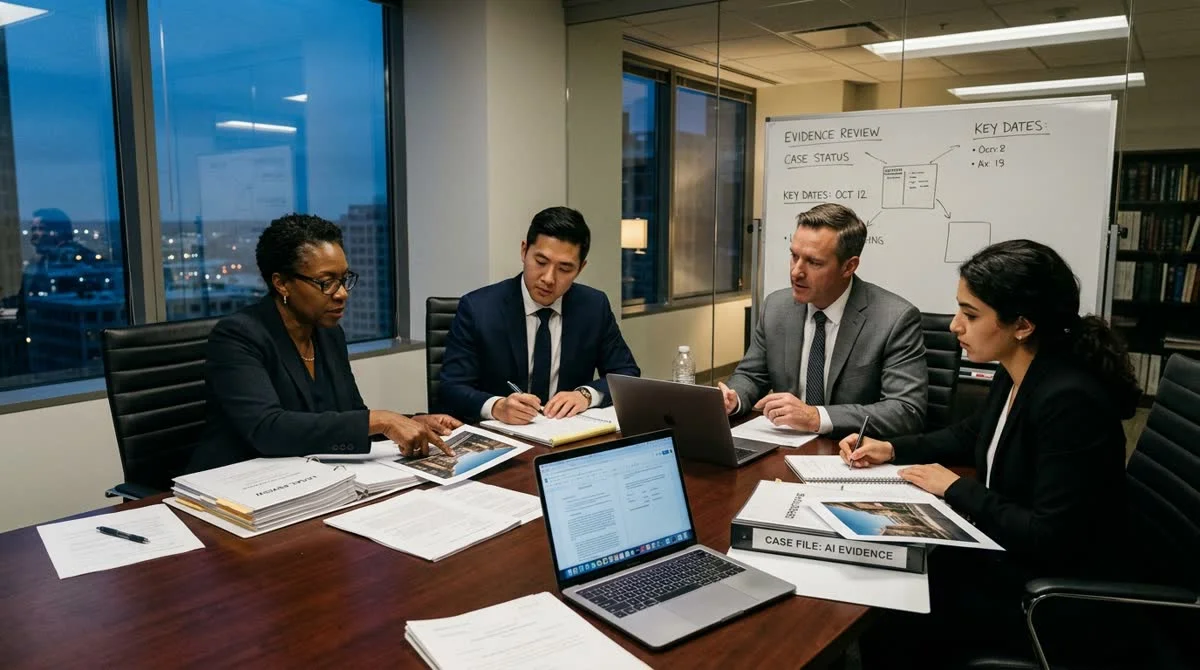
In July 2026, Midjourney filed a motion in US federal court asking it to require the plaintiff film studios to disclose how they use AI inside their own companies. Rather than a traditional, passive defense, the defendant took the offensive: if you accuse us of copyright infringement through AI training, prove that you are not doing the same thing. Variety reported the news.
What are the studios accusing Midjourney of?
The studios accuse the AI image generator of training its model on copyrighted characters, without permission and without paying compensation. Such claims have been standard in AI copyright disputes since 2023: rights holders insist that training neural networks on others' works amounts to unauthorized reproduction and a violation of exclusive rights.
Midjourney is not the first company in this position. At various points, OpenAI, Stability AI and Google have faced similar lawsuits. Disputes of this kind raise a fundamental legal question: is training an AI model on publicly available images "fair use" under US law, or copyright infringement? US courts have not yet reached a single answer.
Midjourney's counter-move is unconventional: the company does not stop at rebutting the allegations but goes on the attack, demanding that the plaintiff studios disclose internal data on their own use of AI.
- The studios accuse Midjourney of training its model on rights holders' characters without permission
- OpenAI, Stability AI and Google faced similar lawsuits in 2023–2025
- Midjourney asked a US federal judge to compel disclosure of the data
- Without court intervention, the studios are entitled to refuse to provide such information
- The motion was reported by Variety in July 2026
Why is
Midjourney demanding data from the plaintiffs themselves?
The defense strategy rests on a principle of symmetrical responsibility. Major film studios are actively bringing AI into production, from generating storyboards and visualizing concepts to post-production, voice work and visual effects processing. If it turns out that they are using AI tools trained on others' materials without proper licenses, their position in court would be extremely vulnerable.
That is exactly what Midjourney is counting on. In effect, the company is asking the court: before holding us liable for our AI training practices, find out whether the plaintiffs themselves adhere to the standards they demand of us. If the studios' AI practices turn out to resemble the ones they are challenging, that could turn the case around, opening the way either to a settlement or to a debate over what counts as an "industry norm" in building training datasets.
In US procedural law, this kind of disclosure mechanism is called discovery: a party may demand documents from its opponent if they may be relevant to the case. That is the tool Midjourney has invoked.
The strategy works for the defendant in any scenario: either the studios prove their AI practices are legally clean, and Midjourney gains a clear picture of its opponents' arguments, or they uncover vulnerabilities of their own that shift the balance of power long before a ruling.
What this means
Midjourney's motion is an attempt to set a new standard in AI copyright litigation: seeking transparency not only from the defendant but also from the plaintiff. If the federal court grants it, it would set a precedent for the entire generative AI industry. Rights holders planning similar lawsuits will have to account for the possibility that their own AI practices could come under judicial scrutiny and be used against them.
Key Questions Answered
What are the studios accusing Midjourney of?
The studios accuse the AI image generator of training its model on copyrighted characters, without permission and without paying compensation. Such claims have been standard in AI copyright disputes since 2023: rights holders insist that training neural networks on others' works amounts to unauthorized reproduction and a violation of exclusive rights. Midjourney is not the first company in this position. At various points, OpenAI, Stability AI and Google have faced similar lawsuits. Disputes of this kind raise a fundamental legal question: is training an AI model on publicl
Why is Midjourney demanding data from the plaintiffs themselves?
The defense strategy rests on a principle of symmetrical responsibility. Major film studios are actively bringing AI into production, from generating storyboards and visualizing concepts to post-production, voice work and visual effects processing. If it turns out that they are using AI tools trained on others' materials without proper licenses, their position in court would be extremely vulnerable. That is exactly what Midjourney is counting on. In effect, the company is asking the court: before holding us liable for our AI training practices, find out whether the plaintif
What this means?
Midjourney's motion is an attempt to set a new standard in AI copyright litigation: seeking transparency not only from the defendant but also from the plaintiff. If the federal court grants it, it would set a precedent for the entire generative AI industry. Rights holders planning similar lawsuits will have to account for the possibility that their own AI practices could come under judicial scrutiny and be used against them.
Test Frontier LLMs & Autonomous Agents in One Workspace
Run Claude Opus 5.5, GPT-6, Gemini 3.1, and DeepSeek side-by-side in Nomad AI (nomadnet.ai) — unified model routing, deep research, and multimodal workflows under one subscription.
The AI world, distilled — once a week
Seven stories that actually mattered, hand-picked. No noise, no reposts, no press releases.
Done! Check your inbox for a confirmation.