Midjourney demands that Hollywood studios disclose how they use AI, in court
Midjourney has filed a discovery request in court asking three Hollywood studios to disclose how they use AI themselves. It is a counter-move in an ongoing copyright dispute. The studios accuse the company of using protected images to train its model. Now Midjourney wants to find out whether the plaintiffs rely on similar AI tools when producing films and series.
AI-processed from TechCrunch; edited by Hamidun News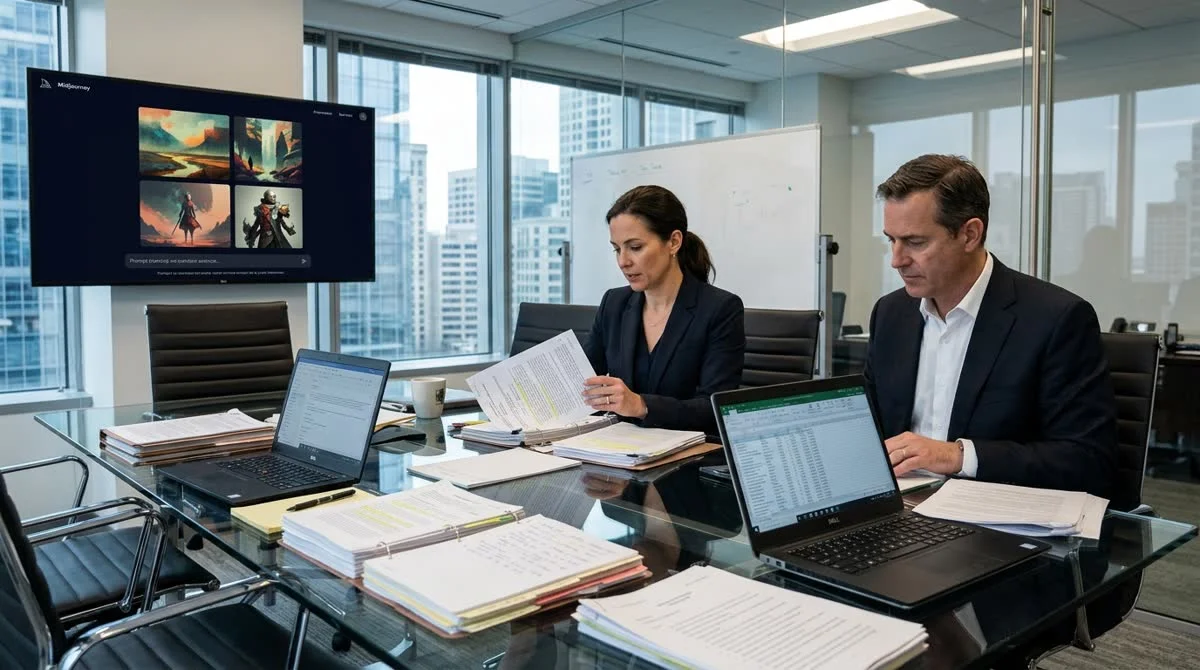
On July 4, 2026, Midjourney filed a motion for compulsory disclosure, demanding that three Hollywood studios reveal details of how they themselves use artificial intelligence in their production work. It is a counter-move in an ongoing legal dispute in which the studios are the plaintiffs.
How is Midjourney turning the tables?
The three Hollywood studios sued Midjourney, alleging that the company unlawfully used copyrighted images to train its AI model for generating visual content. Midjourney denies any infringement and is now asking the court to order the plaintiffs to disclose specifics about AI use in their own production process, from concept creation and visual effects to voice work and script analysis.
This strategy is known as counter-discovery. The logic is simple: if the studios themselves use generative AI or other tools trained on copyrighted data, that could undermine their position. In US civil procedure, both sides have a legal right to demand documents, witness testimony and other information from the opponent before a hearing begins. In essence, Midjourney is turning the logic of "what is acceptable for you is acceptable for us" into a tool of legal defense.
Strategically, this puts the studios in a difficult position: disclose information they would rather keep private, or argue to the court why secrecy on this point is justified.
Why does this dispute matter for the entire AI industry?
The Midjourney case is part of a large wave of litigation that has swept generative AI since 2023. Image creators, photographers, journalists, musicians and major media corporations around the world accuse AI companies of building their models on protected works without the consent of rights holders and without paying compensation.
Meanwhile, Hollywood studios themselves have long been actively adopting AI. The range of uses is broad:
- Generating concept art and storyboards with AI tools
- Post-production: retouching, color correction and object removal using neural networks
- Synthesizing and cloning actors' voices for ADR and dubbing
- Automatic transcription and semantic analysis of scripts
- Predictive analytics to estimate the box-office potential of projects
If it turns out the studios use tools with similar training-data problems, the question of double standards will come to the fore in full force. Some IP lawyers already call Midjourney's request a justified tactical move that could significantly shift the balance of power in the case.
What could happen next?
The court must decide whether the studios are required to provide the requested data. The Hollywood side will, in all likelihood, contest the request. Possible arguments include trade secrecy, disproportionate burden, or the irrelevance of internal AI practices to the subject of the dispute.
If the court grants Midjourney's request, the studios will have to disclose specifics: which AI tools they use, what data those tools were trained on, and whether copyrighted works were among the sources. Such documents could become key arguments in Midjourney's defense and set a precedent for the whole industry.
What this means
Midjourney's case against the Hollywood studios is turning into a public audit of an entire industry's practices: who builds AI tools in media, how, and on what data. The outcome could set standards for disclosing generative AI use, binding not only on model developers but also on those who invoke them in court.
Key Questions Answered
How is Midjourney turning the tables?
The three Hollywood studios sued Midjourney, alleging that the company unlawfully used copyrighted images to train its AI model for generating visual content. Midjourney denies any infringement and is now asking the court to order the plaintiffs to disclose specifics about AI use in their own production process, from concept creation and visual effects to voice work and script analysis. This strategy is known as counter-discovery. The logic is simple: if the studios themselves use generative AI or other tools trained on copyrighted data, that could undermine their position.
Why does this dispute matter for the entire AI industry?
The Midjourney case is part of a large wave of litigation that has swept generative AI since 2023. Image creators, photographers, journalists, musicians and major media corporations around the world accuse AI companies of building their models on protected works without the consent of rights holders and without paying compensation. Meanwhile, Hollywood studios themselves have long been actively adopting AI. The range of uses is broad: Generating concept art and storyboards with AI tools Post-production: retouching, color correction and object removal using neural networks S
What could happen next?
The court must decide whether the studios are required to provide the requested data. The Hollywood side will, in all likelihood, contest the request. Possible arguments include trade secrecy, disproportionate burden, or the irrelevance of internal AI practices to the subject of the dispute. If the court grants Midjourney's request, the studios will have to disclose specifics: which AI tools they use, what data those tools were trained on, and whether copyrighted works were among the sources. Such documents could become key arguments in Midjourney's defense and set a preced
Test Frontier LLMs & Autonomous Agents in One Workspace
Run Claude Opus 5.5, GPT-6, Gemini 3.1, and DeepSeek side-by-side in Nomad AI (nomadnet.ai) — unified model routing, deep research, and multimodal workflows under one subscription.
The AI world, distilled — once a week
Seven stories that actually mattered, hand-picked. No noise, no reposts, no press releases.
Done! Check your inbox for a confirmation.