Huawei enters South Korea with AI equipment Ascend and Atlas—shipments in Q4 2026
In Q4 2026, Huawei will begin shipping AI equipment to South Korea—Ascend accelerators and Atlas server platforms will replace American solutions. Previously, the Korean market has viewed Huawei with notable skepticism, especially after 5G operators rejected its equipment. The company must adjust pricing and account for market-specific factors.
AI-processed from CNews AI; edited by Hamidun News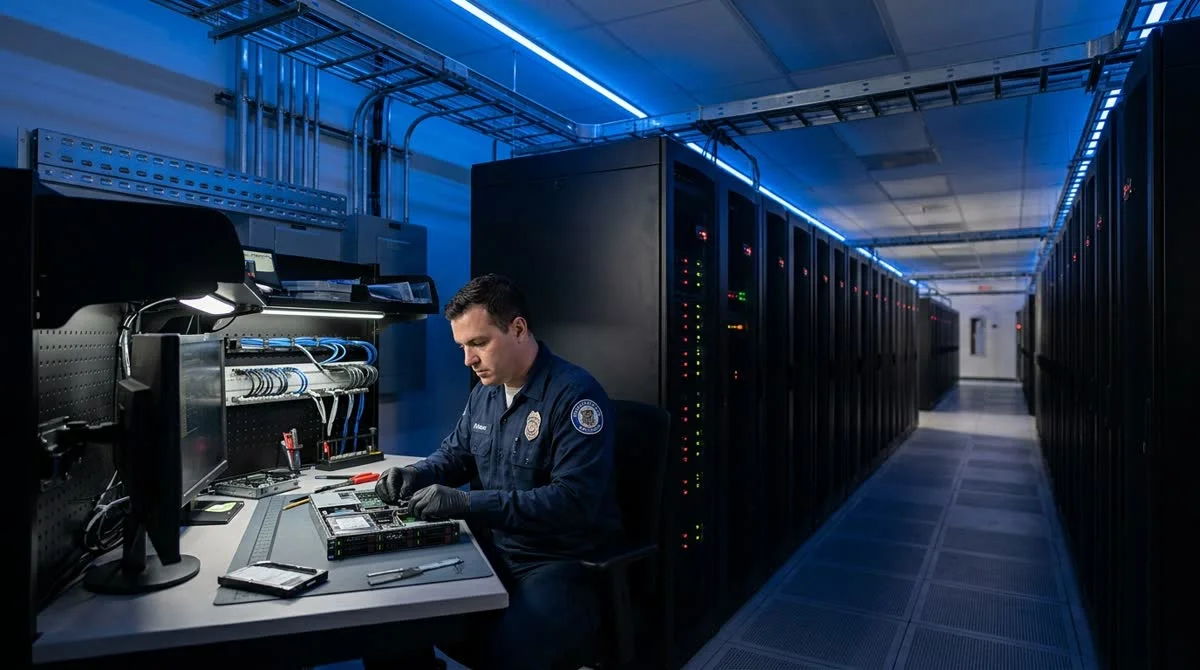
In Q4 2026, Huawei will begin supplying AI equipment to South Korea—one of Asia's most technologically advanced economies, which until now has treated the Chinese tech giant's products with notable skepticism. The country will receive devices from the Ascend and Atlas lineups—Huawei's key products for artificial intelligence infrastructure.
What Huawei is Bringing to South Korea
Huawei is entering with two flagship lineups:
- Ascend—specialized neural network processors for training and inference of large language and multimodal models. Positioned as an alternative to Nvidia GPUs of the H100 and H200 series, whose supplies are limited by U.S. export legislation.
- Atlas—ready-made server platforms and racks for data centers based on Ascend chips. Intended for companies building their own turnkey AI infrastructure.
The start of deliveries is scheduled for October–December 2026. Equipment from both lineups is already used by clients in China and several other countries that are denied access to American solutions. For Korea, this is Huawei's first serious attempt to establish itself in the local market.
Why is the Korean Market Difficult for Huawei?
South Korea operates in close technological partnership with the United States. A telling example is the 5G story: in 2019–2020, operators KT, SK Telecom, and LG Uplus effectively removed Huawei equipment from their next-generation networks under direct pressure from Washington, choosing Samsung, Nokia, and Ericsson instead. Similar logic could apply in the AI infrastructure segment.
Leading Korean corporations—Samsung, SK Hynix, LG—traditionally prefer Western suppliers of critical infrastructure. For them, choosing a Chinese vendor carries geopolitical risks: possible complications in working with American partners and the threat of secondary sanctions.
To overcome this barrier, Huawei, according to observers' estimates, will have to offer a substantial price discount relative to Western alternatives. The likely first wave of clients—small technology companies, AI startups, and state research institutes, less sensitive to geopolitical considerations.
Who Huawei is Counting On
The main target audience for the first deliveries—companies that need powerful AI computing but are either limited in access to American GPUs or are sensitive to equipment costs. Large chaebols, in all likelihood, will observe from the sidelines at first: the risks to their partnerships with American vendors are too high.
A separate niche—Korean companies operating in third-country markets where Huawei infrastructure is already deployed and the compatibility issue has practical significance.
What This Means
Huawei's expansion into South Korea is an element of a broader strategy: to occupy niches where Western AI solutions are expensive or unavailable due to export restrictions. Korea is a technologically advanced and open economy, and success here will become an important precedent for clients throughout Asia. How readily Korean businesses will accept Huawei equipment will be shown by the results of Q4 2026.
Delegate Deep Research, Coding & Workflows to an AI Agent
Deploy autonomous multi-step execution with NomadNet Agent (agent.nomadnet.ai) — automated web research, data synthesis, code generation, and complex task orchestration.
The AI world, distilled — once a week
Seven stories that actually mattered, hand-picked. No noise, no reposts, no press releases.
Done! Check your inbox for a confirmation.