AI avatars learn to see and hear: the next frontier of generative video
For years, AI-video progress was measured by one metric — image quality. Now TNW analysts say the next frontier is interactivity. An avatar must not only look convincing but see the interlocutor and hear their voice. The article examines three levels of interactivity that will define the next wave of competition in AI-video generation.
AI-processed from TNW; edited by Hamidun News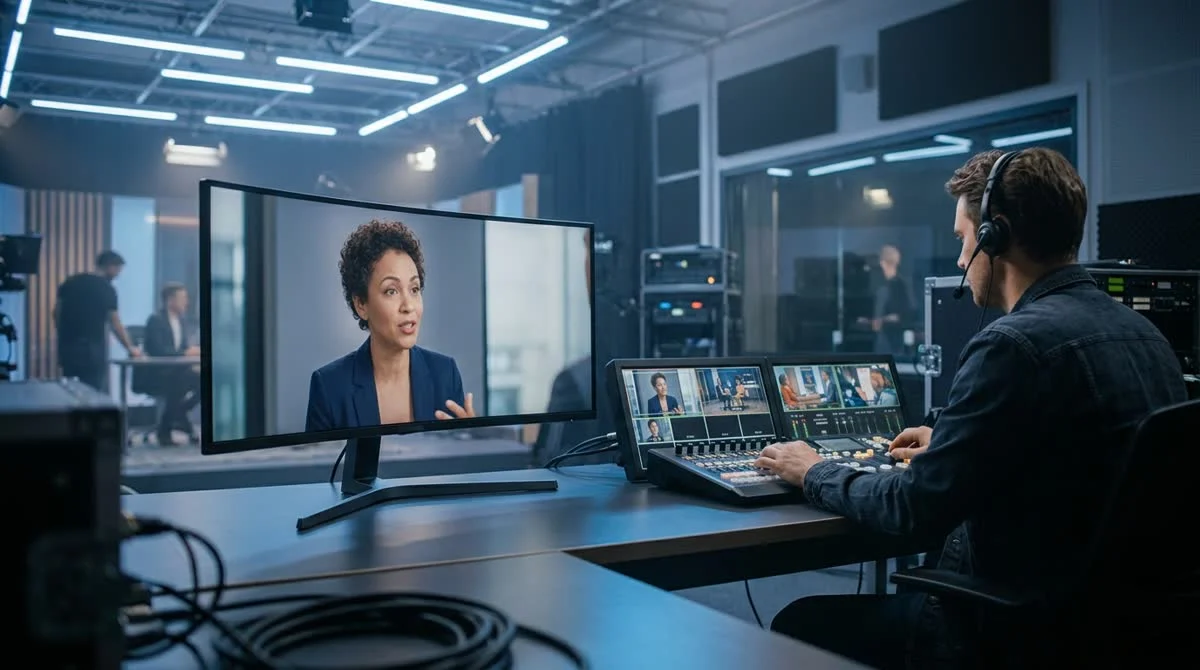
According to TNW analysts (July 2026), the AI video generation industry is approaching an inflection point: after several years of racing for visual quality, competition is beginning to shift toward interactivity — the creation of avatars capable of perceiving their interlocutors and reacting to them.
Why the race for visual quality stops being the main factor
For a long time, the only measure of an AI avatar was its appearance: skin believability, lighting realism, lip-sync smoothness. Such metrics remain important — but by themselves no longer determine the leader.
An avatar that looks flawless but fails to notice the interlocutor's emotion and doesn't adapt its intonation to context remains a video clip — convincing, yet lifeless. This is where the next barrier emerges: it's not enough to generate convincing visuals; you need to close the perception loop.
TNW points out: the race is beginning to shift toward the avatar's ability to perceive the real world and respond to it meaningfully — to see, hear, and interpret context.
What are the three levels of interactivity?
The authors break down avatar interactivity step by step — from basic command reaction to full multimodal perception.
At the initial level, the avatar responds to a pre-written script or text input: it reacts to a command, but not to live context. This is the typical scenario for most current corporate products — video presentations, onboarding videos, synthesized news reports.
The next level connects speech perception: the avatar hears its interlocutor, distinguishes intonation, and adapts answers based on what was said. This is closer to genuine dialogue — but the avatar remains "blind."
The highest level is full multimodal perception: the avatar simultaneously sees, hears, and interprets the situation in the frame. It notices facial expressions, gestures, changes in conversation context. Behavior changes in real time — in response to what happens before the camera.
What scenarios does full interactivity open?
The transition to the third level is not an evolutionary step but a shift in task class. It opens fundamentally new applications:
- A virtual trainer who sees the student's facial expressions and adapts the pace of explanation
- A character in a game or metaverse that recognizes the user and changes behavior from session to session
- A customer support agent who notices client confusion before the client even formulates the problem in words
- A language tutor who responds to pronunciation and the student's emotional state
None of these scenarios work with a static avatar, however realistic it may be. Interactivity here is not an option but an architectural requirement.
What this means
Competition in AI video is transitioning from the question "how does the avatar look" to "what does the avatar perceive." Companies that first close the loop of real-time multimodal perception will gain a sustainable position in applications where visuals and dialogue are inseparable.
Need AI working inside your business — not just in your newsfeed?
I build production AI for companies — custom CRM, internal tools, autonomous agents, workflow automation. Owned by you, shaped to your process, no per-seat tax. Built by Zhemal Khamidun, CPO of AlpinaGPT (AI platform, 6,000+ users).
The AI world, distilled — once a week
Seven stories that actually mattered, hand-picked. No noise, no reposts, no press releases.
Done! Check your inbox for a confirmation.