Nissan CEO on Tariffs, US Production and the Future of Autonomous Driving
Nissan President Ivan Espinosa explained in an interview on Bloomberg Surveillance how the 25% US tariff on vehicles built in Mexico makes them harder to sell in the American market. The company's answer is to increase production directly in the US, which removes the tariff burden. Autonomous driving also came up, but without specific timelines or technical details.
AI-processed from Bloomberg Tech; edited by Hamidun News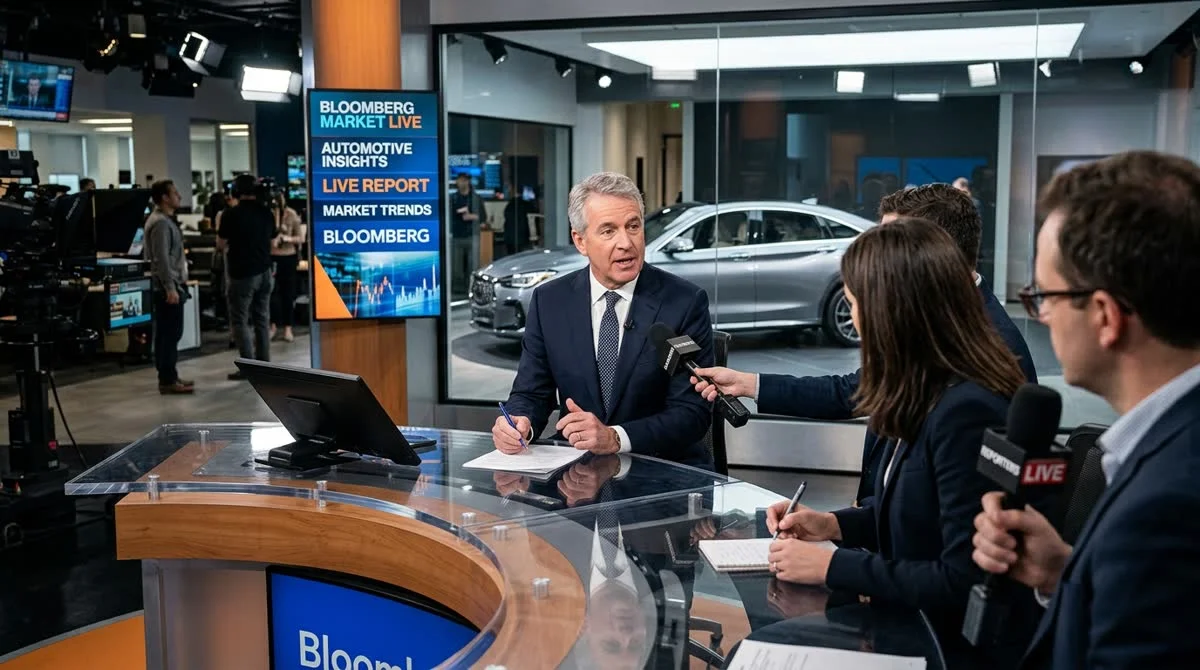
Nissan Motor Co. President and CEO Ivan Espinosa appeared on Bloomberg Surveillance on July 1, 2026, and addressed three topics: the company's future in autonomous driving, its plans to expand production in the US, and the impact of American tariffs on shipments from Mexican plants.
Why have tariffs become a problem for Nissan?
Cars built at Nissan's Mexican plants and shipped to the US face a 25% duty. According to Espinosa, at that tariff level it becomes significantly harder to stay competitive in the world's largest car market, because tariffs weigh directly on pricing and margins.
Key points from the interview:
- 25% is the US customs duty rate on cars from Mexico
- Nissan has large production capacity in Mexico
- The tariff regime reduces the price competitiveness of the Mexican-built lineup in the American market
How is Nissan adapting to trade restrictions?
The CEO's strategic response is to shift part of its output directly to US soil. Cars assembled in the country are not subject to the 25% tariff, which makes them more competitive on price and more profitable for the manufacturer. Espinosa named investment in American plants as one of the priorities.
The CEO did not give specific funding amounts or timelines in the interview. Still, the public acknowledgment that localization is necessary signals that the tariff factor is seriously changing the company's production strategy.
What does the CEO say about autonomous driving?
Espinosa described autonomous driving as a key area of Nissan's development. No substantive technical detail followed, however: the CEO mentioned no commercial launch dates, no target autonomy levels and no partnerships with software developers.
Such cautious rhetoric is typical of traditional automakers that have to compete with Tesla and specialized autopilot players. The market has long been used to treating such statements of intent as lacking immediate technical backing.
What this means
The Nissan CEO's interview captures the dual pressure on global automakers: on one side, the need to invest in autonomous technology to avoid falling behind in the tech race; on the other, trade restrictions that squeeze margins and force a rethink of production geography. A 25% tariff is not a local dispute but a systemic shift that is redrawing the industry's logic.
- Nov 2, 2026DeepSeek open-sources Super-agent prototype: p95 task completion time of 15.7 minutes vs. 29.5
- Nov 2, 2026Bun creator uses Claude Code to port 750K lines from Zig to Rust in 11 days
- Nov 2, 2026Microsoft releases 4B model Mage-VL-Cowork, which solves 66.0% of OSWorld-Verified tasks
- Nov 2, 2026Meta's Muse assistant keeps dossiers on loved ones and gets root on Ubuntu by default
Key Questions Answered
Why have tariffs become a problem for Nissan?
Cars built at Nissan's Mexican plants and shipped to the US face a 25% duty. According to Espinosa, at that tariff level it becomes significantly harder to stay competitive in the world's largest car market, because tariffs weigh directly on pricing and margins. Key points from the interview: 25% is the US customs duty rate on cars from Mexico Nissan has large production capacity in Mexico The tariff regime reduces the price competitiveness of the Mexican-built lineup in the American market
How is Nissan adapting to trade restrictions?
The CEO's strategic response is to shift part of its output directly to US soil. Cars assembled in the country are not subject to the 25% tariff, which makes them more competitive on price and more profitable for the manufacturer. Espinosa named investment in American plants as one of the priorities. The CEO did not give specific funding amounts or timelines in the interview. Still, the public acknowledgment that localization is necessary signals that the tariff factor is seriously changing the company's production strategy.
What does the CEO say about autonomous driving?
Espinosa described autonomous driving as a key area of Nissan's development. No substantive technical detail followed, however: the CEO mentioned no commercial launch dates, no target autonomy levels and no partnerships with software developers. Such cautious rhetoric is typical of traditional automakers that have to compete with Tesla and specialized autopilot players. The market has long been used to treating such statements of intent as lacking immediate technical backing.
Test Frontier LLMs & Autonomous Agents in One Workspace
Run Claude Opus 5.5, GPT-6, Gemini 3.1, and DeepSeek side-by-side in Nomad AI (nomadnet.ai) — unified model routing, deep research, and multimodal workflows under one subscription.
The AI world, distilled — once a week
Seven stories that actually mattered, hand-picked. No noise, no reposts, no press releases.
Done! Check your inbox for a confirmation.