Australia's Shadow Arts Minister: AI Giants Must Pay for Content
Angie Bell, Australia's shadow minister for culture and a former professional musician, said on 3 July 2026 that AI corporations must pay for the content they use to train their models. In her words, without fair compensation creators lose out while tech giants profit from their work.
AI-processed from Guardian; edited by Hamidun News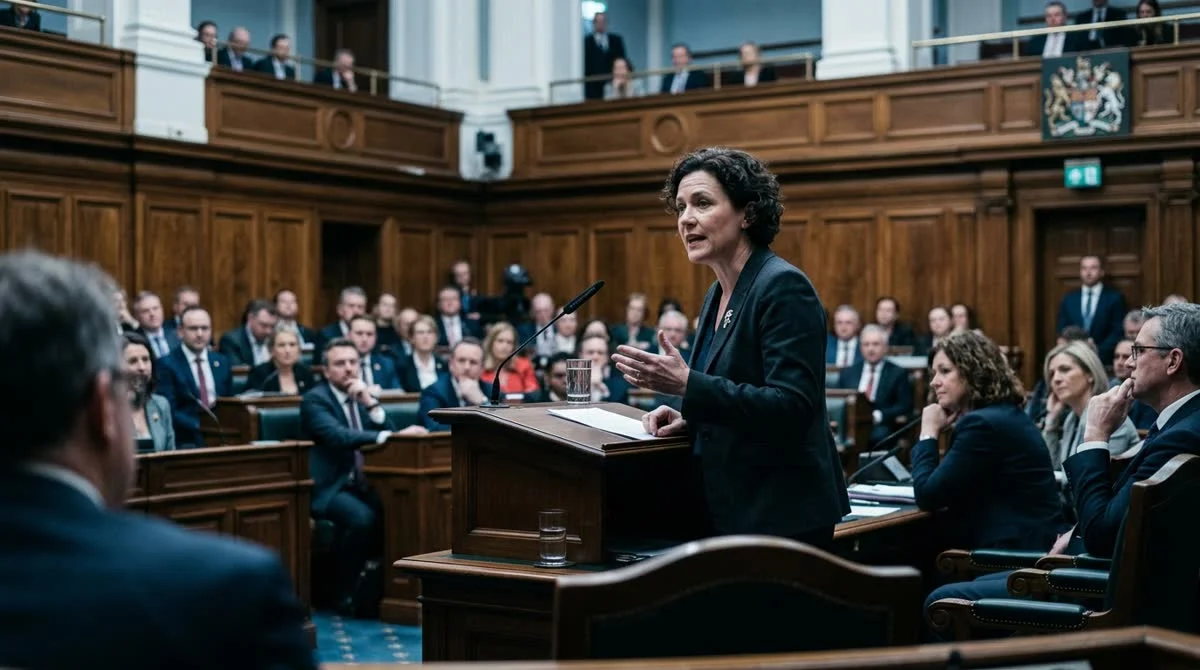
Angie Bell, Australia's shadow minister for culture, called on 3 July 2026 for the largest AI companies to be required to pay creators whose works are used to train language models.
Why Bell's voice matters in this debate
Angie Bell is not just a politician: before entering parliament she worked as a professional musician. That gives her position particular weight, since it rests on the personal experience of someone whose work AI systems can use without permission or payment.
The question of compensating authors for data absorbed by large language models remains one of the key unresolved issues in the industry. Media companies, publishers, musicians and screenwriters around the world are demanding legally defined compensation mechanisms.
What is happening with content rights worldwide
The Australian debate is unfolding against a global trend: several large media groups are already suing OpenAI and other AI labs. A number of countries have passed or are preparing legislation requiring tech companies to negotiate licensing deals with rights holders.
Meanwhile, AI companies in most cases insist that training on publicly available data falls under the fair use doctrine. Rights holders disagree.
What this means
Bell's statement signals that the question of AI companies paying for creative content is becoming part of the election agenda in Australia. If the demand takes shape as a bill, it could set a precedent for other countries where such rules do not yet exist.
- Nov 1, 2026Local models lose to Opus and Codex: 0.21 on a MacBook versus 1.00 for Codex
- Nov 1, 2026Kimi scores 96.2% on a 1C database analytics test and emerges as a fallback if Claude access is blocked
- Nov 1, 2026OpenAI Rewrites GPT Behavior Rules: Five Values and a Chain of Command
- Nov 1, 2026Google admits AI Mode cuts search revenue, shares fall 15%
Key Questions Answered
Why Bell's voice matters in this debate?
Angie Bell is not just a politician: before entering parliament she worked as a professional musician. That gives her position particular weight, since it rests on the personal experience of someone whose work AI systems can use without permission or payment. The question of compensating authors for data absorbed by large language models remains one of the key unresolved issues in the industry. Media companies, publishers, musicians and screenwriters around the world are demanding legally defined compensation mechanisms.
What is happening with content rights worldwide?
The Australian debate is unfolding against a global trend: several large media groups are already suing OpenAI and other AI labs. A number of countries have passed or are preparing legislation requiring tech companies to negotiate licensing deals with rights holders. Meanwhile, AI companies in most cases insist that training on publicly available data falls under the fair use doctrine. Rights holders disagree.
What this means?
Bell's statement signals that the question of AI companies paying for creative content is becoming part of the election agenda in Australia. If the demand takes shape as a bill, it could set a precedent for other countries where such rules do not yet exist.
Test Frontier LLMs & Autonomous Agents in One Workspace
Run Claude Opus 5.5, GPT-6, Gemini 3.1, and DeepSeek side-by-side in Nomad AI (nomadnet.ai) — unified model routing, deep research, and multimodal workflows under one subscription.
The AI world, distilled — once a week
Seven stories that actually mattered, hand-picked. No noise, no reposts, no press releases.
Done! Check your inbox for a confirmation.