Senator Pocock demands ban on Big Tech training AI on Australian content
Australian Senator David Pocock has demanded a clear public answer from the Albanese government: will tech giants be allowed to train AI models on local creators' content without consent or compensation? Amid heavy lobbying by AI companies, the cabinet is weighing two options: special exceptions to copyright law, or expanded licensing agreements. Albanese intends to announce the new AI policy in July.
AI-processed from Guardian; edited by Hamidun News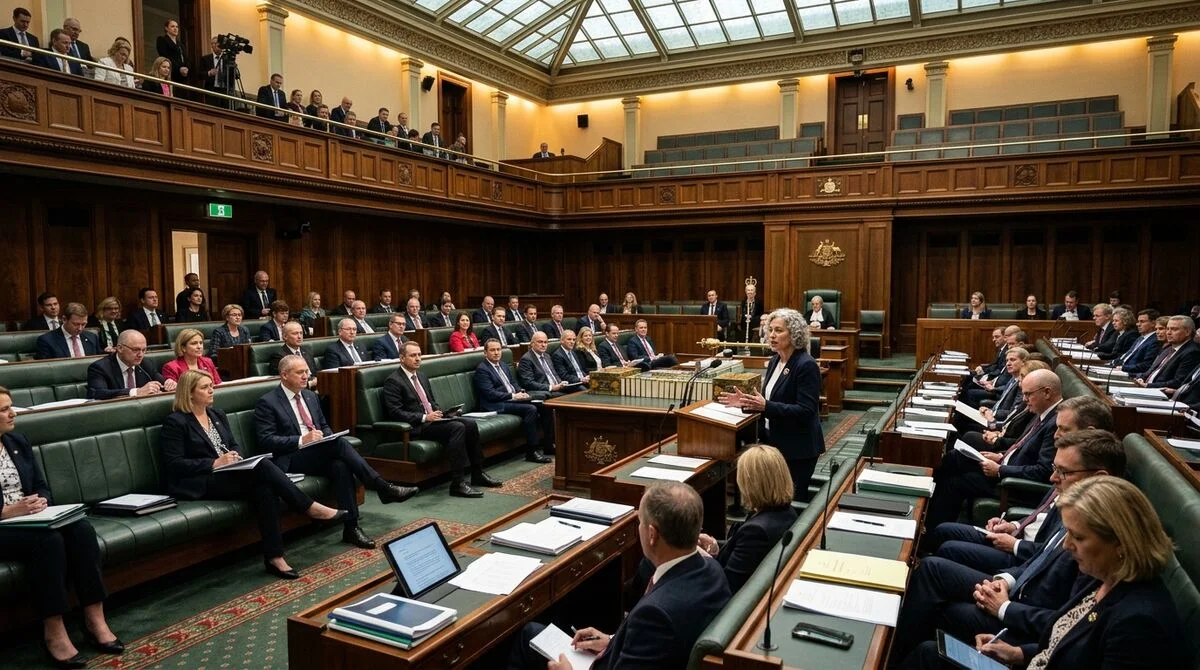
Independent Australian Senator David Pocock has demanded that the Albanese government answer publicly: will tech giants be allowed to train AI models on Australian content without the consent of, or compensation to, its creators?
The question put to the Senate
On Tuesday, Pocock used question time in the Senate to raise the issue of intensive lobbying by AI companies. According to the senator, industry representatives are pressing Canberra for one of two outcomes: either a special "exception" in copyright law for AI training, or an expansion of existing licensing agreements.
The Labor government is considering both scenarios as part of its upcoming copyright reform. The cabinet is studying competing proposals, and Anthony Albanese reportedly intends to present the new AI policy in July 2026. Pocock insists that parliament and the public must know the government's intentions before a decision is made behind closed doors under lobbyists' influence.
The core of the conflict
At the heart of the dispute is who owns content created by Australians. Large language models are trained on massive volumes of text from open sources, and a significant share of it was produced by local authors without any consent from them:
- articles and reporting from Australian media
- books, novels, fiction and non-fiction works
- academic papers, research and scientific publications
- material from professional and trade publications
- archives of community organisations, libraries and cultural institutions
Advocates of copyright protection argue that AI companies are monetising the work of journalists, writers and scholars who never agreed to such use of their work. Without compensation, they say, this amounts to the uncompensated taking of professional content for the benefit of commercial corporations.
What the industry is proposing
Major AI players, including OpenAI, Google, Anthropic and others, argue that training on publicly available data falls under fair use and requires neither the consent of rights holders nor payment. They warn that strict licensing requirements would hamper the development of AI technology and put Australian companies at a disadvantage against competitors in jurisdictions with more liberal regulation.
Lobbyists are promoting a "carve-out" model: special copyright exceptions modelled on Japan, where such provisions are already enshrined in law. This approach would let companies use Australian content freely to train models without negotiating with each rights holder. Opponents call this option an outright capitulation to pressure from multinational tech corporations.
What this means
Australia has found itself on the front line of the global dispute over content rights in the age of generative AI. Canberra's decision, whether special exceptions for the industry or new licensing and compensation mechanisms, will become a precedent that other countries look to. The stakes are especially high for media and the creative industries: their professional content most often serves as the "fuel" for training language models.
Pocock has put a direct question to the government: whom does it protect, Australian creators or tech corporations?
- Nov 2, 2026NC State's AICG Framework Cuts MAE by 50.3% on Math Answer Grading
- Nov 2, 2026We Audited 929 Automations at Alpina: What Corporate AI Training Should Look Like in 2026
- Nov 2, 2026I Interrogated 6 AI Models About Myself Through a Procurement Manager's Eyes: Amazon, Esoterica, 'Telo Hudelo' and 5 Holes We Closed in a Day
- Nov 2, 2026TJ Digital: 23% of AI-cited pages open with a direct answer, versus 14% of uncited ones
Key Questions Answered
What are the key details on The question put to the Senate?
On Tuesday, Pocock used question time in the Senate to raise the issue of intensive lobbying by AI companies. According to the senator, industry representatives are pressing Canberra for one of two outcomes: either a special "exception" in copyright law for AI training, or an expansion of existing licensing agreements. The Labor government is considering both scenarios as part of its upcoming copyright reform.
What are the key details on The core of the conflict?
At the heart of the dispute is who owns content created by Australians. Large language models are trained on massive volumes of text from open sources, and a significant share of it was produced by local authors without any consent from them: articles and reporting from Australian media books, novels, fiction and non-fiction works academic papers, research and scientific publications material from professional and trade publications archives of community organisations, libraries and cultural…
What the industry is proposing?
Major AI players, including OpenAI, Google, Anthropic and others, argue that training on publicly available data falls under fair use and requires neither the consent of rights holders nor payment. They warn that strict licensing requirements would hamper the development of AI technology and put Australian companies at a disadvantage against competitors in jurisdictions with more liberal regulation.
Test Frontier LLMs & Autonomous Agents in One Workspace
Run Claude Opus 5.5, GPT-6, Gemini 3.1, and DeepSeek side-by-side in Nomad AI (nomadnet.ai) — unified model routing, deep research, and multimodal workflows under one subscription.
The AI world, distilled — once a week
Seven stories that actually mattered, hand-picked. No noise, no reposts, no press releases.
Done! Check your inbox for a confirmation.