ByteDance Moves to In-House AI Chips, With Rollout Starting Next Year
ByteDance will start using its own AI chips in its infrastructure as early as next year. At a quarterly event, Qualcomm acknowledged that it is developing custom chips for two large cloud companies, presumably including ByteDance. In-house chips would reduce the company's dependence on US suppliers and let it tune workloads for TikTok.
AI-processed from 3DNews AI; edited by Hamidun News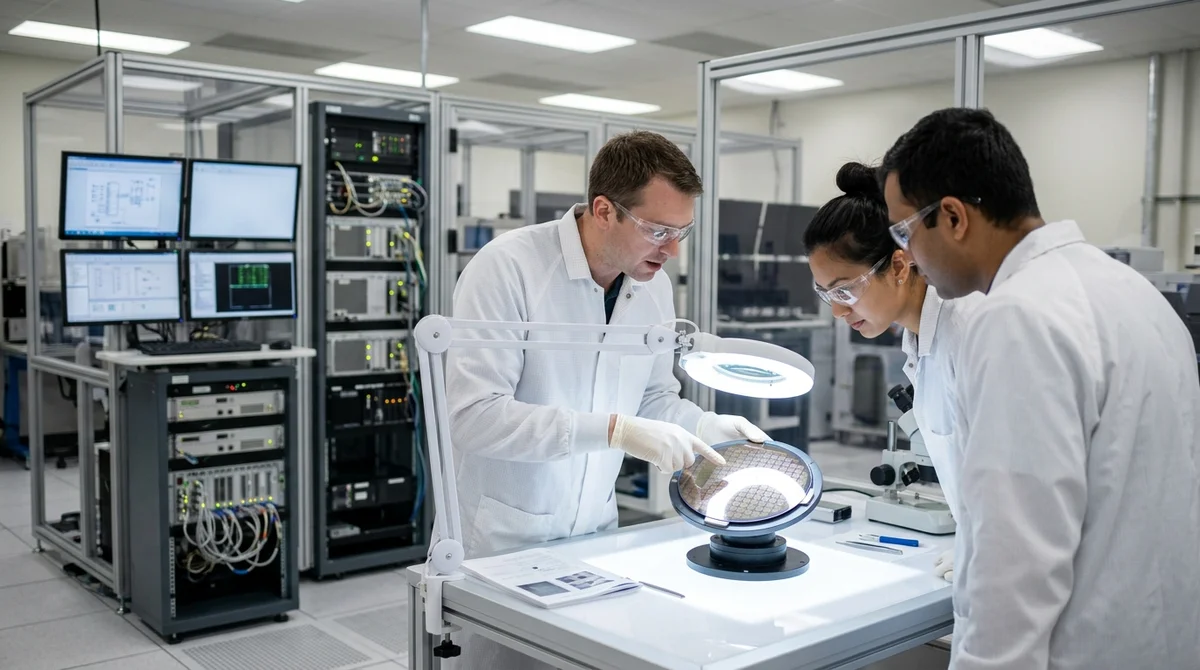
ByteDance, TikTok's parent company, is preparing to switch to AI chips of its own design. According to industry sources, they will appear in the company's production computing infrastructure as early as next year.
Qualcomm shows its hand
At a recent quarterly event, Qualcomm openly confirmed several important details about its customers for the first time. The company said it supplies off-the-shelf chips to Meta. On the official slides the name was masked as M*a, but the context left no doubt. Qualcomm also said it is developing custom chips for two more large cloud companies, without naming them publicly.
Industry sources have long discussed a possible Qualcomm partnership with ByteDance, and the story now has concrete outlines.
Qualcomm is positioning itself as a maker not only of consumer mobile processors but also of custom AI accelerators for the largest platforms. It is a strategic turn: the company used to be associated mainly with Snapdragon for smartphones, and it is now moving actively into the enterprise segment.
Qualcomm's involvement in the project apparently does not mean a full transfer of intellectual property. Most likely, the work is joint design that takes ByteDance's workloads into account, followed by manufacturing at third-party fabs, presumably TSMC or Samsung.
Why ByteDance needs its own chip
For ByteDance, this move is not a technological whim but a forced strategic step. Several reasons lie behind it:
- Geopolitical protection. US export restrictions have already cut Chinese companies off from NVIDIA's latest GPUs. In-house chips give more control over the supply chain.
- Workload optimization. TikTok's recommendation algorithm and language-model inference have requirements that a general-purpose GPU serves inefficiently.
- Economies of scale. At ByteDance's volumes, billions of requests a day, a small cut in the cost per operation adds up to a huge annual saving.
- Control over the roadmap. A proprietary chip lets the company align hardware with its software priorities without waiting for NVIDIA's or AMD's release cycle.
- Lower sanctions risk. In a trade war, an independent production chain becomes critically important.
China is building chip independence
ByteDance is not the first to go this way. Baidu, Alibaba and Huawei have long invested in their own AI accelerators. Huawei's Ascend chips already replace NVIDIA products in some Chinese data centers, and Alibaba is developing the Yitian series for its cloud infrastructure. The Chinese government actively subsidizes chip design: Biren Technology, Cambricon and Moore Threads receive state support.
Notably, even when working with US-based Qualcomm, ByteDance sits in a regulatory gray zone. US export rules govern the transfer of certain technologies, and every such deal requires careful legal structuring.
By comparison, the largest Western platforms have long been moving toward vertical integration of the hardware stack: Amazon with Trainium and Inferentia, Google with TPU, Microsoft with Maia. ByteDance follows the same logic, only in a far more complicated geopolitical context.
What this means
ByteDance's move to its own AI chips signals that the era when a company could simply buy a rack of GPUs is ending. For Qualcomm the situation is ambiguous: large orders strengthen its position in enterprise AI now, but a customer that built a chip with its help has a long-term incentive to cut out the middleman.
*Meta has been designated an extremist organization and is banned in Russia.
- Nov 1, 2026Google taught its StreamVibe video agent to decide when to step in on its own: +10.7%
- Nov 1, 2026OpenAI Rewrites GPT Behavior Rules: Five Values and a Chain of Command
- Nov 1, 2026Voice bots built on LLMs turn to Jev, a fast classifier, for decisions in 200–500 ms
- Nov 1, 2026Google admits AI Mode cuts search revenue, shares fall 15%
Key Questions Answered
What are the key details on Qualcomm shows its hand?
At a recent quarterly event, Qualcomm openly confirmed several important details about its customers for the first time. The company said it supplies off-the-shelf chips to Meta. On the official slides the name was masked as Ma, but the context left no doubt. Qualcomm also said it is developing custom chips for two more large cloud companies, without naming them publicly. Industry sources have long discussed a possible Qualcomm partnership with ByteDance, and the story now has concrete outlines. Qualcomm is positioning itself as a maker not only of consumer mobile processor
Why ByteDance needs its own chip?
For ByteDance, this move is not a technological whim but a forced strategic step. Several reasons lie behind it: Geopolitical protection. US export restrictions have already cut Chinese companies off from NVIDIA's latest GPUs. In-house chips give more control over the supply chain. Workload optimization. TikTok's recommendation algorithm and language-model inference have requirements that a general-purpose GPU serves inefficiently. Economies of scale. At ByteDance's volumes, billions of requests a day, a small cut in the cost per operation adds up to a huge annual saving. C
What are the key details on China is building chip independence?
ByteDance is not the first to go this way. Baidu, Alibaba and Huawei have long invested in their own AI accelerators. Huawei's Ascend chips already replace NVIDIA products in some Chinese data centers, and Alibaba is developing the Yitian series for its cloud infrastructure. The Chinese government actively subsidizes chip design: Biren Technology, Cambricon and Moore Threads receive state support. Notably, even when working with US-based Qualcomm, ByteDance sits in a regulatory gray zone. US export rules govern the transfer of certain technologies, and every such deal requi
Build & Ship Production AI Agents Without Boilerplate Code
Start your free 72-hour trial at Hamidun Academy (academy.hamidun.com) — interactive lessons on Claude Code & Cursor, live Tech Radar, and production agent templates.
The AI world, distilled — once a week
Seven stories that actually mattered, hand-picked. No noise, no reposts, no press releases.
Done! Check your inbox for a confirmation.