Inside Chinese AI: ByteDance, Z.ai, Passport-Checked Robots and the Server GPU Market
A co-founder of GPTunneL spent eight days meeting ByteDance, Z.ai, SiliconFlow and MiniMax in China and published a field report. ByteDance announced a release for July 10, 2026, while Z.ai is switching from NVIDIA to Huawei chips, a direct response to sanctions. In Shanghai's markets, server GPUs sit next to iPhones, and humanoid robots are sold at retail to buyers who show a passport.
AI-processed from Habr AI; edited by Hamidun News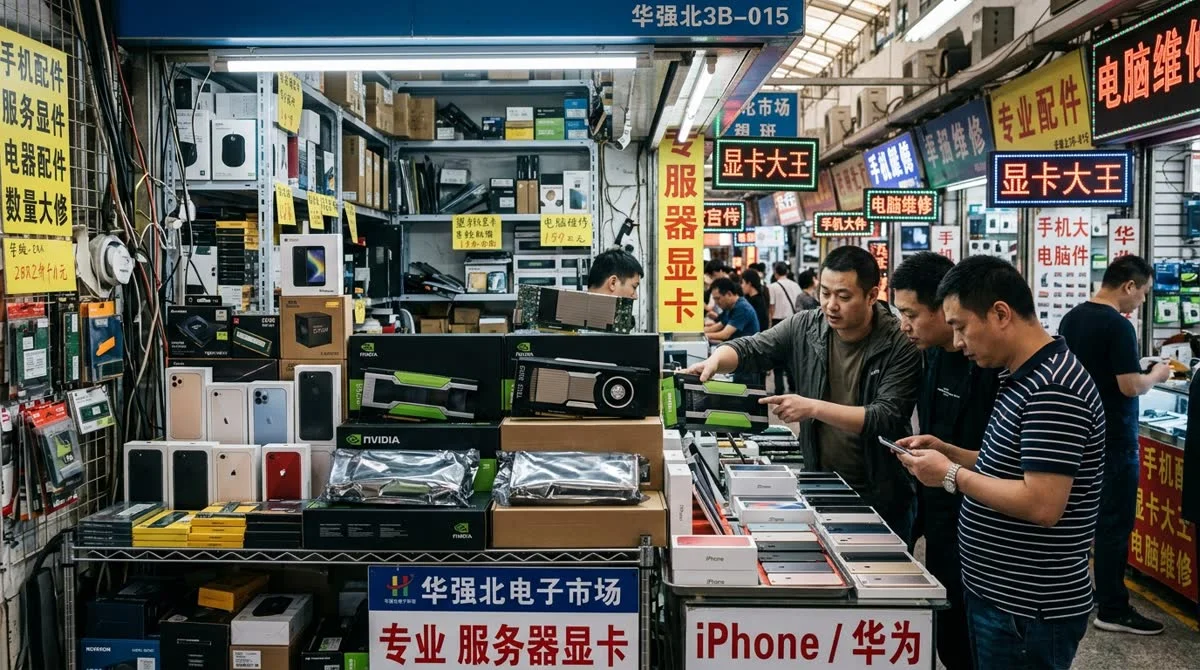
A co-founder of GPTunneL, a platform that provides access to Chinese AI models, spent eight days in China in early July 2026, meeting in turn with the teams at ByteDance, Z.ai, SiliconFlow and MiniMax. This is a report from the inside: negotiations every day, a server GPU market, and a store where humanoids are sold against a passport.
What ByteDance is preparing for July 10, 2026
ByteDance, the developer of TikTok and the Seedance video generation model, announced a new product launching on July 10, 2026. The authors are deliberately holding back exact details until the official release, but they point to the context: the launch fits a broader trend of cheaper flagship models. SiliconFlow and MiniMax are cutting prices at the same time, and competition among Chinese AI providers has become noticeably fiercer than a year ago.
One of the most telling moments of the trip came at the airport: one of the three people who met the authors turned out to own a company that sells data to OpenAI, Meta and Anthropic. It illustrates the real state of the market: Chinese and Western AI ecosystems remain deeply intertwined, despite the official technological rivalry between the two countries.
- Companies on the trip's agenda: ByteDance, Z.ai (GLM model), SiliconFlow, MiniMax
- ByteDance announced a new product release for July 10, 2026
- Z.ai is moving from NVIDIA to Huawei Ascend chips
- Server GPUs are sold in open markets in Shanghai next to consumer electronics
- Humanoid robots go on sale at retail, with a passport required
How Z.ai is moving from NVIDIA to Huawei
Z.ai, the team behind the GLM language model, one of the most powerful Chinese LLMs, is switching from NVIDIA chips to Huawei Ascend accelerators. The reason is straightforward: US export restrictions have cut off shipments of flagship H100 and H200 GPUs to China, and large labs have to rebuild their training infrastructure on alternative hardware. The transition is painful: Huawei's development ecosystem lags far behind the mature NVIDIA CUDA environment in tooling, documentation and support, but there are practically no alternatives.
Server graphics cards still turn up in open markets, though. The authors describe a Shanghai market where data-center-class cards lie on stalls next to iPhones and ordinary household electronics, a vivid illustration of how sanctions have reshaped the gray-market logistics of AI components.
"One of the people who met us at the airport turned out to own a company whose data is bought by
OpenAI, Meta and Anthropic" — from the GPTunneL report.
Robots against a passport, and
Beijing's cleaners still ahead
One of the most vivid episodes of the trip was a visit to a store that sells humanoid robots at retail, but only against a passport. In China this is already reality: you can walk in, pick a humanoid and buy it like a large household appliance. Still, the authors candidly note the gap between showroom shine and operational maturity: in real tasks, cleaning offices and city streets, human cleaners in Beijing still consistently beat their robotic counterparts. Industrial maturity for humanoids is still ahead.
What this means
Chinese AI in July 2026 is competitive models, an emerging chip base and parallel supply channels all at once. ByteDance, Z.ai and SiliconFlow are moving at the same speed as American labs, but by different rules: their own infrastructure, their own data, their own market. Watching this from the inside is a fundamentally different experience from reading analysis from the outside.
*Meta has been designated an extremist organization and is banned in Russia.
- Nov 1, 2026OpenAI Rewrites GPT Behavior Rules: Five Values and a Chain of Command
- Nov 1, 2026Google admits AI Mode cuts search revenue, shares fall 15%
- Oct 31, 2026Author puts his script before an AI jury: the verdict cost 850 thousand tokens
- Oct 31, 2026Anthropic: Fold Subagents Back Into a Single Loop — One Customer's Tasks Ran Twice as Fast
Key Questions Answered
What ByteDance is preparing for July 10, 2026?
ByteDance, the developer of TikTok and the Seedance video generation model, announced a new product launching on July 10, 2026. The authors are deliberately holding back exact details until the official release, but they point to the context: the launch fits a broader trend of cheaper flagship models. SiliconFlow and MiniMax are cutting prices at the same time, and competition among Chinese AI providers has become noticeably fiercer than a year ago. One of the most telling moments of the trip came at the airport: one of the three people who met the authors turned out to own
How Z.ai is moving from NVIDIA to Huawei?
Z.ai, the team behind the GLM language model, one of the most powerful Chinese LLMs, is switching from NVIDIA chips to Huawei Ascend accelerators. The reason is straightforward: US export restrictions have cut off shipments of flagship H100 and H200 GPUs to China, and large labs have to rebuild their training infrastructure on alternative hardware. The transition is painful: Huawei's development ecosystem lags far behind the mature NVIDIA CUDA environment in tooling, documentation and support, but there are practically no alternatives. Server graphics cards still turn up in
What are the key details on Robots against a passport, and Beijing's cleaners still ahead?
One of the most vivid episodes of the trip was a visit to a store that sells humanoid robots at retail, but only against a passport. In China this is already reality: you can walk in, pick a humanoid and buy it like a large household appliance. Still, the authors candidly note the gap between showroom shine and operational maturity: in real tasks, cleaning offices and city streets, human cleaners in Beijing still consistently beat their robotic counterparts. Industrial maturity for humanoids is still ahead.
Test Frontier LLMs & Autonomous Agents in One Workspace
Run Claude Opus 5.5, GPT-6, Gemini 3.1, and DeepSeek side-by-side in Nomad AI (nomadnet.ai) — unified model routing, deep research, and multimodal workflows under one subscription.
The AI world, distilled — once a week
Seven stories that actually mattered, hand-picked. No noise, no reposts, no press releases.
Done! Check your inbox for a confirmation.