Meta explains the difference between GPU, CPU, and its own MTIA chips in AI infrastructure
Meta explains what lies behind the term “computing power” in the world of AI. The company builds its AI infrastructure on three types of processors: GPU for training neural networks, CPU for managing system logic, and MTIA, its own custom chip for Meta workloads. Without this hardware, there would be no Llama models or personalized feeds in Facebook and Instagram. *Meta is recognized as an extremist organization and banned in the Russian Federation.
AI-processed from Meta Corporate News; edited by Hamidun News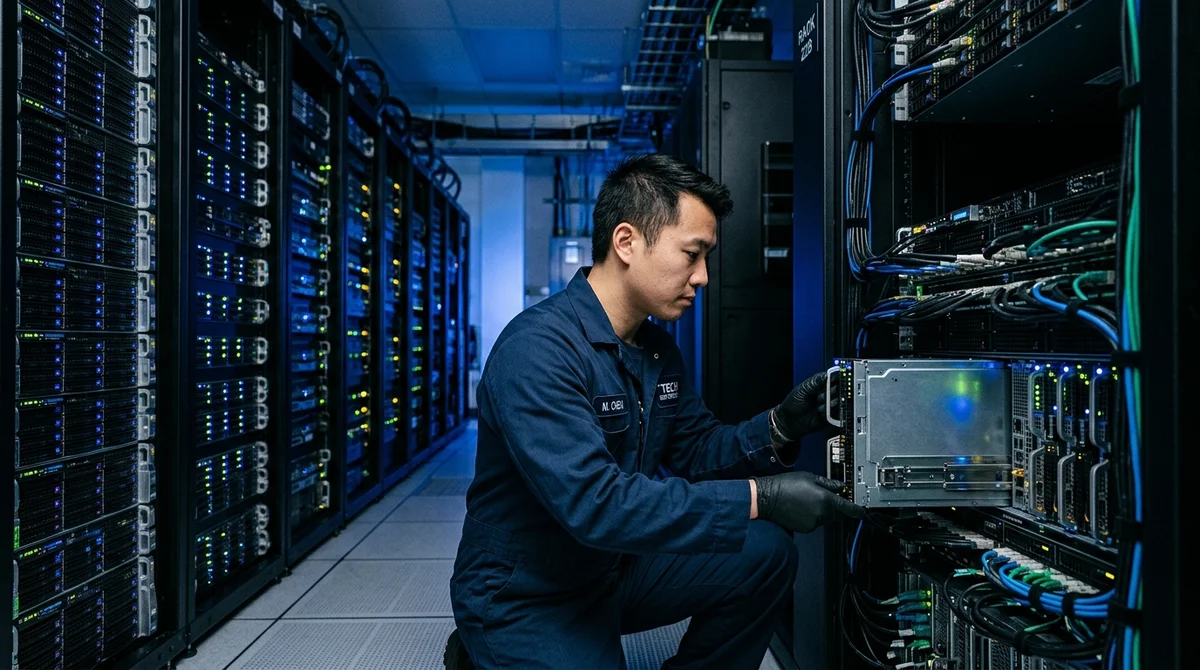
Why Meta Explains the Hardware
Meta has launched an educational series called 'Infrastructure Explained' — the company is publicly explaining what computational power is and how GPU, CPU, and its own MTIA chips enable its AI systems to work at the scale of billions of users.
The initiative fits into a broader transparency strategy: Meta consistently publishes materials about the inner workings of its AI systems — from data center architecture to the principles of recommendation algorithms.
Computational power — a term increasingly heard in CEO statements and quarterly investor reports, but rarely explained in simple language to a broad audience. In basic terms, compute power is the overall speed at which a system performs mathematical operations. The higher it is, the more complex models can be trained and the faster they run in production.
For an AI company, this is literally the foundation: without sufficient computational power, neither new models, nor instant responses to users, nor real-time recommendation feeds are possible.
The context of this publication is important: the world's largest technology companies are now actively competing for computational power. Meta plans to spend 60–65 billion dollars on AI infrastructure in 2025 alone — explaining why such sums are needed has become a necessity.
Three Types of Processors in Meta's Arsenal
Meta builds its AI infrastructure on a combination of three architectures, each of which performs its own role:
- GPU (graphics processors) — the primary workhorse for training neural networks. Thousands of parallel cores process matrix computations that form the basis of most AI algorithms. All versions of the open Llama model were trained on GPUs.
- CPU (central processors) — manage system logic, coordinate tasks, and process data that does not require massive parallelism.
- MTIA (Meta Training and Inference Accelerator) — Meta's own custom chip, created specifically for Meta's workloads: recommendation systems, content ranking in Facebook and Instagram, Llama model inference.
The combination of three architectures allows Meta to distribute the load optimally: not pushing expensive GPUs where CPUs will suffice, and deploying MTIA where specialized speed is needed with lower energy consumption.
Why Meta Builds Its Own Chips
Dependence on external suppliers — primarily NVIDIA — creates supply chain risks and limits opportunities for fine-tuning optimization for the company's specific tasks.
The GPU market has been operating under severe shortages for the past two years: waiting lists for new Hopper and Blackwell series stretched for months ahead.
Moreover, general-purpose chips must support a wide range of tasks, which inevitably means performance compromises.
MTIA was designed for Meta's specific models and computation patterns, which provides an advantage in efficiency and operational cost.
A proprietary chip allows Meta to:
- reduce inference cost through architecture tailored to specific models;
- accelerate development iterations without depending on third-party manufacturers' roadmaps;
- scale capacity without competing for scarce third-party chips;
- optimize energy consumption for its specific workload characteristics.
'We are convinced that this is one of the most important investments we are making right now,' said
Mark Zuckerberg, announcing plans to invest 60–65 billion dollars in AI infrastructure in 2025.
What This Means
Educational materials from Meta are not simply corporate PR. A company that can explain complex topics accessibly wins on multiple fronts: it attracts engineering talent, shapes the narrative for regulators, and strengthens developer-partner trust.
For the average user, such materials remind them: behind every AI assistant response or feed recommendation stands tons of physical hardware and billions of dollars in investments.
For the industry as a whole, it is a broader signal — custom silicon is no longer a privilege of Apple or Google: now every major AI company is building its own hardware, and its power will determine who sets the pace in the next generation of AI systems.
*Meta has been designated an extremist organization and is banned in Russia.
Want to stop reading about AI and start using it?
AI News is a curated feed of AI/tech news. Hamidun Academy teaches you to use AI systematically in your work.
The AI world, distilled — once a week
Seven stories that actually mattered, hand-picked. No noise, no reposts, no press releases.
Done! Check your inbox for a confirmation.