Meta considers launching cloud business to monetize AI infrastructure
Meta is considering launching a cloud service — the company wants to sell AI computing power from its infrastructure to external customers. Bloomberg reported internal negotiations on July 2, 2026. If the plan materializes, Meta will enter the cloud computing market and compete with AWS, Google Cloud, and Azure — the company already has its own MTIA AI chips and a global network of data centers, and Llama has attracted millions of developers worldwide.
AI-processed from Bloomberg Tech; edited by Hamidun News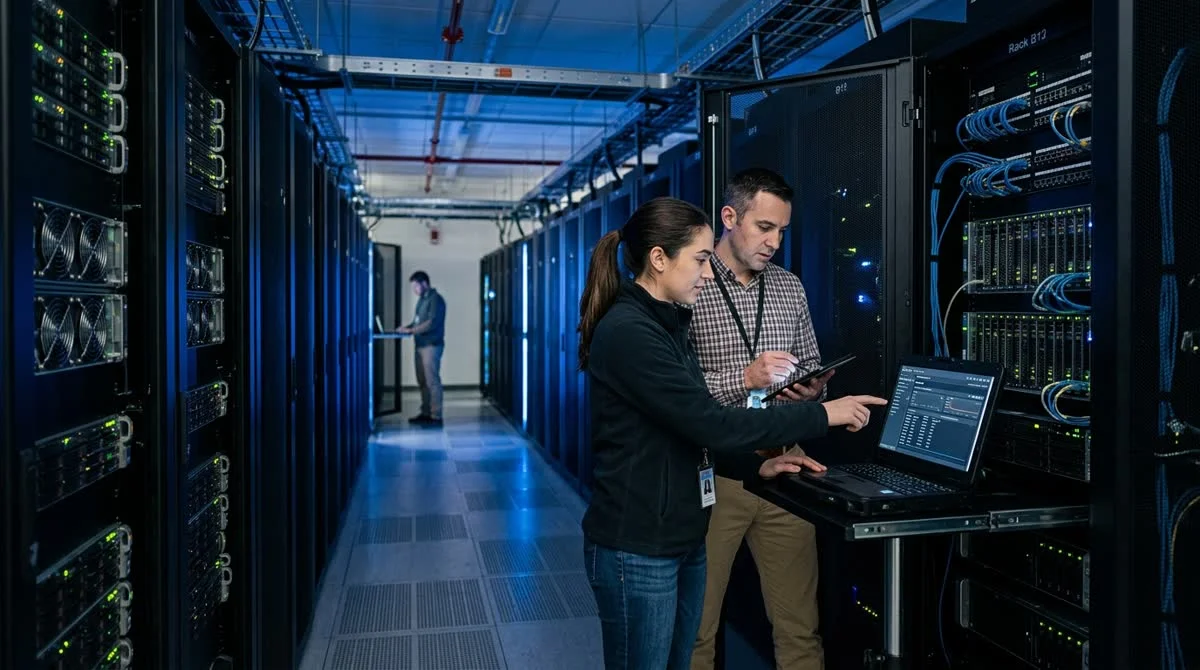
On July 2, 2026, Meta is exploring the possibility of launching a cloud business — Bloomberg reported that the company is internally discussing the sale of AI computing resources to external customers to monetize years of investment in servers, chips, and data centers that have so far operated exclusively for Meta's own needs.
Why Meta is Looking at Cloud?
For several years, Meta has been steadily building computing infrastructure at rates comparable to major cloud providers. The company is constructing data centers across multiple continents, developing its own AI chips in the MTIA series (Meta Training and Inference Accelerator), and purchasing GPUs at industrial scale annually. Meta's capital expenditure on infrastructure amounts to tens of billions of dollars per year and continues to grow along with the company's AI ambitions.
All of this infrastructure has so far operated exclusively for internal needs: training language models of the Llama family, recommendation algorithms in Instagram and Facebook, and generative AI in WhatsApp and Messenger. Returns on investments were indirect — smarter algorithms kept users in the ecosystem, which increased advertising targeting efficiency, and advertising remains Meta's primary source of income.
Now the company is asking a different question: why not sell these capacities directly? The precedent is well known. In the early 2000s, Amazon built server infrastructure for its own retail business, and when it realized it had excess capacity, it created AWS. Today, AWS brings Amazon over $100 billion per year and remains the world's largest cloud provider. Meta sees in this model an opportunity to justify the scale of AI capital investments to investors.
What Meta Has — and What It Still Lacks
Most companies that tried to enter the cloud market after the formation of the "big three" (AWS, Azure, Google Cloud) stumbled on the problems of scale and corporate trust. Meta's situation is fundamentally different.
- Bloomberg report date: July 2, 2026
- Status: internal discussion, no official statements
- Own AI chips: MTIA series — partial independence from NVIDIA supply chain
- Open models: Llama — millions of downloads, broad global developer ecosystem
- Competitors: AWS, Google Cloud, Microsoft Azure, Oracle Cloud, CoreWeave
Meta has two structural advantages. First — MTIA chips: they reduce dependence on the NVIDIA supply chain and potentially allow offering competitive prices for inference tasks. Second — the Llama ecosystem: open language models have already attracted developers worldwide, and this audience could become a ready entry point for corporate cloud customers.
"The company is considering a cloud business to monetize AI capacities," —
Bloomberg, July 2, 2026
The weaknesses are also obvious. Entering the cloud market is not the same as renting servers. You need SLA agreements with guaranteed uptime, round-the-clock technical support, enterprise sales, compliance, and complex billing infrastructure. AWS built all of this over nearly twenty years. Meta has neither this experience nor a reputation as a reliable cloud provider in the corporate segment.
What This Means
The AI computing market in 2025–2026 is experiencing acute scarcity: companies worldwide are seeking GPU capacity for training and inference of LLMs, and major providers cannot keep up with demand. In this context, Meta with its own chips and global infrastructure could occupy a significant niche — especially among developers already working with Llama.
For AWS and Google Cloud, this would be an atypical competitor: a company for which cloud is not the primary business, but monetization of a side asset. This means the possibility of aggressive pricing without harm to the core P&L. While Bloomberg only reports on internal negotiations — but the logic is clear: Meta is preparing to turn infrastructure spending into an independent source of revenue.
*Meta is recognized as an extremist organization and is banned in the Russian Federation.
Need AI working inside your business — not just in your newsfeed?
I build production AI for companies — custom CRM, internal tools, autonomous agents, workflow automation. Owned by you, shaped to your process, no per-seat tax. Built by Zhemal Khamidun, CPO of AlpinaGPT (AI platform, 6,000+ users).
The AI world, distilled — once a week
Seven stories that actually mattered, hand-picked. No noise, no reposts, no press releases.
Done! Check your inbox for a confirmation.