U.S. restricts foreigners' access to Anthropic — Europe alarmed ahead of G7
On the eve of VivaTech in Paris and the G7 summit in Evian, the U.S. tightened foreign nationals' access to Anthropic's advanced models. Europe arrived at its own tech event with 180,000 attendees — and was immediately reminded of its dependence on American AI platforms. Digital sovereignty became the main topic in side conversations.
AI-processed from TNW; edited by Hamidun News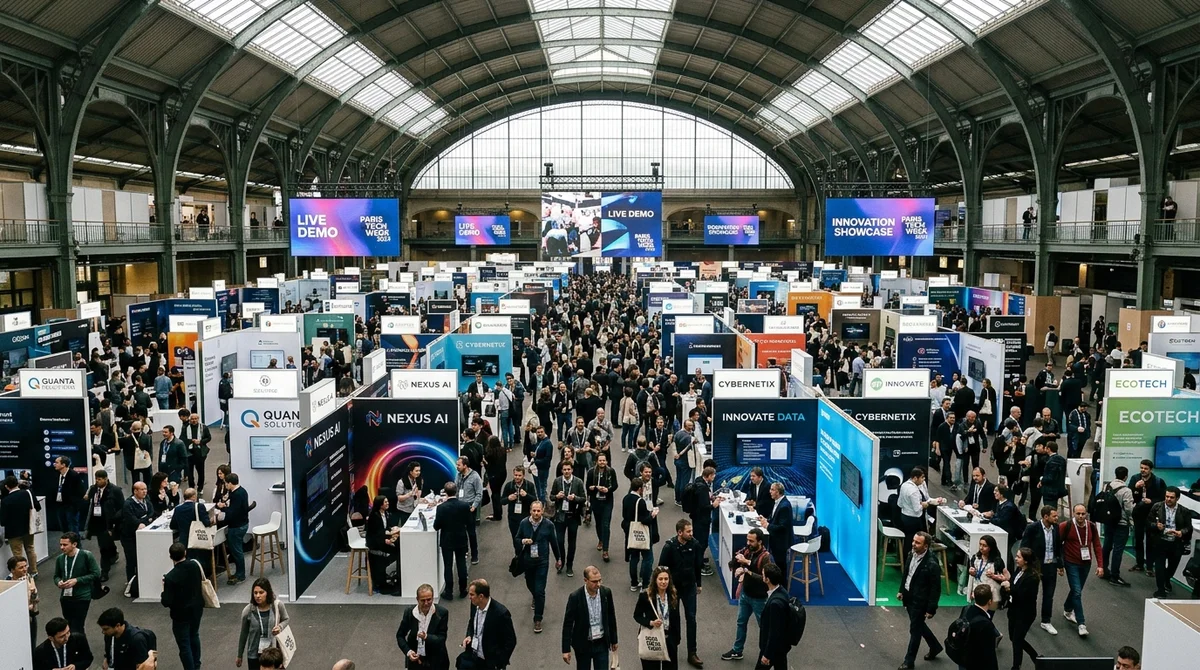
On the eve of two of Europe's largest technology events — the VivaTech conference in Paris and the G7 summit in the resort town of Evian-les-Bains — the US tightened access to Anthropic's most advanced models for foreign nationals. The timing was far too telling to ignore.
A double blow to Europe's sense of agency
In the days before more than 180,000 participants filled the VivaTech exhibition halls, and while G7 leaders were still settling in around the table by the lake in Evian, Washington quietly tightened the rules: foreign nationals lost full access to Anthropic's most powerful tools. Europe came to its own technology party — and was immediately reminded of who really makes the rules here.
This is not the first such incident and, in all likelihood, won't be the last. Export restrictions on American AI chips, strict control over language models, closed or conditionally open APIs — it all adds up to a system that Americans themselves are slow to call policy, but which is de facto one. Each such step narrows the space for Europe's technological autonomy.
What was discussed in Paris and Evian
VivaTech is more than just a startup exhibition: it's a showcase of European ambitions in technology. This time, discussions about digital sovereignty were particularly relevant — against the backdrop of literally fresh news from Washington. The event brought together European entrepreneurs, venture investors, and representatives of American BigTech, but the theme of dependency took center stage this time, rather than remaining behind closed doors.
- Over 180,000 participants from more than 180 countries
- Dozens of sessions dedicated to the European AI Act and the EU's regulatory agenda
- Heated discussions about financing their own computing infrastructure
- Calls for building a "European AI stack" — from chip production to foundational models
- A parallel G7 track in Evian focused on AI safety and international technology governance
It was precisely in Evian-les-Bains that G7 leaders discussed AI in a broad geopolitical context. Europe is increasingly pushing for real participation in making technology decisions — not just the role of a regulator who studies others' products and enacts laws after the fact.
Anthropic as a mirror of dependency
The US decision to restrict access to Anthropic's advanced models for foreign nationals became a concrete and tangible example of what dependency on American AI platforms means in real life. Anthropic is a private company, but American legislation, investment climate, and export norms de facto turn it into an instrument of national technology policy. European companies that built Anthropic's API into their products found themselves in a situation where rules change without their participation or warning.
Notably, Anthropic is considered one of the most "open" American AI companies from the perspective of European-American relations. If restrictions have affected its products — no American platform is immune to similar measures.
"Europe arrived at its own party, just having been reminded," — as
The Next Web aptly puts it.
What it means
The question of AI sovereignty has ceased to be academic. Concrete steps by Washington — chip export controls, restrictions on model access, rules for infrastructure use — show that technological superiority is actively being used as an instrument of geopolitical influence. Europe faces a choice: invest in its own technology stack or remain a consumer with limited access rights — and accordingly limited sovereignty.
Need AI working inside your business — not just in your newsfeed?
I build production AI for companies — custom CRM, internal tools, autonomous agents, workflow automation. Owned by you, shaped to your process, no per-seat tax. Built by Zhemal Khamidun, CPO of AlpinaGPT (AI platform, 6,000+ users).
The AI world, distilled — once a week
Seven stories that actually mattered, hand-picked. No noise, no reposts, no press releases.
Done! Check your inbox for a confirmation.