China prepares reciprocal measures: foreigners may lose access to advanced AI models
Chinese authorities met with leading AI developers and discussed possible restrictions on foreigners' access to advanced models — along the lines of what Anthropic did in the US. Qwen (Alibaba), Ernie (Baidu), and DeepSeek could be affected. Details of the measures and the timeline have not yet been disclosed.
AI-processed from 3DNews AI; edited by Hamidun News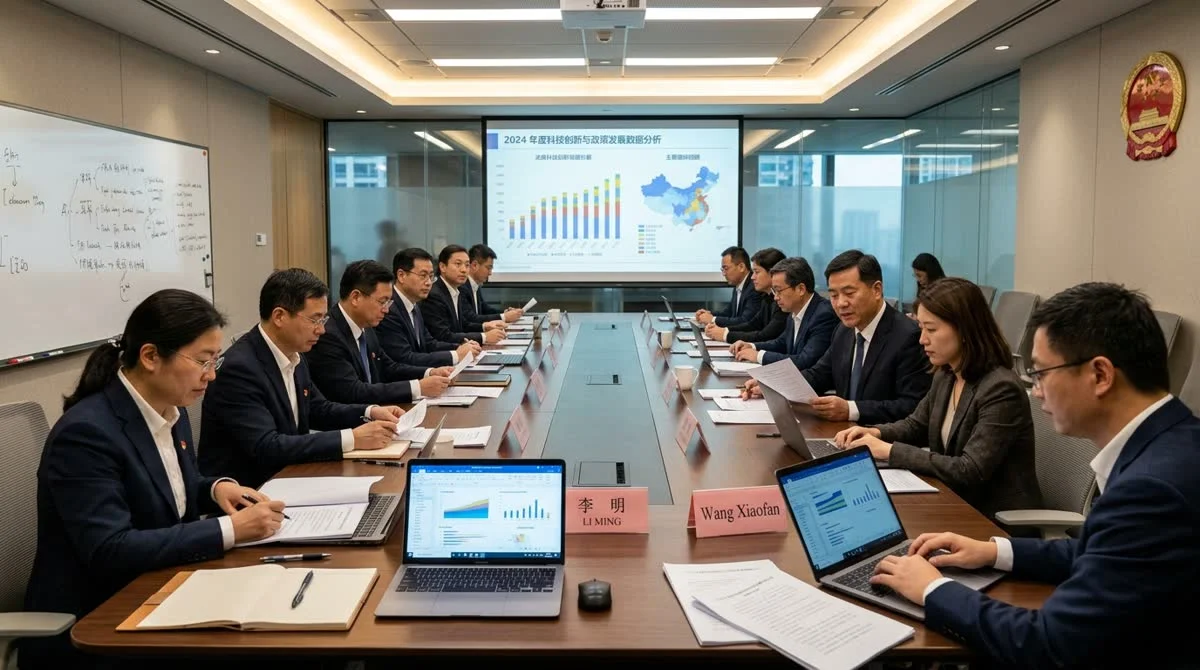
Chinese authorities held meetings with leading domestic AI model developers and discussed possible restrictions on foreign users' access to advanced systems, Reuters reports. The initiative is viewed as a direct response to similar measures by the United States.
What exactly is being discussed
In early July 2026, Chinese government officials held negotiations with major players in the domestic AI market. The discussion focused on a possible mechanism restricting foreign citizens' access to the most advanced Chinese models. Details have not yet been disclosed: it remains unclear which specific companies will be affected, which models are under discussion, and what timeline the restrictions might take effect.
Over the past two years, China has built a powerful stack of its own frontier systems: Qwen from Alibaba, Ernie Bot from Baidu, a series of models from ByteDance and DeepSeek, which has gained widespread international recognition. Many of these systems are available through open APIs to developers worldwide. Unlike Western counterparts, some Chinese models are distributed with open weights, making them particularly sought after by teams seeking to avoid dependence on proprietary platforms.
Key facts:
- Government meetings with AI companies took place in early July 2026
- Restrictions on foreign access to advanced models are under discussion—following the US model
- Alibaba, Baidu, ByteDance, DeepSeek, and other leading developers may be subject to these measures
- Specific parameters, company list, and timelines have not been announced as of publication
Why now
The direct precedent for Beijing came from Anthropic. The American developer temporarily restricted foreign users' access to its advanced models—including Claude—citing national security concerns. This decision fits into Washington's broader strategy: the US is consistently tightening control over AI technology exports, viewing access to powerful language models as a strategic resource on par with high-performance semiconductors.
Beijing has interpreted Anthropic's move as a precedent and a call to action. A characteristic dynamic of the current technological race between the two powers: one side's action immediately produces a symmetric response from the other. The fundamental novelty—restrictions now apply not to chips and hardware, but directly to the neural network models themselves.
"The story of Anthropic's temporary restriction on foreign citizens' access to advanced models in the US apparently inspired Chinese officials to take mirror measures,"
Reuters states.
Who will be affected by the restrictions
Foreign developers and companies that have built products on top of Chinese AI will be the first to be affected. For a number of Western startups and research groups, Alibaba and DeepSeek models have effectively become cheap or free alternatives to GPT and Claude with comparable quality. Access restrictions will create a serious operational problem for them: they will have to either migrate to other platforms or establish corporate partnerships with the Chinese side. The Russian market is also at risk: Chinese models have acquired a notable audience there as an alternative to blocked Western services.
The Chinese companies themselves also face reputational risk. DeepSeek became an international phenomenon thanks to its openness—the model can be downloaded, deployed locally, used via API without geographic barriers. Introducing restrictions would negate precisely this competitive advantage: the openness that distinguished Chinese AI from closed Western counterparts.
What this means
Restricting access to AI models is emerging as an independent geopolitical tool—the third after semiconductor export controls and cloud service restrictions. If measures are introduced in parallel by both the US and China, the global AI market risks ultimately splitting into two incompatible blocs—without shared technologies, compatible licenses, or unified access standards.
Build & Ship Production AI Apps with Vibe Coding
Join Zhemal Khamidun's hands-on Vibe Coding Intensive at hamidun.com/vibecoding — master Claude Code, Cursor, and autonomous agentic workflows.
The AI world, distilled — once a week
Seven stories that actually mattered, hand-picked. No noise, no reposts, no press releases.
Done! Check your inbox for a confirmation.