Uber ends its Waymo robotaxi partnership in Phoenix and looks for a new partner
Uber has officially ended its robotaxi partnership with Waymo in Phoenix, one of the main testing grounds for driverless cars in the US. The two companies were partners and competitors at once: Waymo runs as a standalone service, while Uber wants to become an aggregator for all autonomous platforms. Uber promises to announce a new partner to replace Waymo. The name has not been disclosed yet.
AI-processed from Bloomberg Tech; edited by Hamidun News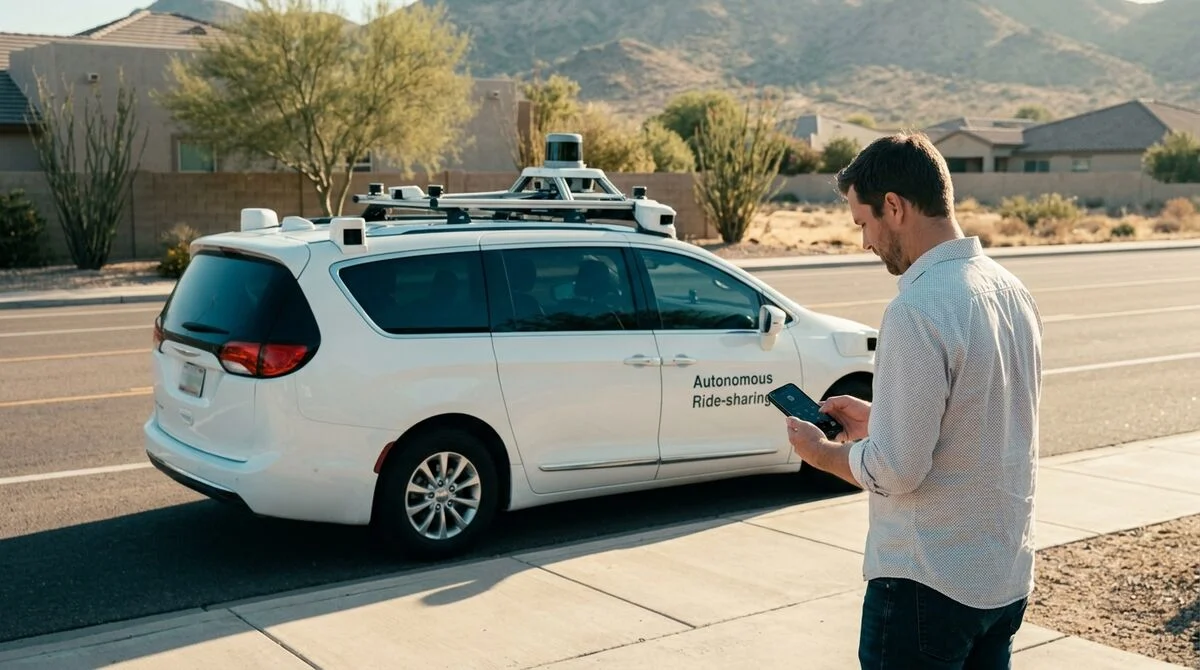
Uber has announced the end of its joint robotaxi service with Waymo in Phoenix, one of the key US cities for testing driverless transport. The company is now preparing to announce a new partner in autonomous vehicles.
The end of the Phoenix experiment
The Uber–Waymo partnership in Phoenix was one of the first large-scale attempts to integrate autonomous cars into a mainstream ride-hailing app. Users could summon a robotaxi directly from the familiar Uber interface, without installing the separate Waymo One app.
Phoenix is no accident as a location for this kind of experiment. A hot, dry climate with little rain, wide straight arterial roads and relatively predictable traffic make it one of the most convenient proving grounds for autonomous driving. It is here that Waymo has logged millions of kilometers and launched one of the world's first fully commercial robotaxi services with no safety driver behind the wheel.
Partners and competitors at the same time
The Uber–Waymo relationship was always unconventional. On one hand, there was cooperation: Waymo supplied the fleet and the autonomous technology, while Uber brought its customer base and a proven payment infrastructure. On the other, there was obvious competition: Waymo One operates as a standalone app and competes directly for passengers.
This duality is typical of the whole industry at its current stage. Autonomous platforms need traffic, which aggregators provide. Aggregators need self-driving technology, which companies like Waymo provide. But as robotaxi services scale up, each player is increasingly trying to control the end user.
Notably, the partnerships in Austin and Atlanta remain in place for now. Phoenix is the first city where the cooperation has been wound down.
A new partner on the horizon
Uber has not disclosed the name of its next robotaxi partner in Phoenix, promising an announcement soon. The company has been steadily adding partnerships so as not to depend on a single supplier:
- Waymo (Austin, Atlanta): partnership remains in place
- Motional and May Mobility: existing agreements in other cities
- Nuro: cooperation on autonomous delivery
- A number of European mobility startups
The strategy is clear: become a neutral robotaxi aggregator, regardless of whose cars are under the hood. The more suppliers, the lower the dependence on any one of them.
"We continue to develop partnerships with leading autonomous driving companies around the world,"
Uber stressed.
What this means
The break in Phoenix is not the end of the Uber–Waymo relationship, but it is a telling symptom. As robotaxis move from experiments to a real business with hundreds of thousands of rides, the question of who owns the relationship with the passenger, the aggregator or the autonomous technology developer, becomes ever more pressing. The answer will shape the balance of power in the industry for years to come.
- Nov 1, 2026Google's StreamVibe video agent beats other models by 10.7% on response timing and quality
- Nov 1, 2026New test catches hidden AI agent collusion by measuring how a partner reacts to a paraphrase
- Nov 1, 2026Illinois compiled 12 151 open problems and tested whether AI can solve them
- Oct 31, 2026AI engineer writes a single reward function for agent teams: win rate climbs from 51% to 90%
Key Questions Answered
What are the key details on The end of the Phoenix experiment?
The Uber–Waymo partnership in Phoenix was one of the first large-scale attempts to integrate autonomous cars into a mainstream ride-hailing app. Users could summon a robotaxi directly from the familiar Uber interface, without installing the separate Waymo One app. Phoenix is no accident as a location for this kind of experiment. A hot, dry climate with little rain, wide straight arterial roads and relatively predictable traffic make it one of the most convenient proving grounds for autonomous driving. It is here that Waymo has logged millions of kilometers and launched one
What are the key details on Partners and competitors at the same time?
The Uber–Waymo relationship was always unconventional. On one hand, there was cooperation: Waymo supplied the fleet and the autonomous technology, while Uber brought its customer base and a proven payment infrastructure. On the other, there was obvious competition: Waymo One operates as a standalone app and competes directly for passengers. This duality is typical of the whole industry at its current stage. Autonomous platforms need traffic, which aggregators provide. Aggregators need self-driving technology, which companies like Waymo provide. But as robotaxi services scal
What are the key details on A new partner on the horizon?
Uber has not disclosed the name of its next robotaxi partner in Phoenix, promising an announcement soon. The company has been steadily adding partnerships so as not to depend on a single supplier: Waymo (Austin, Atlanta): partnership remains in place Motional and May Mobility: existing agreements in other cities Nuro: cooperation on autonomous delivery A number of European mobility startups The strategy is clear: become a neutral robotaxi aggregator, regardless of whose cars are under the hood. The more suppliers, the lower the dependence on any one of them. "We continue to
Test Frontier LLMs & Autonomous Agents in One Workspace
Run Claude Opus 5.5, GPT-6, Gemini 3.1, and DeepSeek side-by-side in Nomad AI (nomadnet.ai) — unified model routing, deep research, and multimodal workflows under one subscription.
The AI world, distilled — once a week
Seven stories that actually mattered, hand-picked. No noise, no reposts, no press releases.
Done! Check your inbox for a confirmation.