NVIDIA explains how to govern autonomous agents in enterprise AI factories
AI agents left the chat window long ago. They review code, run tests, read corporate documents and work for hours on an employee's behalf. That opens access to sensitive data and systems, which means clear governance rules are required. NVIDIA has laid out how to build a secure, controllable environment for agents in enterprise AI factories.
AI-processed from NVIDIA Developer Blog; edited by Hamidun News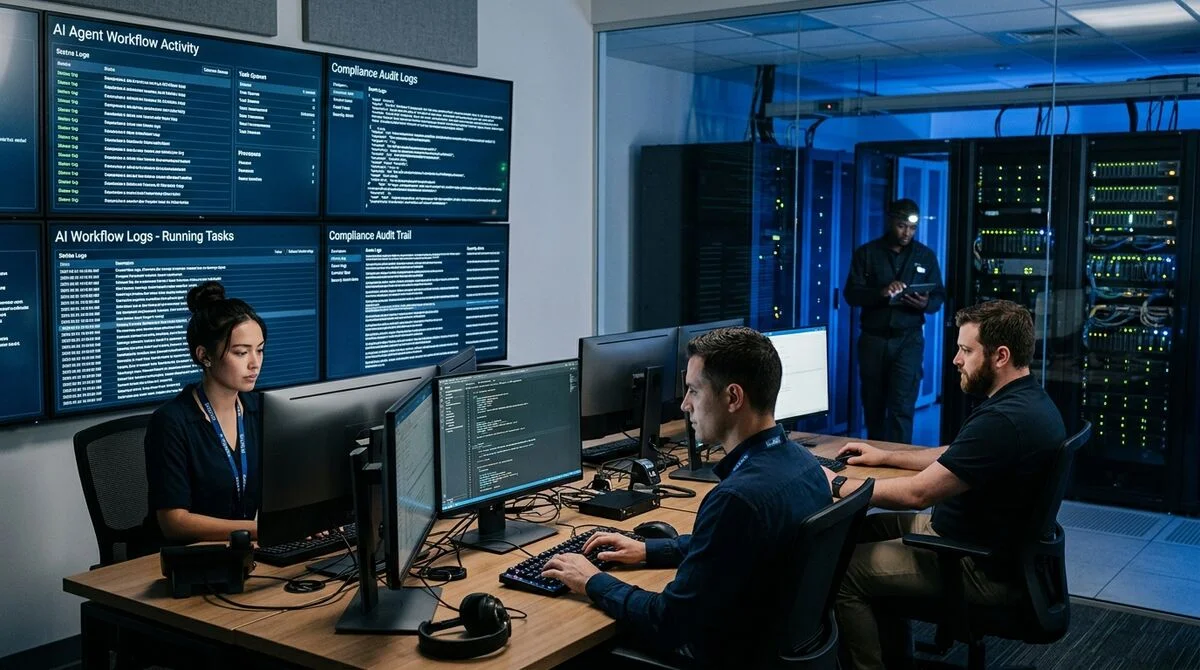
AI agents are no longer just chatbots. They review code, run tests, read documents, crawl knowledge bases, call internal systems and can work for hours on an employee's behalf, which means corporate security has to be rebuilt alongside them.
An agent is more than a single request
A modern AI agent does not execute one request but a whole chain of actions: it reads a document, finds the right database, draws a conclusion, runs a script, all without constant human involvement. This mode of work significantly boosts productivity, but the surface area of potential threats grows with it.
An agent can reach sensitive corporate data: source code, financial reports, customers' personal data. It acts on behalf of a specific user, so its actions must be limited to that user's permissions, not the full range of permissions available in the system. Today most companies do not enforce this.
Duration is a separate problem. A normal request takes seconds, while an agent may work on a task for several hours. In that time conditions can change, new data can appear, or an erroneous branch can emerge in its logic. Control is needed not only at the start but throughout, up to and including the ability to stop the agent in an emergency.
Five principles of secure deployment
NVIDIA identifies several key layers at which agent governance should operate in an enterprise environment:
- Identity and authentication: every agent must have a verifiable identifier so it is possible to establish exactly who performed a given action
- Least privilege: the agent gets access only to the resources needed for the current task
- Audit and tracing: all actions are logged in a format suitable for review and replay
- Data isolation: agents do not mix information from different projects, users or security perimeters
- Real-time control: there must be a technical way to interrupt an agent that takes unwanted actions
Without these principles, even the most productive agent becomes an uncontrolled source of risk. Regulators in the financial and healthcare sectors are already asking not what agents can do, but whether they can be audited and whether someone can be held accountable for their decisions.
AI factory architecture
In NVIDIA's interpretation, an "AI Factory" is infrastructure in which agents are not merely running but embedded in a managed pipeline, from receiving a task to a verified result. It is not just a set of tools but a process model with a clear division of responsibility.
An orchestrator determines which agent performs which step. Each agent works in its own isolated environment with limited permissions. The results of each step are checked before being passed to the next stage. The whole process is logged and can be replayed for an audit or an incident investigation.
"Agents need more than infrastructure to run on.
They need an environment where their actions can be understood, verified and, if necessary, rolled back."
This approach is especially critical for financial and healthcare companies, as well as legal departments. But even in less regulated sectors, a data leak through an autonomous agent can cost more than everything saved by not building secure infrastructure.
What this means
Enterprises deploying AI agents will have to think not only about efficiency but about governability. Tools, roles, logs and access policies are becoming a mandatory part of agent architecture.
Companies that build this infrastructure now will gain a significant advantage when scaling and will avoid painful incidents in the early stages.
- Nov 1, 2026Adobe's EditAgent judge picks a usable edit 81.3% of the time, versus 74.8% for EditScore
- Nov 1, 202616 models tested on 7 search tools: Exa averaged 10.5 out of 14, SearXNG about 3
- Nov 1, 2026Google's StreamVibe video agent beats other models by 10.7% on response timing and quality
- Nov 1, 2026New test catches hidden AI agent collusion by measuring how a partner reacts to a paraphrase
Key Questions Answered
What are the key details on An agent is more than a single request?
A modern AI agent does not execute one request but a whole chain of actions: it reads a document, finds the right database, draws a conclusion, runs a script, all without constant human involvement. This mode of work significantly boosts productivity, but the surface area of potential threats grows with it. An agent can reach sensitive corporate data: source code, financial reports, customers' personal data. It acts on behalf of a specific user, so its actions must be limited to that user's permissions, not the full range of permissions available in the system. Today most c
What are the key details on Five principles of secure deployment?
NVIDIA identifies several key layers at which agent governance should operate in an enterprise environment: Identity and authentication: every agent must have a verifiable identifier so it is possible to establish exactly who performed a given action Least privilege: the agent gets access only to the resources needed for the current task Audit and tracing: all actions are logged in a format suitable for review and replay Data isolation: agents do not mix information from different projects, users or security perimeters Real-time control: there must be a technical way to int
What are the key details on AI factory architecture?
In NVIDIA's interpretation, an "AI Factory" is infrastructure in which agents are not merely running but embedded in a managed pipeline, from receiving a task to a verified result. It is not just a set of tools but a process model with a clear division of responsibility. An orchestrator determines which agent performs which step. Each agent works in its own isolated environment with limited permissions. The results of each step are checked before being passed to the next stage. The whole process is logged and can be replayed for an audit or an incident investigation. "Agent
Test Frontier LLMs & Autonomous Agents in One Workspace
Run Claude Opus 5.5, GPT-6, Gemini 3.1, and DeepSeek side-by-side in Nomad AI (nomadnet.ai) — unified model routing, deep research, and multimodal workflows under one subscription.
The AI world, distilled — once a week
Seven stories that actually mattered, hand-picked. No noise, no reposts, no press releases.
Done! Check your inbox for a confirmation.