MIT developed a spatial memory system for robots — they will remember where your keys are
MIT scientists created a spatial memory system for robots that remembers where household items are while the machine moves through a room. The algorithm does not capture the entire field of view, only important details about objects: shape, position, context. This allows the robot to remember where keys or glasses were last left — without excessive load on the processor. A first step toward true home assistant robots.
AI-processed from MIT News; edited by Hamidun News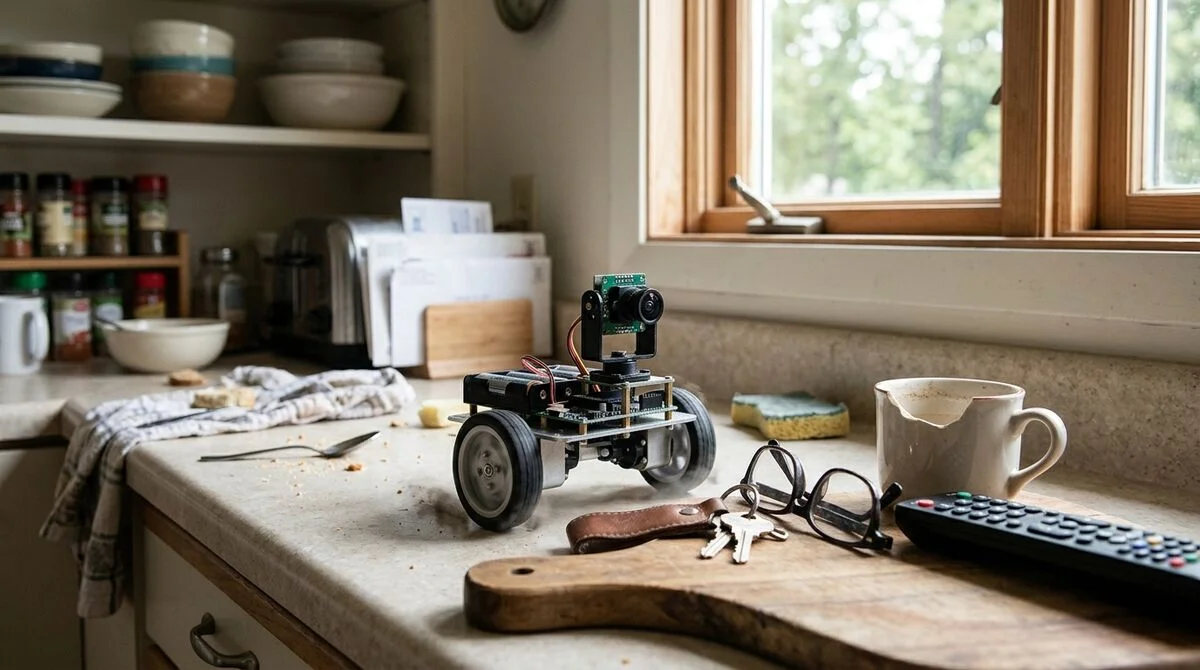
Researchers at MIT have developed a new spatial memory system for robots. It efficiently captures details about objects that a machine notices while navigating through rooms — and opens the path toward robots that truly understand home environments.
How the System Works
Spatial memory for robots is a challenge that researchers have been solving for many years. The classical approach is to build a complete 3D map of a space and overlay semantic labels of objects onto it. The method works in laboratory conditions, but scales poorly to real homes: there are too many objects, the environment constantly changes, and typical household robots have limited computational resources.
MIT's system proposes a different principle. Instead of continuous scanning, the algorithm focuses on efficiently capturing information about specific items: their shape, position, and environmental context. As the robot moves through rooms, the system builds not a geometric, but an object-oriented map of the space — and does so without excessive computation. This approach is fundamentally more efficient than standard solutions: the system stores what matters, not everything that falls into the camera's field of view.
Why a Robot Needs to Remember Where the Keys Are
The title of MIT's publication — "Could AI Tell You Where You Left Your Keys?" — precisely frames the task. This very ability — to remember the location of everyday objects — is considered one of the critical gaps in home robotics. Modern robots can do a lot: map spaces, navigate around obstacles, return to charging. But remembering that three hours ago the keys were on the table and now they're gone — most systems can't do that. Objects in a real house are constantly moving, and tracking them requires a special spatiotemporal database, which MIT's system allows building in the background.
The new system enables a robot to:
- remember objects upon first detection and update information on repeat visits
- distinguish similar items by context and typical location
- build a semantic map on top of the geometric one — where things usually are
- track object movements over time
- store the spatial history of objects without excessive processor load
Next Steps for Home Robots
Robot vacuums have become a mass-market product and navigate space well. But their understanding of the home environment remains purely geometric: they know where the walls are, but not where your things are. The gap between "a robot moves around the house" and "a robot helps in the house" is exactly here. MIT's system closes a critical functional gap.
A robot that has traversed an apartment with such a system will be able not only to create a floor plan, but also to answer everyday questions: where was the remote last seen, where are glasses usually kept. The scope of applications extends beyond home environments: warehouses, hospitals, facilities for the elderly — anywhere it matters to know the location of specific objects.
"Could AI
Tell You Where You Left Your Keys?" — this is exactly the question MIT places at the center of its work.
What It Means
Spatial memory is one of the key components that household robots lack. MIT's development makes this component efficient and practical even for devices with limited resources. If the system proves itself under real-world conditions, it could significantly accelerate the emergence of a new generation of home assistant robots — ones that truly help, rather than simply rolling across the floor.
Want to stop reading about AI and start using it?
AI News is a curated feed of AI/tech news. Hamidun Academy teaches you to use AI systematically in your work.
The AI world, distilled — once a week
Seven stories that actually mattered, hand-picked. No noise, no reposts, no press releases.
Done! Check your inbox for a confirmation.