Samsung cut product testing time from 15 days to 2 with digital twins
Samsung reduced product testing time from 15 days to 2 — a 7.5-fold reduction — thanks to digital twin technology and AI. Algorithms simulate product behavior before physical assembly, identifying defects at the design stage. By 2030, the company plans to deploy the technology at all its plants in Korea and abroad.
AI-processed from 3DNews AI; edited by Hamidun News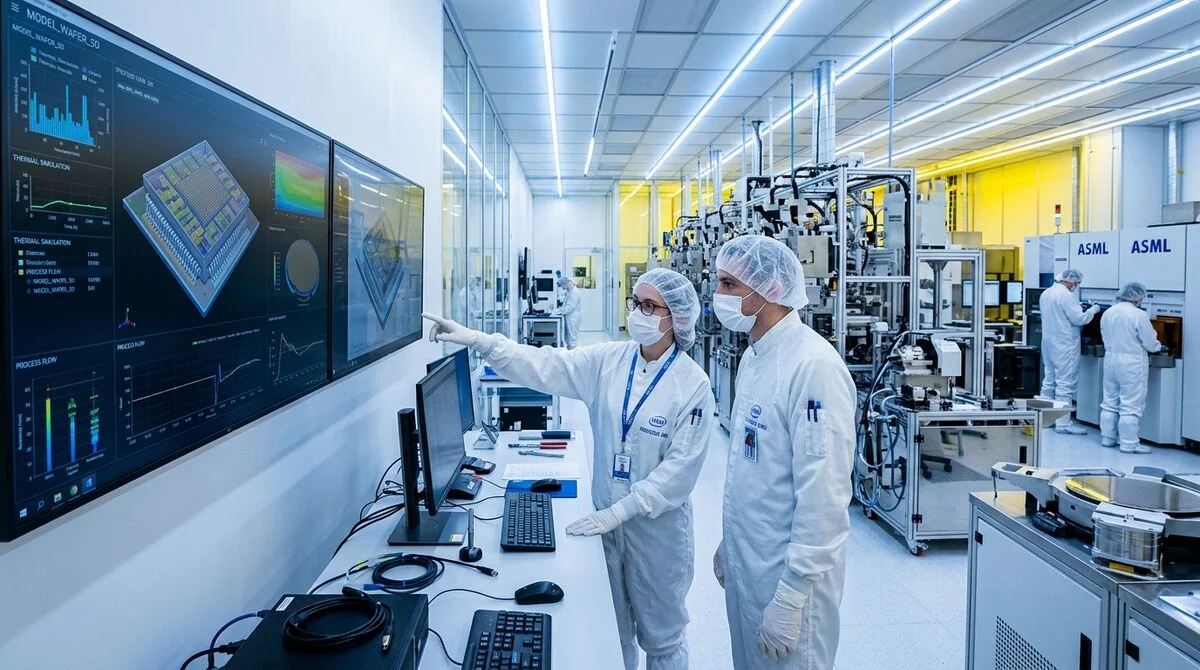
Samsung Electronics uses digital twin technology and artificial intelligence to radically accelerate the production cycle. The main result is already visible: the time to test electronic products has been reduced from 15 to 2 days — more than sevenfold. By 2030, the company intends to scale this technology across all its facilities worldwide.
How Digital Twins Work
A digital twin is a virtual model of a physical object or production process that can be tested, modified, and optimized in a software environment without creating real prototypes. Unlike traditional testing, which requires physical samples and test benches, a digital version allows engineers to run thousands of scenarios involving load, temperature, vibration, and wear in just hours. Samsung embeds machine learning algorithms in these models, which are trained on historical test data.
The system builds predictive forecasts of component behavior under non-standard operating conditions and automatically identifies design weaknesses at the design stage itself. This means defects are eliminated before the first real product comes off the production line — rather than after costly physical testing. This shift in methodology is what enabled the company to reduce the finished product verification cycle from 15 working days to two.
By the standards of large-scale electronics manufacturing, this is not just acceleration — it is a transition to a qualitatively different mode of operation, in which the product reaches consumers faster and manufacturing defects are reduced at the earliest stage.
Scaling Strategy Through 2030
By 2030, Samsung plans to cover all its factories — both within South Korea and at overseas facilities — with AI technologies and digital twins. South Korean media characterize this initiative as a key element of the company's long-term manufacturing digitalization strategy. The scope of the transformation will touch several areas:
- Semiconductor fabrication plants in Korea and the US
- Assembly lines for Galaxy smartphones and home appliances
- International manufacturing hubs in India, Vietnam, and other countries
- Logistics and supply chain management
- Incoming and outgoing quality control systems
This is not a point pilot project — it is about systemic restructuring of the production architecture of one of the world's largest technology conglomerates.
Testing Speed as a Competitive Asset
For electronics manufacturers, testing time is one of the main bottlenecks in the operational cycle. A company that completes verification of a new product in 2 days instead of 15 brings updated products to market significantly sooner than competitors, responds faster to identified defects, and spends fewer resources on physical testing. In the smartphone and semiconductor sector, where product lines update annually and schedule slippage can cost market share, sevenfold acceleration of testing is a sustainable structural advantage that accumulates with each production cycle. Digital twin technology has long been used in aviation and automotive — Samsung is deploying it to consumer electronics at industrial scale.
What This Means
Samsung sets a concrete benchmark for industrial AI: not "smart factory" as a marketing slogan, but a measurable result — minus 13 days of testing per product. Competitors in the consumer electronics and semiconductor sector will have to move in the same direction or accept growing lag in product launch speed.
Need AI working inside your business — not just in your newsfeed?
I build production AI for companies — custom CRM, internal tools, autonomous agents, workflow automation. Owned by you, shaped to your process, no per-seat tax. Built by Zhemal Khamidun, CPO of AlpinaGPT (AI platform, 6,000+ users).
The AI world, distilled — once a week
Seven stories that actually mattered, hand-picked. No noise, no reposts, no press releases.
Done! Check your inbox for a confirmation.