Erin Brockovich declares war on AI data centers: “this is Hinkley on steroids”
Erin Brockovich — the activist who in 1993, without a law degree, won $333 million from energy giant PG&E over drinking water contamination — has taken on a new cause. In April, she asked people to write to her about problems with data centers near their homes. Within a month, 3,862 people responded. “This feels like Hinkley on steroids,” she says.
AI-processed from Guardian; edited by Hamidun News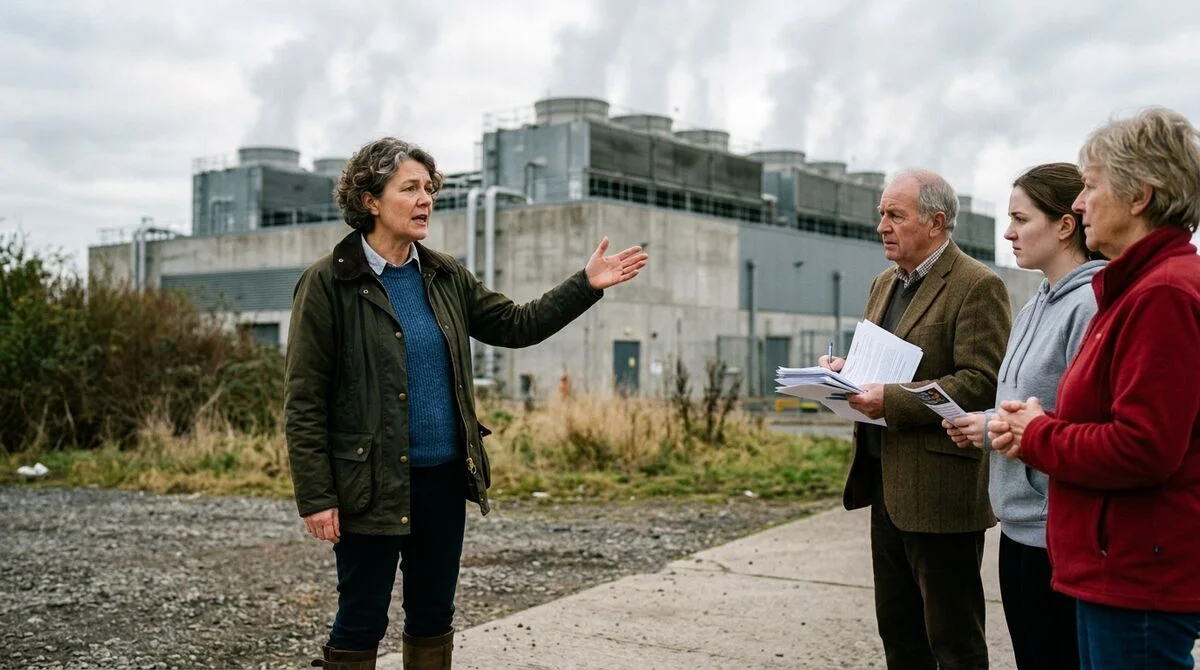
Erin Brockovich — the activist who in 1993, without a law degree, forced energy giant Pacific Gas & Electric to pay $333 million to residents of Hinkley, California for groundwater contamination — has announced a new campaign. This time she's taking on data centers being built around the world to power artificial intelligence systems. And while Hinkley was the story of one town and one company, the current situation, according to Brockovich, is global.
Where the Letters Came From
A few weeks ago, Brockovich woke up and found 30 unread emails from people from the same city. People write to her constantly: over three decades, she has become a symbol of a defender whom people turn to when it seems there's nowhere else to go. But a flood of letters from one location — that's always a sign. All these letters turned out to be about data centers. In April 2026, Brockovich posted a message on her website: she asked everyone with questions or complaints about the data center near their home to write to her. In one month, 3,862 people responded. She didn't expect such a response even considering her Hinkley experience.
'Hinkley on Steroids'
In 1993, Brockovich helped Hinkley residents prove that PG&E had been dumping hexavalent chromium into groundwater for years and denying it. The $333 million award became the largest single direct lawsuit payout in U.S.
history at that time. In 2000, a film came out about this story starring Julia Roberts in the lead role — explaining to millions of Americans who Brockovich is. Now she sees a similar pattern on a completely different scale.
Technology companies had always built data centers — but the ones being built today for AI workloads are significantly larger, more water-hungry and energy-intensive, and often appear in regions where resources are limited. "This feels like Hinkley on steroids," Brockovich says. A single large AI data center can consume millions of liters of water per day just for cooling server racks.
In arid regions, this is direct competition with the needs of local residents and farmers. Add to this the strain on power grids, exhaust from backup diesel generators during emergencies, and expedited approvals that bypass standard environmental reviews.
Complaints of the Same Type
Among the thousands of appeals Brockovich receives, common themes emerge — local communities feel that decisions are made without their involvement. Specific complaints:
- Water withdrawal from local water bodies and rivers for server cooling
- Sharp rises in electricity rates due to local grid overload
- Air pollution from backup diesel generators during emergencies
- Permits issued bypassing mandatory environmental reviews
- Construction without public hearings with residents of adjacent areas
"We are facing forces that have all the money in the world.
But that's precisely what has never stopped me."
Brockovich is already coordinating work with lawyers and environmental experts in several states. The goal is to systematize complaints, identify the most acute cases, and where there are grounds, take them to court. Essentially, she's forming a decentralized monitoring system: thousands of people who document what's happening near their homes.
What This Means
AI data centers are not an abstract "digital infrastructure." They are physical objects with concrete consequences for water, air, and the budgets of local residents. If technology companies do not establish transparent procedures for engaging with communities, pressure from below will intensify. This pressure already has a precedent with a multimillion-dollar outcome — and a person who knows how to apply it.
Want to stop reading about AI and start using it?
AI News is a curated feed of AI/tech news. Hamidun Academy teaches you to use AI systematically in your work.
The AI world, distilled — once a week
Seven stories that actually mattered, hand-picked. No noise, no reposts, no press releases.
Done! Check your inbox for a confirmation.