Anthropic и Белый дом договариваются о правилах ИИ на G7 — пока модели компании под запретом
Дарио Амодеи, CEO Anthropic, участвует в саммите G7 и ведёт прямые переговоры с американскими чиновниками о правилах безопасного применения ИИ. Это…
AI-processed from 3DNews AI; edited by Hamidun News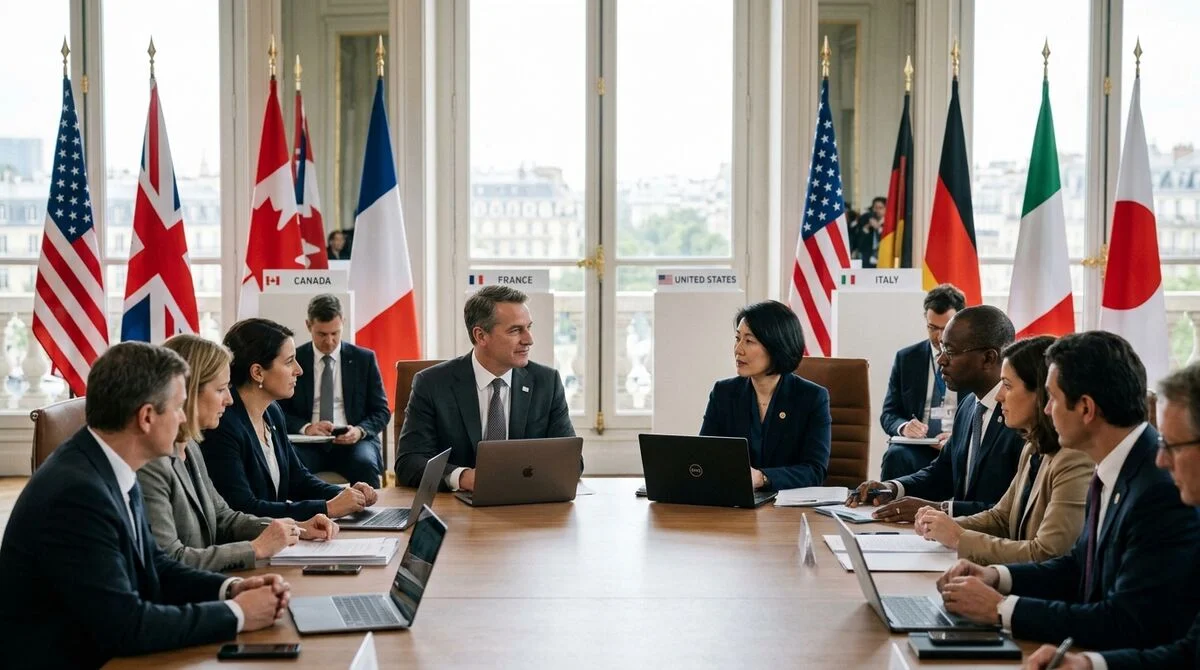
Dario Amodei, CEO of Anthropic, participated in the G7 summit and used the platform for direct negotiations with senior American officials on rules for the safe use of AI models. The circumstances are unusual: the company's flagship models have been under ban in the US for about a week — due to concerns about national security.
Models under ban, CEO at G7 table
About a week ago, American authorities introduced restrictions on the use of advanced AI systems from Anthropic in a number of federal contexts — the official reasons are related to national security considerations. The exact details have not yet been publicly disclosed, which itself is characteristic of such decisions. For the company, this is a paradoxical situation: its technologies are recognized as potentially sensitive — and at the same time, its CEO finds himself at one table with senior officials making decisions about the fate of these same technologies. Participation in G7 gave Amodei an opportunity that most AI startups do not have — to discuss regulatory frameworks directly with those who shape them.
What is being discussed at the summit
At G7, AI safety is a separate item on the agenda. The world's largest economies are trying to develop joint approaches to regulation before technologies completely outpace legislation. For Anthropic, participation in this process means an opportunity not only to protect its own products from poorly thought-out restrictions, but also to influence international standards that will ultimately affect the entire industry. Among the questions on the agenda:
- International standards for testing AI systems for safety before market release
- Criteria by which models can be considered sensitive from the perspective of national security
- Risk assessment methodologies and their alignment between allied states
- Transparency requirements regarding training data and model architectures
- Mechanisms for coordinated response when critical threats are identified
Negotiations with American officials give Anthropic a practical benefit: an opportunity to gain clarity on a question that so far remains open — on what exactly the models were banned for and what will be required to lift the ban.
Why Anthropic is valuable for these negotiations
The picture that has emerged looks paradoxical: a company whose models are temporarily blocked is simultaneously helping to write rules for similar models. But this is the essence of the current moment in AI regulation. Governments have realized that without the participation of developers in rule-making, the rules risk being either too strict and stifling progress, or meaningless and failing to achieve their stated goals.
Anthropic, from its inception, has positioned itself as a company for which safety is built into the research agenda, not added as a marketing statement. The company is known for developing methods of neural network interpretability and a policy of responsible disclosure of the capabilities and limitations of its systems. All of this makes it a valuable partner for states that seriously want to understand what is happening inside advanced language models.
The negotiations are beneficial for both sides. Governments gain access to expertise from within — the kind that no external report can provide. The company gets a chance to communicate its position: which restrictions are meaningful and which create regulatory barriers without actually reducing risks.
What this means
The dialogue between Anthropic and the White House at the G7 sidelines is a sign that AI regulation is transitioning from reactive to preventive mode. The ban on flagship models and simultaneous negotiations with their creators is not a contradiction, but a working tactic: first understand the risks, then develop rules together with those who understand the technology better than anyone. The next step is concrete agreements that could form the basis of international standards for the entire industry.
Need AI working inside your business — not just in your newsfeed?
I build production AI for companies — custom CRM, internal tools, autonomous agents, workflow automation. Owned by you, shaped to your process, no per-seat tax. Built by Zhemal Khamidun, CPO of AlpinaGPT (AI platform, 6,000+ users).
The AI world, distilled — once a week
Seven stories that actually mattered, hand-picked. No noise, no reposts, no press releases.
Done! Check your inbox for a confirmation.