Anthropic cannot release Claude Mythos and Fable 5 — the White House is changing the rules right now
Anthropic cannot distribute Claude Mythos and Fable 5 — the Trump administration has blocked the international distribution of the models, citing national security. There are no formal accusations, only informal pressure from officials. The White House is shaping AI rules on the fly, and no one in the industry knows which standards to follow.
AI-processed from Wired; edited by Hamidun News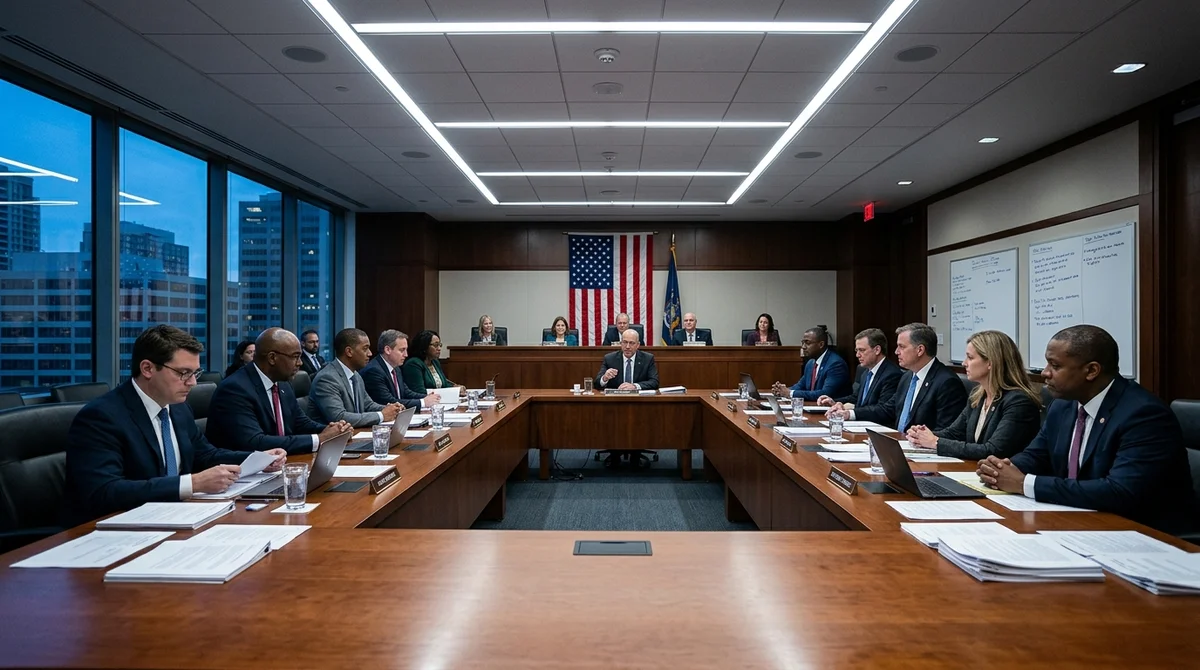
Anthropic cannot distribute its newest language models — Claude Mythos and Fable 5 — after a conflict with the Trump administration over export controls. Yet nobody — neither inside the company nor outside it — can explain exactly what was violated.
Sanctions without explanations
The United States has long applied export controls to semiconductors and manufacturing equipment. In this sphere, there are concrete lists, technical parameters, clear criteria. With software AI models, everything is different: they have no physical form, are copied instantly, and the U.
S. still has no unified regulatory framework for their cross-border distribution. The Trump administration made clear to Anthropic that issuing Claude Mythos and Fable 5 to foreign clients and partners contradicts national security interests.
The company was never presented with an official regulatory act listing specific violations. Instead — informal signals from officials: international distribution "should wait." For Anthropic, this is a legal dead-end: challenging the decision in court is impossible (no formal accusation), bringing the business into compliance is also impossible (the requirements themselves are not formulated).
The company continues operations within the U.S., but international growth is effectively frozen.
What exactly is blocked
The restrictions affected two key releases of the current development cycle:
- Claude Mythos — a flagship model of the new generation that passed internal testing and was preparing for wide launch
- Fable 5 — the next in the model lineup, oriented toward corporate clients
- API access for overseas developers and enterprise clients has been suspended
- The company does not publicly name a timeline for lifting restrictions
Within the U.S., both models are operating normally. The ban specifically targeted cross-border distribution — that same gray area where the regulatory framework is still forming and where each new case can set a precedent.
White House writes rules on the fly
According to Wired, lawyers and leaders of technology companies describe what is happening identically: the White House is building AI rules "in real time," relying on national security doctrines developed long before the era of large language models and originally intended for a different class of technologies.
"Nobody can explain what exactly we violated.
This is not regulation — it's a guessing game," Wired reports from sources close to Anthropic.
The problem extends far beyond one company. The entire industry lacks clear criteria: at what power level is a model considered a threat, who counts as an impermissible foreign user, what capability threshold makes a system subject to export control. Each case is reviewed as a precedent, with no unified system of norms. Meanwhile, Congress is discussing a special law on AI export — by analogy with semiconductor regulation. Until it is passed, the executive branch acts at its own discretion, and companies are forced to operate under chronic uncertainty.
What this means
The case with Anthropic is not an isolated episode, but a test of the entire system of American AI regulation. If a company with an impeccable reputation can suddenly find itself in a legal trap without any explanation, this is an unmistakable signal to the industry: vagueness here is not a temporary phenomenon, but an intentional policy. While Washington has no transparent rules, any AI company risks facing the same surprise — at any moment.
Want to stop reading about AI and start using it?
AI News is a curated feed of AI/tech news. Hamidun Academy teaches you to use AI systematically in your work.
The AI world, distilled — once a week
Seven stories that actually mattered, hand-picked. No noise, no reposts, no press releases.
Done! Check your inbox for a confirmation.