Масаёси Сон из SoftBank: орбитальные дата-центры Маска не решат гонку ИИ
Основатель SoftBank Масаёси Сон публично отверг идею Элона Маска о строительстве дата-центров на орбите. По его словам, в космических вычислениях мало…
AI-processed from Bloomberg Tech; edited by Hamidun News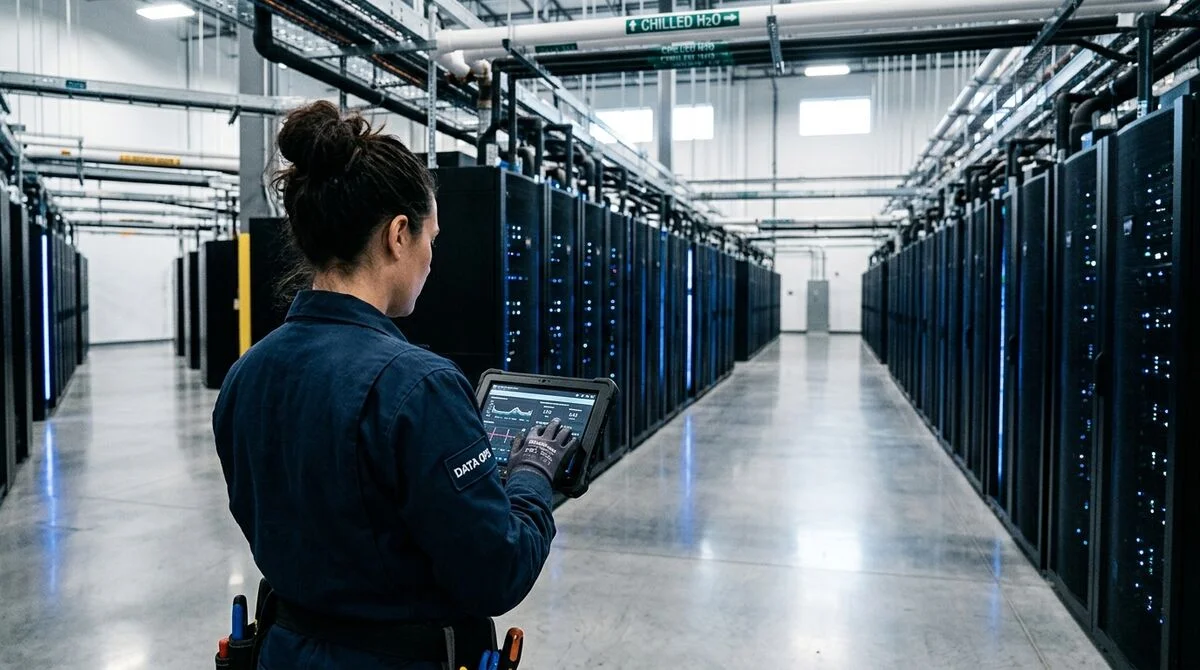
SoftBank founder Masayoshi Son has publicly rejected Elon Musk's idea of building orbital data centers, calling it devoid of practical sense. According to Son, the winner in the race for artificial intelligence superiority will be determined by terrestrial computing infrastructure, not server farms in orbit.
The Dispute Between Two Visionaries
The idea of orbital data centers emerged as a response to a real bottleneck in AI development: ground-based server capacity faces limitations from power grid constraints, insufficient water for cooling, and a shortage of suitable land parcels. Musk, who heads SpaceX and manages AI company xAI, is promoting orbital computing as an unconventional workaround. Servers above the atmosphere, by his logic, do not compete with cities for electricity, do not require local government permits, and theoretically enjoy unlimited access to solar energy.
Son, however, fundamentally disagrees with this logic. The SoftBank founder, whose company has invested hundreds of billions of dollars in technology companies worldwide — from Alibaba to Arm — is convinced that the technical difficulties and colossal costs of orbital infrastructure outweigh any potential benefits. In his view, the AI race will be won by whoever scales computing capacity faster and cheaper — and this is only possible on Earth.
Why Terrestrial Infrastructure Wins
SoftBank under Son's leadership has consistently bet on terrestrial AI infrastructure: the company is a strategic partner of leading American AI giants and a participant in large-scale data center projects in several regions worldwide. Musk's criticism here is not just rhetoric, but a position backed by concrete investment decisions.
Key reasons why space data centers lose to terrestrial ones:
- The cost of launching payloads into orbit remains high — even with SpaceX's reusable rockets
- Cooling servers in vacuum conditions with extreme temperature swings is an unsolved engineering problem
- Data transmission latency from orbit to Earth is critical for real-time AI applications
- Equipment repair and replacement in space is incomparably more complex and expensive than in terrestrial data centers
- Terrestrial capacity scales faster: new regions and gigawatts come online in months, not years
Context: The Battle for Energy and Land
Behind this public dispute lies an acute industrial problem. Data centers for training and inference of large language models consume enormous amounts of electrical power: major facilities already rival small cities in consumption. Shortage of land parcels near energy hubs and difficulties in obtaining permits for data center construction have become key constraints for the entire AI industry.
This pushes some entrepreneurs toward unconventional solutions — from building small nuclear reactors next to server halls to the concept of orbital computing clusters. Musk is promoting the "servers in the sky" idea through several of his companies: SpaceX would handle transportation of equipment to orbit, xAI would manage computational loads.
However, the largest AI industry players — Microsoft, Google, Amazon, Meta — are choosing a different path: aggressive expansion of terrestrial hyperscale infrastructure. New data centers are being built at record speed across multiple regions simultaneously. SoftBank is moving in the same direction, and Son's position directly reflects this strategy.
"The AI race will be won by whoever wins on Earth,"
Masayoshi Son said in an interview with Bloomberg.
What This Means
The discussion between Son and Musk exposes a fundamental divergence in strategic bets: scaling proven yet resource-intensive terrestrial infrastructure — or investing in fundamentally new solutions with high risk and high potential. For now, the industry is voting with its wallet for Earth: that is where trillions of dollars of AI infrastructure investment are being directed. Son's position is not merely skepticism, but a strategic statement about where the fate of the AI race will be decided.
*Meta is recognized as an extremist organization and is banned in the Russian Federation.
Need AI working inside your business — not just in your newsfeed?
I build production AI for companies — custom CRM, internal tools, autonomous agents, workflow automation. Owned by you, shaped to your process, no per-seat tax. Built by Zhemal Khamidun, CPO of AlpinaGPT (AI platform, 6,000+ users).
The AI world, distilled — once a week
Seven stories that actually mattered, hand-picked. No noise, no reposts, no press releases.
Done! Check your inbox for a confirmation.