Masayoshi Son Rejects Musk's Orbital Data Centers, Bets on Earth-Based AI Infrastructure
SoftBank founder Masayoshi Son opposed Musk's vision of building data centers in space. At a June 23 shareholder meeting, he declared that orbital infrastructure "makes little sense" and predicted that those betting on terrestrial computing power will win the AI race. SoftBank is actively investing in earth-based AI infrastructure—ARM, Stargate—and Son is clearly justifying this strategic choice.
AI-processed from TNW; edited by Hamidun News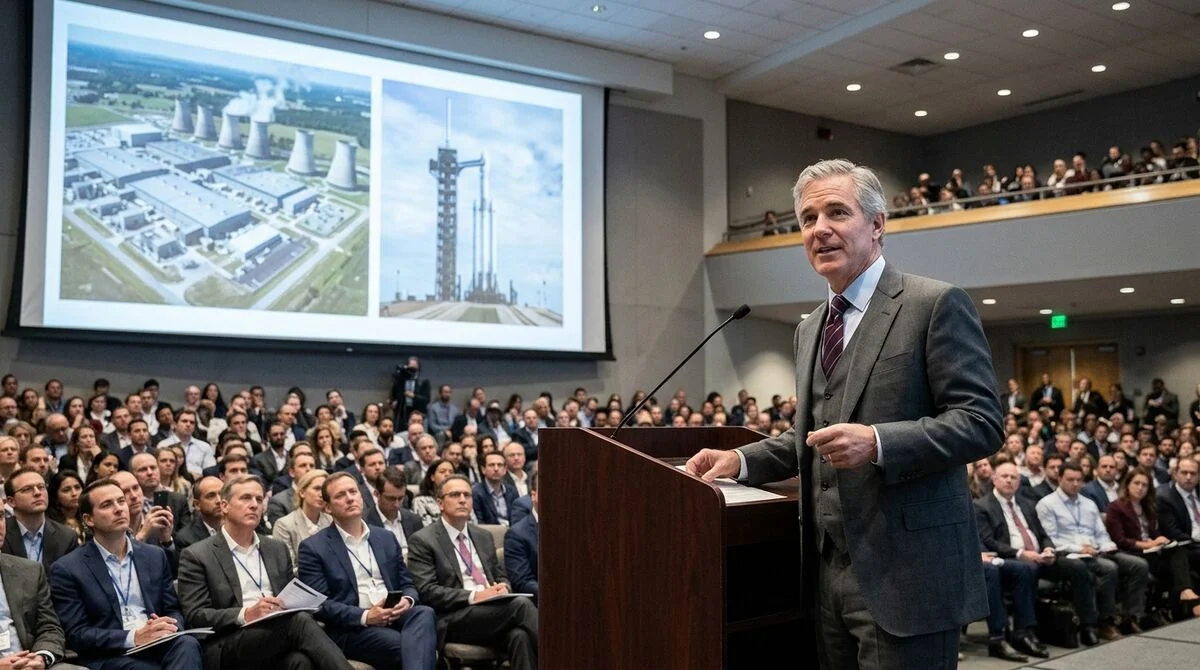
Masayoshi Son, founder of SoftBank, publicly expressed doubt about the feasibility of orbital data centers — an idea actively promoted by Elon Musk.
What Son Told Shareholders
At SoftBank's annual shareholder meeting on June 23, 2026, Masayoshi Son stated that building computing infrastructure in space "makes little sense." According to him, those who bet on terrestrial capacity will win the artificial intelligence race — not those seeking alternatives beyond the atmosphere. This is a fundamentally important signal for shareholders: SoftBank invested colossal sums precisely in terrestrial AI infrastructure, and Son justifies the correctness of this course. His speech is simultaneously a polemical response to Musk's position: in recent years, Musk has been increasingly insisting on orbital data centers as the next frontier for AI computing. In this logic, SpaceX becomes not just a transportation company, but also a provider of computing power — literally beyond Earth.
Why Orbital Data Centers Appeal to Musk
There are physical arguments in favor of space-based data centers, and some of them are compelling:
- Cooling — the main expense item for server halls; in a vacuum, heat is dissipated by radiation without water and compressors
- Direct access to solar energy without atmospheric losses reduces electricity costs
- No need to compete for land plots, obtain permits, or negotiate with local authorities
- Starship is gradually reducing the cost of cargo delivery to orbit — potentially making such projects economically realistic
Musk positions this as long-term inevitability. As AI clusters grow to gigawatt-scale consumption, physical constraints on Earth — overloaded power grids, water scarcity, lack of available sites — will become, in his view, a critical bottleneck for industry growth.
SoftBank's Bet on Terrestrial Infrastructure
Son's position is driven not only by technical skepticism, but also by concrete financial decisions. SoftBank, through its Vision Fund, has invested tens of billions of dollars in ARM — a key developer of architectures for AI chips on which most of the world's servers run. Additionally, the company is one of the partners in the American Stargate project — an initiative with a total volume of $500 billion to develop AI infrastructure in the US jointly with OpenAI, Microsoft, and Oracle.
Overall, SoftBank is actively increasing investments in building data centers in Japan and the US. In other words, Son is financially invested in the terrestrial scenario's success. But this does not make his arguments any less sound: terrestrial infrastructure already works, scales through proven methods, and remains understandable for investors and regulators.
"Building data centers in space makes little sense,"
Son declared at a meeting with SoftBank shareholders.
What This Means
The disagreement between Son and Musk is a matter of time horizon: Musk projects decades ahead and is willing to accept high technical risk, while Son focuses on the next 3-5 years of the AI race. For the 2026 market, Son's statement is a weighty argument in favor of terrestrial data centers: it is precisely there that main investments are going and precisely there that real competition is unfolding.
Need AI working inside your business — not just in your newsfeed?
I build production AI for companies — custom CRM, internal tools, autonomous agents, workflow automation. Owned by you, shaped to your process, no per-seat tax. Built by Zhemal Khamidun, CPO of AlpinaGPT (AI platform, 6,000+ users).
The AI world, distilled — once a week
Seven stories that actually mattered, hand-picked. No noise, no reposts, no press releases.
Done! Check your inbox for a confirmation.