Infineon opens €5 billion fab in Dresden, the first real win for the European Chips Act
On July 2, Infineon Technologies opens its Smart Power Fab in Dresden, a €5 billion investment that includes €1 billion in subsidies from the European Chips Act. The plant will make power semiconductors for AI data centers, electric vehicles, and renewable energy. It is the first major facility actually brought online under the EU's chips law.
AI-processed from TNW; edited by Hamidun News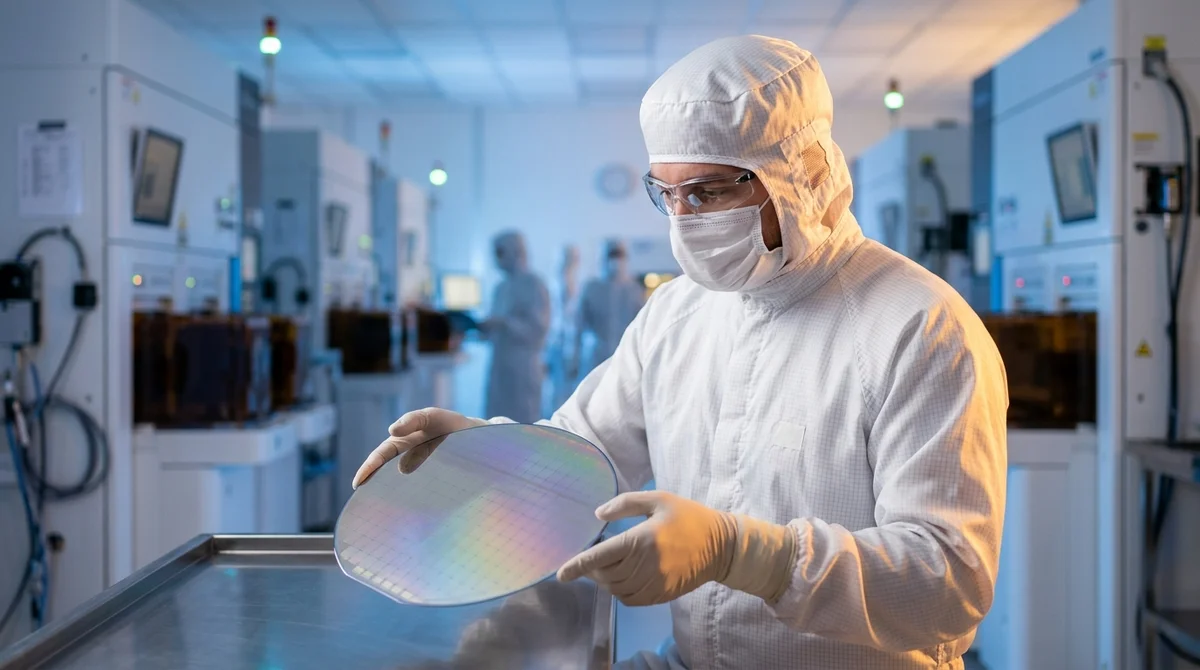
On July 2, Infineon Technologies opens its €5 billion Smart Power Fab in Dresden, the largest single investment in the company's history. It is also the first major facility launched under the European Chips Act, which the EU passed three years ago to try to regain technological sovereignty.
A fab for three industries of the future
Smart Power Fab sits on Infineon's Dresden campus in the heart of "Silicon Saxony," Europe's largest microelectronics cluster. Infineon, Robert Bosch, and GlobalFoundries already run production sites there. Dresden has long been the center of Europe's semiconductor industry, and the new fab strengthens that position further.
The new plant specializes in power semiconductors, a class of chips that control the flow of electrical energy. These aren't the chips that usually make tech headlines: they don't train neural networks or store gigabytes of data. But they determine how efficiently any system converts and uses electricity, whether it's a server rack in a data center, an electric motor in a car, or an inverter on a solar plant's roof.
Smart Power Fab will produce components for four fast-growing sectors:
- AI data centers: converting, distributing, and stabilizing server power
- Electric vehicles: power inverters, charging modules, and motor control systems
- Renewable energy: inverters for solar panels and wind turbines
- Industrial automation: motor drives and frequency converters
How a European law became a real fab
Smart Power Fab cost €5 billion to build, with about €1 billion coming as subsidies under the European Chips Act. The EU adopted the law in 2023 with an ambitious goal: double Europe's share of global semiconductor production by 2030, from roughly 10% to 20%.
The law was shaped by the pandemic-era crisis of 2021–2022. The global chip shortage paralyzed dozens of industries, from automotive to consumer electronics. European leaders concluded that critical dependence on production in Taiwan and South Korea creates structural risks not only for industry but also for security. The Chips Act was meant to change that.
Smart Power Fab is the first major facility actually built and opened thanks to the chips law. For Brussels, that's an important win: for three years, the law existed mostly on paper. Now it has a concrete result: €5 billion in investment and thousands of jobs.
Why demand for power chips is at a record high
The generative AI boom has radically changed how the global economy consumes electricity. A single modern AI cluster draws hundreds of megawatts, and every watt passes through power semiconductors that regulate how current is converted and distributed. More data centers translate directly into more demand for Infineon's products.
Analysts forecast that the global power semiconductor market will exceed $50 billion by 2027. Infineon already ranks among the top three global players in the segment. The new fab should let the company grow its market share precisely when demand for its products peaks.
A second major driver is unfolding in parallel: transportation. An electric vehicle needs 5–10 times more power semiconductors than a car with an internal combustion engine. As the world's vehicle fleet electrifies, that demand will only grow.
What it means
The opening of Smart Power Fab is the first substantial proof that the European Chips Act works. The EU is betting on strategic independence, not only on economic growth. In the era of AI and the energy transition, control over the production of key components is turning from an abstract political idea into a concrete industrial policy task.
- Oct 31, 2026Author puts his script before an AI jury: the verdict cost 850 thousand tokens
- Oct 29, 2026OvisOCR3: an 0.8B-parameter model that reads documents better than specialized systems
- Oct 29, 2026Tencent releases Youtu-Parsing-Omni: one model parses documents, audio and video
- Oct 28, 2026Liquid AI releases LFM2.5-24B-A2B: an agent model with 2B active parameters
Key Questions Answered
What are the key details on A fab for three industries of the future?
Smart Power Fab sits on Infineon's Dresden campus in the heart of "Silicon Saxony," Europe's largest microelectronics cluster. Infineon, Robert Bosch, and GlobalFoundries already run production sites there. Dresden has long been the center of Europe's semiconductor industry, and the new fab strengthens that position further. The new plant specializes in power semiconductors, a class of chips that control the flow of electrical energy. These aren't the chips that usually make tech headlines: they don't train neural networks or store gigabytes of data. But they determine how
How a European law became a real fab?
Smart Power Fab cost €5 billion to build, with about €1 billion coming as subsidies under the European Chips Act. The EU adopted the law in 2023 with an ambitious goal: double Europe's share of global semiconductor production by 2030, from roughly 10% to 20%. The law was shaped by the pandemic-era crisis of 2021–2022. The global chip shortage paralyzed dozens of industries, from automotive to consumer electronics. European leaders concluded that critical dependence on production in Taiwan and South Korea creates structural risks not only for industry but also for security.
Why demand for power chips is at a record high?
The generative AI boom has radically changed how the global economy consumes electricity. A single modern AI cluster draws hundreds of megawatts, and every watt passes through power semiconductors that regulate how current is converted and distributed. More data centers translate directly into more demand for Infineon's products. Analysts forecast that the global power semiconductor market will exceed $50 billion by 2027. Infineon already ranks among the top three global players in the segment. The new fab should let the company grow its market share precisely when demand f
Test Frontier LLMs & Autonomous Agents in One Workspace
Run Claude Opus 5.5, GPT-6, Gemini 3.1, and DeepSeek side-by-side in Nomad AI (nomadnet.ai) — unified model routing, deep research, and multimodal workflows under one subscription.
The AI world, distilled — once a week
Seven stories that actually mattered, hand-picked. No noise, no reposts, no press releases.
Done! Check your inbox for a confirmation.