Crusoe Removed From Managing Wyoming AI Campus Due to Failed Google Deal
Crusoe has been removed from managing its own AI campus in Wyoming. The startup failed to attract Google and other cloud giants as anchor clients. Investors are now seeking a more experienced data center operator.
AI-processed from Bloomberg Tech; edited by Hamidun News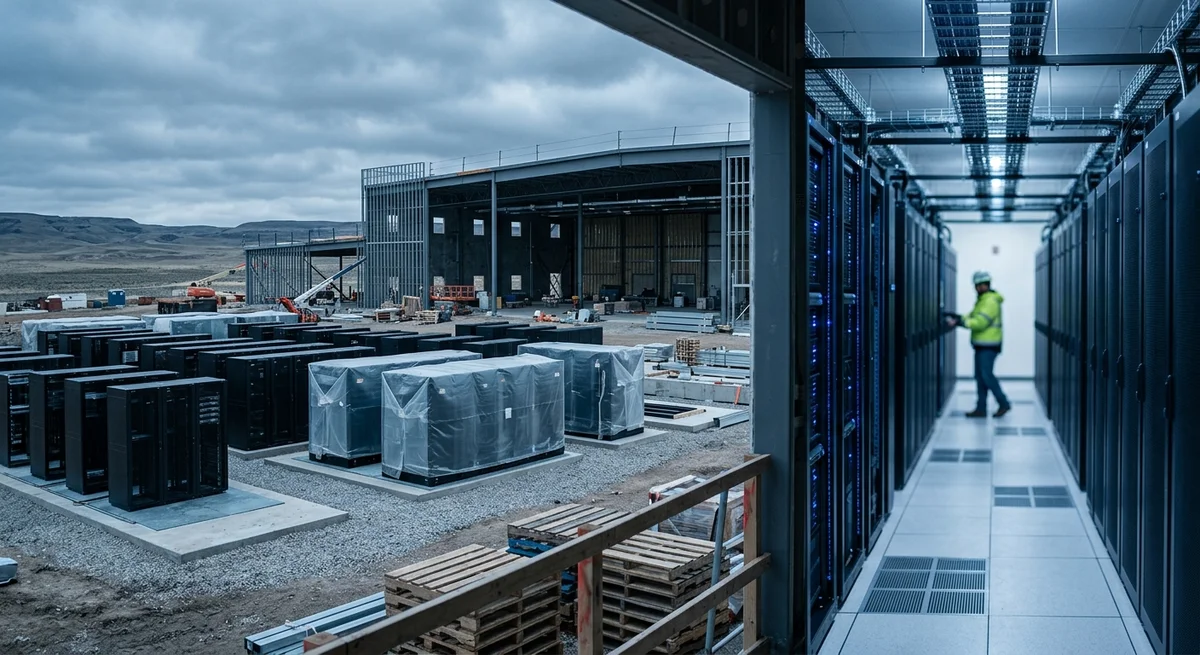
Crusoe, a startup building data centers for AI, has been removed from managing its own campus in Wyoming. Investors have reassessed its role in the project after the company failed to attract Google and other cloud giants as anchor clients.
Why the Negotiations Failed
Crusoe was developing an AI campus in Wyoming as a strategic project. The goal was clear: to become the preferred capacity provider for cloud giants training large language models. A contract with Google would have been a major victory—a signal to the market of reliability and readiness for global scale. However, negotiations ended in rejection.
Google and other cloud providers chose alternatives or decided to rely on their own infrastructure. Typical reasons for rejection in such negotiations:
- Price: new operators are typically more expensive than cloud companies' own data centers
- Risk and reliability: LLM training capacity requires 24/7 uptime
- Delivery timelines: building a new data center takes 2-3 years, while cloud companies need capacity now
- Scalability: giants need millions of GPUs simultaneously
- Control: Google and Microsoft prefer infrastructure they fully own and manage
Investors Change Management
After the failed negotiations, the project's investors have revised their strategy. According to sources, they are in talks with experienced data center operators—companies with years of experience working with cloud giants. Crusoe was founded by outstanding engineers who excel at power optimization and energy efficiency. But that very fact created the problem: engineering mindset doesn't always align with commercial thinking.
Negotiating with giants, managing long-term contracts, scaling operations—these are different competencies. In a typical scenario, Crusoe would remain a technology partner but lose operational control.
A Signal for Startups
The Crusoe story illustrates one of the key realities in AI infrastructure: cloud giants are extremely conservative when selecting suppliers of critical capacity. Billions of dollars in LLM research investments depend on them, so the risk of working with an unestablished startup is very high.
For Crusoe and similar companies, this means that pure technological superiority is insufficient to conquer the market. They need either a strategic niche, or a partnership with one of the giants, or acquisition by a major player.
What This Means
The AI infrastructure market will continue consolidating around Google, AWS, Microsoft, and Alibaba. Innovative startups will find value in niches, in technology licensing, or in acquisition. But competition for global contracts at the scale of giants will remain their monopoly—this will ensure the stability of critical infrastructure upon which AI development depends.
Need AI working inside your business — not just in your newsfeed?
I build production AI for companies — custom CRM, internal tools, autonomous agents, workflow automation. Owned by you, shaped to your process, no per-seat tax. Built by Zhemal Khamidun, CPO of AlpinaGPT (AI platform, 6,000+ users).
The AI world, distilled — once a week
Seven stories that actually mattered, hand-picked. No noise, no reposts, no press releases.
Done! Check your inbox for a confirmation.