GM to launch V2G: electric vehicles will help power data centers
GM has presented a comprehensive plan to adapt energy infrastructure to the growing electricity demand from AI data centers. The company is activating vehicle-to-grid (V2G) technology, which lets electric vehicles send stored electricity back to the grid. At the same time, GM is releasing sodium-ion batteries for industrial-scale energy storage and adding a feature that makes it easier to find and pay for public charging stations.
AI-processed from The Verge; edited by Hamidun News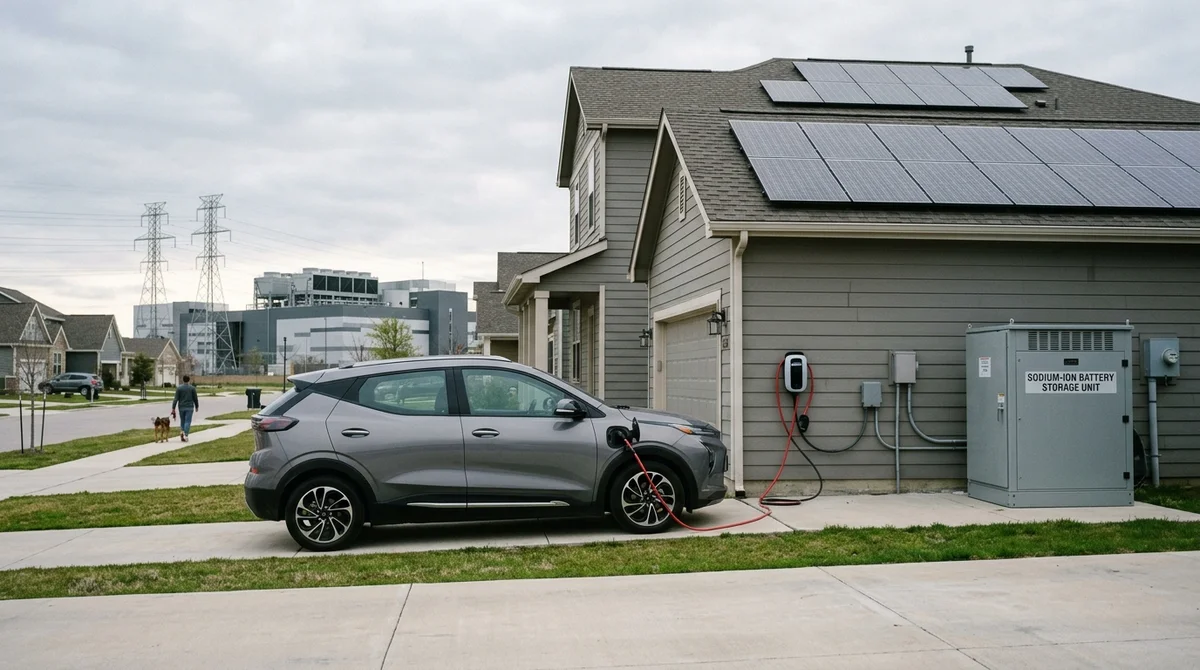
General Motors has announced a comprehensive strategy to adapt energy infrastructure to the growing electricity demand from AI data centers. At an event in San Francisco, the company presented three key initiatives: activating Vehicle-to-Grid technology for existing customers, releasing new sodium-ion batteries for industrial energy storage, and simplifying public EV charging.
V2G: EVs as the grid's backup battery
General Motors is starting to activate Vehicle-to-Grid (V2G) technology for existing customers who own an EV and a home energy system. The idea is simple but powerful: a parked EV stops being just a consumer of electricity and becomes a smart energy supplier for the grid. When the car's battery is charged, it can send stored electricity back into the home's electrical system or the local distribution grid during peak demand.
Why does this matter so much right now? AI data centers consume ever more electricity, and that creates serious spikes in energy demand. Power grids are built for a certain level of peak demand, and when that level is exceeded, problems follow: outages, higher electricity prices, and more strain on aging infrastructure. V2G offers an elegant fix: distributed energy reserves in the form of millions of parked EVs can stabilize the grid at exactly the critical moments of peak load.
Sodium-ion batteries: storage at scale
GM's second initiative is a commercial energy storage strategy built on sodium-ion batteries. Unlike V2G, which operates at the level of individual cars and homes, the sodium-ion batteries are designed for industrial scale: large storage installations at data centers, grid nodes, or utility sites.
Why sodium-ion instead of conventional lithium-ion? Sodium-ion batteries offer several key advantages for large-scale deployment. First, they are cheaper to produce, because sodium is far more abundant and cheaper than lithium. Second, they depend less on scarce materials such as cobalt and nickel, which are in short supply and politically sensitive. Third, they hold up better at extreme temperatures, which matters for outdoor storage across different climates.
GM is pitching the technology as a solution for system operators who run the grid and need large storage capacity to handle uneven demand from data centers.
Simplifying the charging ecosystem
The third initiative is a new feature for GM EV owners that should make it significantly easier to find and pay at public charging stations. GM has not disclosed details of the feature, but it targets a real problem: the public charging ecosystem in the US remains fragmented. Dozens of independent operators each have their own apps, payment methods, and service levels. EV owners often end up installing five different apps just to find an available station nearby.
What it means
GM is taking a new view of the automaker's role in the AI era. The company sees EVs not merely as an alternative to gasoline cars, but as a strategic asset for the energy system. If millions of cars send power back to the grid at the right moments, that could significantly ease the load on the grid and reduce the need for costly new generating capacity.
Sodium-ion batteries extend this approach from distributed vehicles to the critical infrastructure of data centers. Together, these initiatives outline a vision in which transportation electrification and energy storage become part of a single integrated ecosystem, optimized for the new reality of AI's heavy power consumption.
For now this applies only to existing GM customers, but it is a clear signal that traditional automakers are starting to treat energy as part of their core business rather than just a secondary service.
Key Questions Answered
What are the key details on V2G: EVs as the grid's backup battery?
General Motors is starting to activate Vehicle-to-Grid (V2G) technology for existing customers who own an EV and a home energy system. The idea is simple but powerful: a parked EV stops being just a consumer of electricity and becomes a smart energy supplier for the grid. When the car's battery is charged, it can send stored electricity back into the home's electrical system or the local distribution grid during peak demand. Why does this matter so much right now? AI data centers consume ever more electricity, and that creates serious spikes in energy demand. Power grids ar
What are the key details on Sodium-ion batteries: storage at scale?
GM's second initiative is a commercial energy storage strategy built on sodium-ion batteries. Unlike V2G, which operates at the level of individual cars and homes, the sodium-ion batteries are designed for industrial scale: large storage installations at data centers, grid nodes, or utility sites. Why sodium-ion instead of conventional lithium-ion? Sodium-ion batteries offer several key advantages for large-scale deployment. First, they are cheaper to produce, because sodium is far more abundant and cheaper than lithium. Second, they depend less on scarce materials such as
What are the key details on Simplifying the charging ecosystem?
The third initiative is a new feature for GM EV owners that should make it significantly easier to find and pay at public charging stations. GM has not disclosed details of the feature, but it targets a real problem: the public charging ecosystem in the US remains fragmented. Dozens of independent operators each have their own apps, payment methods, and service levels. EV owners often end up installing five different apps just to find an available station nearby.
Test Frontier LLMs & Autonomous Agents in One Workspace
Run Claude Opus 5.5, GPT-6, Gemini 3.1, and DeepSeek side-by-side in Nomad AI (nomadnet.ai) — unified model routing, deep research, and multimodal workflows under one subscription.
The AI world, distilled — once a week
Seven stories that actually mattered, hand-picked. No noise, no reposts, no press releases.
Done! Check your inbox for a confirmation.