Amodei concedes: governments should be able to block dangerous AI models
Anthropic's chief executive has acknowledged that governments should have the power to restrict the distribution of dangerous AI models. The stance departs from the company's earlier position: Anthropic previously refused to work with the Pentagon. The company now accepts the need for government regulation in AI safety.
AI-processed from 3DNews AI; edited by Hamidun News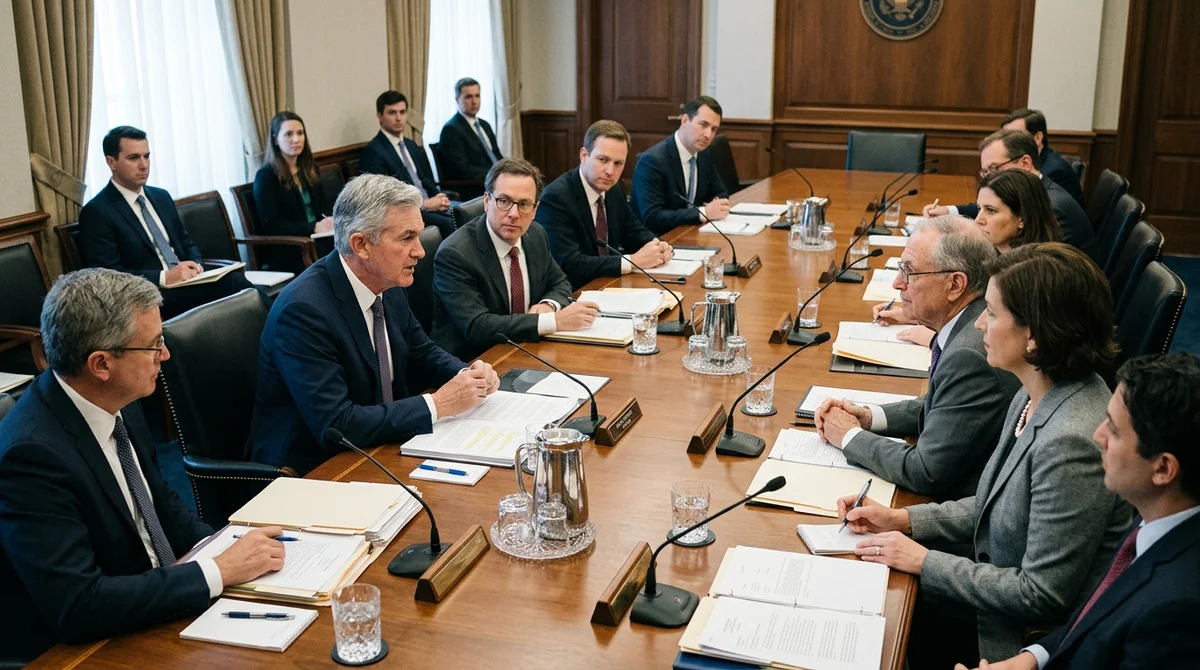
Dario Amodei, CEO of Anthropic, made an unexpected statement this week: governments should have the right to restrict the distribution of certain AI models if they pose a potential security threat. The admission marks a notable shift in the company's position.
What changed in Anthropic's position
Anthropic had earned its reputation precisely by refusing to cooperate with the authorities. The company turned down contracts with the Pentagon and other government bodies, citing ethical concerns and the need to protect the public interest. Amodei cast the firm as a principled defender against the state machine.
Now the company's leader has conceded that absolute resistance to any government intervention is the wrong approach. Amodei argues that truly dangerous AI models call for exceptions to the general rule of non-interference. It is a question of balancing innovation and safety.
Which AI models require government restriction
According to Amodei, the models considered dangerous and subject to restriction are those that:
- Can be used for biochemical synthesis of dangerous pathogens or for developing weapons
- Contain critical vulnerabilities that let users bypass built-in safety restrictions
- Are capable of controlling critical infrastructure (power grids, water supply, transport, communications)
- Show undesirable capabilities that cannot be fixed after deployment
Amodei noted that in 2026 such models are still rare, but as AI scales, the number of potential risks inevitably grows. That is why it is important to work out the right approach to regulation now.
The state versus risks: how to regulate without censoring
Acknowledging the need for state control raises a hard question: how do you tell legitimate regulation from censorship and political control? Amodei proposes a compromise mechanism: a transparent process involving independent experts and open criteria for when a model may be blocked. This differs from secret "blacklists," which critics often describe as a tool of suppression.
In Amodei's ideal scenario, companies and governments work together on the basis of agreed safety standards.
"We cannot afford to ignore real risks just because we feared government control,"
Amodei says.
What this means for the industry
This shift by Anthropic's chief signals the growing maturity of the AI industry. The era when companies acted as fully independent players is ending. OpenAI, Google DeepMind and other labs are expected to reach similar conclusions during 2026.
- Nov 2, 2026Meta's Muse assistant keeps dossiers on loved ones and gets root on Ubuntu by default
- Nov 1, 2026Local models lose to Opus and Codex: 0.21 on a MacBook versus 1.00 for Codex
- Nov 1, 2026Kimi scores 96.2% on a 1C database analytics test and emerges as a fallback if Claude access is blocked
- Nov 1, 2026OpenAI Rewrites GPT Behavior Rules: Five Values and a Chain of Command
Key Questions Answered
What changed in Anthropic's position?
Anthropic had earned its reputation precisely by refusing to cooperate with the authorities. The company turned down contracts with the Pentagon and other government bodies, citing ethical concerns and the need to protect the public interest. Amodei cast the firm as a principled defender against the state machine. Now the company's leader has conceded that absolute resistance to any government intervention is the wrong approach. Amodei argues that truly dangerous AI models call for exceptions to the general rule of non-interference. It is a question of balancing innovation
Which AI models require government restriction?
According to Amodei, the models considered dangerous and subject to restriction are those that: Can be used for biochemical synthesis of dangerous pathogens or for developing weapons Contain critical vulnerabilities that let users bypass built-in safety restrictions Are capable of controlling critical infrastructure (power grids, water supply, transport, communications) Show undesirable capabilities that cannot be fixed after deployment Amodei noted that in 2026 such models are still rare, but as AI scales, the number of potential risks inevitably grows. That is why it is i
What are the key details on The state versus risks: how to regulate without censoring?
Acknowledging the need for state control raises a hard question: how do you tell legitimate regulation from censorship and political control? Amodei proposes a compromise mechanism: a transparent process involving independent experts and open criteria for when a model may be blocked. This differs from secret "blacklists," which critics often describe as a tool of suppression. In Amodei's ideal scenario, companies and governments work together on the basis of agreed safety standards. "We cannot afford to ignore real risks just because we feared government control," Amodei sa
Test Frontier LLMs & Autonomous Agents in One Workspace
Run Claude Opus 5.5, GPT-6, Gemini 3.1, and DeepSeek side-by-side in Nomad AI (nomadnet.ai) — unified model routing, deep research, and multimodal workflows under one subscription.
The AI world, distilled — once a week
Seven stories that actually mattered, hand-picked. No noise, no reposts, no press releases.
Done! Check your inbox for a confirmation.