Google won't admit it trained Lyria on YouTube music
Independent musicians are suing Google for allegedly using their YouTube songs without permission to train the Lyria 3 music generator. Google denies training on the plaintiffs' specific works and points to its terms of service, which it says give it a broad license to content. The case tests the line between a user license and copyright.
AI-processed from The Verge; edited by Hamidun News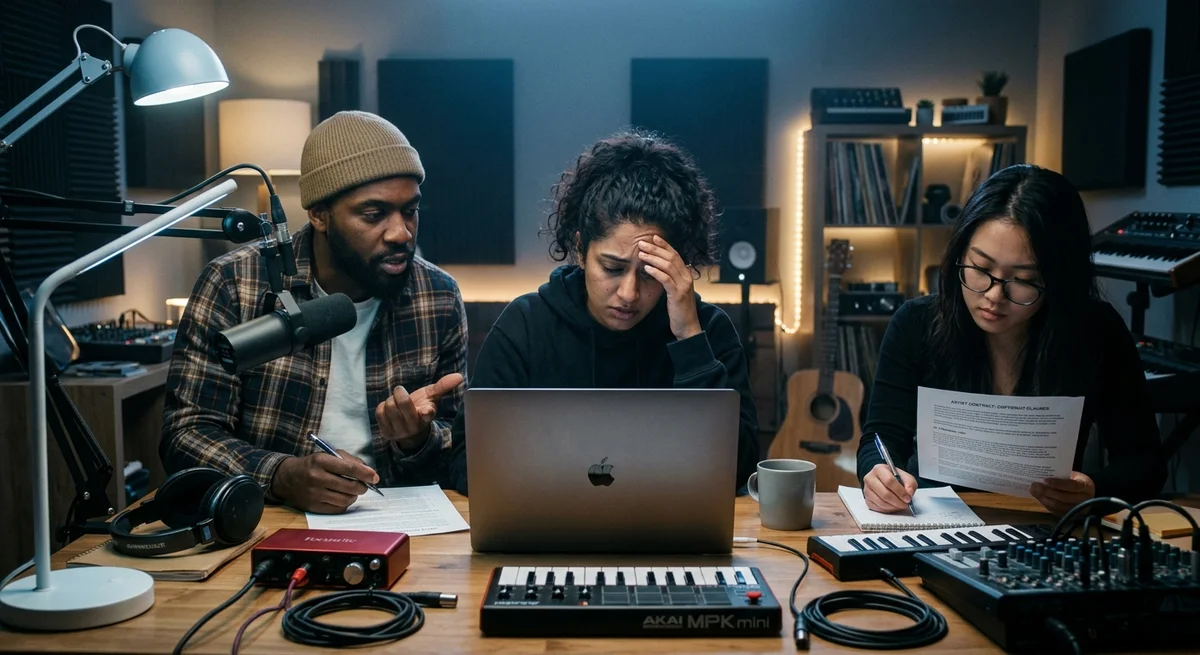
Google almost certainly used music uploaded to YouTube to train its Lyria music generator. It just doesn't want to admit that in court.
The lawsuit from independent musicians
A group of independent musicians has sued Google, accusing the company of illegally using their songs to train Lyria 3, an advanced music generator that can create new compositions from a text description. According to the plaintiffs, their works uploaded to YouTube became part of the training dataset for this AI without their knowledge or consent.
The suit follows growing concern in the music industry over how companies train generative AI models. Musicians and record labels have long suspected that their work is used for machine learning without explicit consent, but proving it is hard. The Lyria case is the first serious court proceeding on the subject.
What Google says
Google filed a motion to dismiss, arguing in court documents that the musicians themselves granted Google a license to use the content. The company insists that when users upload videos to YouTube, they automatically agree to terms of service that give Google (and YouTube) a "broad license" to use uploaded content for any purpose.
"Their claim rests on an unfounded hypothesis that we trained the model on their specific works," Google writes in the filing, relying on the letter of the terms of service rather than on users' intentions. By Google's logic, the license you gave the platform extends to anything the platform may come up with in the future.
License versus copyright
The key question in the dispute is how to interpret the license users grant YouTube when they upload content. Google argues that this license covers all uses, including AI training, even if the musicians did not suspect it when they uploaded.
That creates a paradox for independent creators. When they upload music to YouTube so people can hear it, they effectively grant the company the right to use that music in ways that may emerge in the future, including training generative models that then compete with their own work.
- Music on YouTube can be used for AI projects without the creator's additional consent
- The terms of service cover new uses that users did not know about
- Musicians have practically no control over how their work is used in machine learning
- AI companies cite existing licenses when training new models
- Copyright is becoming less of a protection than a generic clause in the terms of service
Consequences for musicians
If Google wins, it will set a dangerous precedent. Any content uploaded to a platform with such terms of service could be used for machine learning without further notice or compensation. Big AI companies would get a green light to use creative work as fuel for their models.
If the musicians win, it could force AI companies to be more honest about the sources of their training data. Creators' explicit consent would be required to use their work for AI training. That would protect independent musicians, but could slow the development of the AI industry.
What this means
This dispute is the first serious test of how broadly companies can interpret user licenses when training AI. The outcome will determine whether copyright remains a protection for creators or becomes a formality overridden by terms of service. For independent musicians, it is a question of survival in the era of generative AI.
- Nov 1, 202616 models tested on 7 search tools: Exa averaged 10.5 out of 14, SearXNG about 3
- Nov 1, 2026Google's StreamVibe video agent beats other models by 10.7% on response timing and quality
- Nov 1, 2026OpenAI Rewrites GPT Behavior Rules: Five Values and a Chain of Command
- Nov 1, 2026Voice bots built on LLMs turn to Jev, a fast classifier, for decisions in 200–500 ms
Key Questions Answered
What are the key details on The lawsuit from independent musicians?
A group of independent musicians has sued Google, accusing the company of illegally using their songs to train Lyria 3, an advanced music generator that can create new compositions from a text description. According to the plaintiffs, their works uploaded to YouTube became part of the training dataset for this AI without their knowledge or consent. The suit follows growing concern in the music industry over how companies train generative AI models. Musicians and record labels have long suspected that their work is used for machine learning without explicit consent, but prov
What Google says?
Google filed a motion to dismiss, arguing in court documents that the musicians themselves granted Google a license to use the content. The company insists that when users upload videos to YouTube, they automatically agree to terms of service that give Google (and YouTube) a "broad license" to use uploaded content for any purpose. "Their claim rests on an unfounded hypothesis that we trained the model on their specific works," Google writes in the filing, relying on the letter of the terms of service rather than on users' intentions. By Google's logic, the license you gave
What are the key details on License versus copyright?
The key question in the dispute is how to interpret the license users grant YouTube when they upload content. Google argues that this license covers all uses, including AI training, even if the musicians did not suspect it when they uploaded. That creates a paradox for independent creators. When they upload music to YouTube so people can hear it, they effectively grant the company the right to use that music in ways that may emerge in the future, including training generative models that then compete with their own work. Music on YouTube can be used for AI projects without
Test Frontier LLMs & Autonomous Agents in One Workspace
Run Claude Opus 5.5, GPT-6, Gemini 3.1, and DeepSeek side-by-side in Nomad AI (nomadnet.ai) — unified model routing, deep research, and multimodal workflows under one subscription.
The AI world, distilled — once a week
Seven stories that actually mattered, hand-picked. No noise, no reposts, no press releases.
Done! Check your inbox for a confirmation.