Opponents of AI Regulation Gather in Washington as the 2026 Elections Change the Rules
The AI Honors ceremony in Washington brought together senators from both parties, entrepreneurs and military officers, an odd coalition formed around AI regulation. The 2026 elections have turned artificial intelligence into a political battle line. The conversation about AI regulation has stopped being technocratic and become deeply political, and it began just as the 2026 elections appeared on the horizon.
AI-processed from The Verge; edited by Hamidun News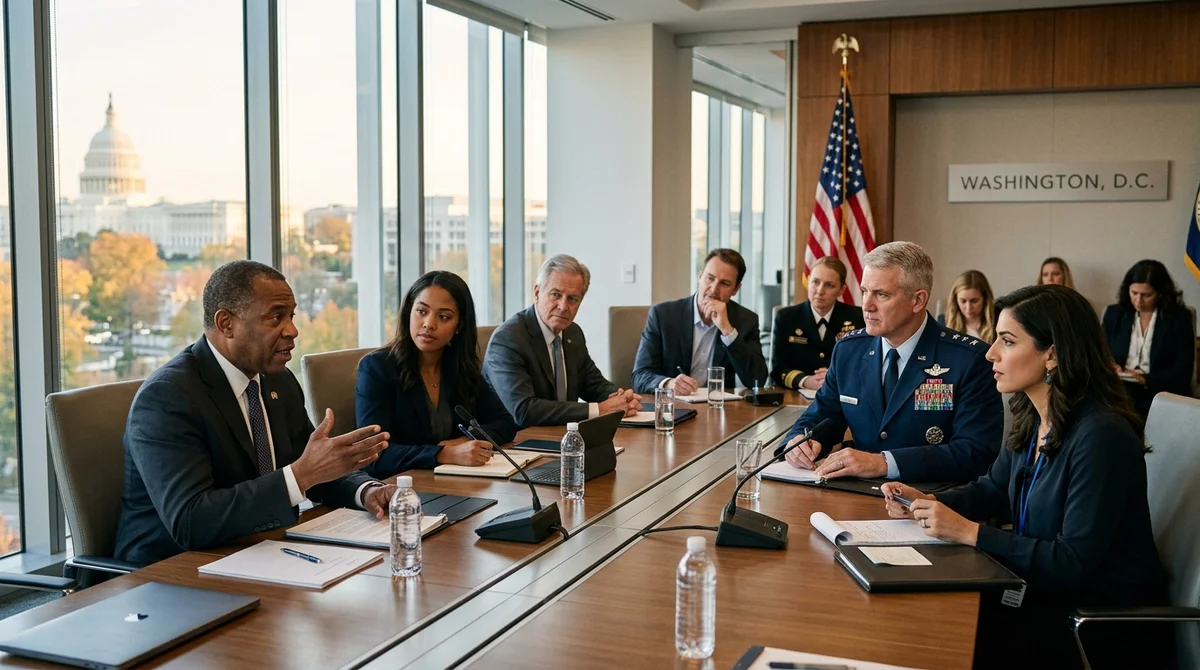

At the Second Annual AI Honors in Washington, something rare happened: people who usually stand on opposite sides of the barricades gathered around one table. Senators from both parties, well-known venture capitalists, military generals and television stars drank to a shared goal, though even they do not seem entirely sure what it is. The conversation about AI regulation has stopped being technocratic and become deeply political. And it began right after the 2026 elections appeared on the horizon.
A gathering of strange bedfellows
The event put side by side:
- Senator Mike Rounds (Republican, South Dakota) and Senator Mark Warner (Democrat, Virginia), both of whom wield considerable influence on tech committees
- Kevin O'Leary (businessman, known for sharp criticism of excessive regulation) and representatives of traditional American capital
- Military figures (Major General Patrick Ellis), since AI is becoming a national security issue
- TV hosts and public figures, who bring PR weight
This is a coalition that is not really a coalition: the only thing uniting them is the understanding that AI is too important to be left without rules. But on the rules themselves, they disagree completely.
Republicans and Democrats: two Americas
Republicans (especially those tied to venture capital and the startup scene) want light-touch regulation: innovation, competition, minimal bureaucracy. Democrats lean toward protection: citizens' data, algorithmic bias, corporate accountability to society.
In normal times, these positions simply coexist. But the 2026 elections have made AI a visible issue for voters. Now each faction must show that it stands behind its own vision of AI, while looking reasonable and serious rather than technophobic or recklessly chaotic.
The result: strange alliances. The military, which needs fast innovation in defense, links arms with Silicon Valley's elite. Democrats look for supporters among advocates of "job protection" and ethics. Everyone smiles and talks about "the right regulation" (each meaning something different).
The elections flip the board
Two weeks ago this was a dull topic for Washington newsletters. Now it is a hot political candy. Congressional candidates are already preparing platforms of "I'm for innovation" or "I'm for accountability," with no third option.
AI Honors shows that the scriptwriter of this political theater can only be one thing: the election result. Those in power now are betting on one vision of AI. Those hoping to govern afterward are betting on another. And both camps sit halfway between "we're all smart people" and "but you're the fools."
What this means
In the coming months, AI regulation will become mainstream in American politics rather than an expert niche. The odd alliances at the Second Annual AI Honors are a harbinger: the 2026 elections will reshuffle the deck in Silicon Valley and Washington DC at the same time.
- Oct 31, 2026Author puts his script before an AI jury: the verdict cost 850 thousand tokens
- Oct 29, 2026OvisOCR3: an 0.8B-parameter model that reads documents better than specialized systems
- Oct 29, 2026Tencent releases Youtu-Parsing-Omni: one model parses documents, audio and video
- Oct 28, 2026Liquid AI releases LFM2.5-24B-A2B: an agent model with 2B active parameters
Key Questions Answered
What are the key details on A gathering of strange bedfellows?
The event put side by side: Senator Mike Rounds (Republican, South Dakota) and Senator Mark Warner (Democrat, Virginia), both of whom wield considerable influence on tech committees Kevin O'Leary (businessman, known for sharp criticism of excessive regulation) and representatives of traditional American capital Military figures (Major General Patrick Ellis), since AI is becoming a national security issue TV hosts and public figures, who bring PR weight This is a coalition that is not really a coalition: the only thing uniting them is the understanding that AI is too importa
What are the key details on Republicans and Democrats: two Americas?
Republicans (especially those tied to venture capital and the startup scene) want light-touch regulation: innovation, competition, minimal bureaucracy. Democrats lean toward protection: citizens' data, algorithmic bias, corporate accountability to society. In normal times, these positions simply coexist. But the 2026 elections have made AI a visible issue for voters. Now each faction must show that it stands behind its own vision of AI, while looking reasonable and serious rather than technophobic or recklessly chaotic. The result: strange alliances. The military, which nee
What are the key details on The elections flip the board?
Two weeks ago this was a dull topic for Washington newsletters. Now it is a hot political candy. Congressional candidates are already preparing platforms of "I'm for innovation" or "I'm for accountability," with no third option. AI Honors shows that the scriptwriter of this political theater can only be one thing: the election result. Those in power now are betting on one vision of AI. Those hoping to govern afterward are betting on another. And both camps sit halfway between "we're all smart people" and "but you're the fools."
Test Frontier LLMs & Autonomous Agents in One Workspace
Run Claude Opus 5.5, GPT-6, Gemini 3.1, and DeepSeek side-by-side in Nomad AI (nomadnet.ai) — unified model routing, deep research, and multimodal workflows under one subscription.
The AI world, distilled — once a week
Seven stories that actually mattered, hand-picked. No noise, no reposts, no press releases.
Done! Check your inbox for a confirmation.