GLOBSEC 2026 Exposes Two Fundamentally Different Paths for European Digital Policy
GLOBSEC 2026 in Prague drew more than 2000 participants and 270 speakers. Three days of discussion on the future of AI, cybersecurity and digital trust led to one conclusion: Europe has to choose between strict regulation and maximum freedom for innovation. The forum did not produce a ready-made solution, but it made clear that the choice can no longer be put off.
AI-processed from TNW; edited by Hamidun News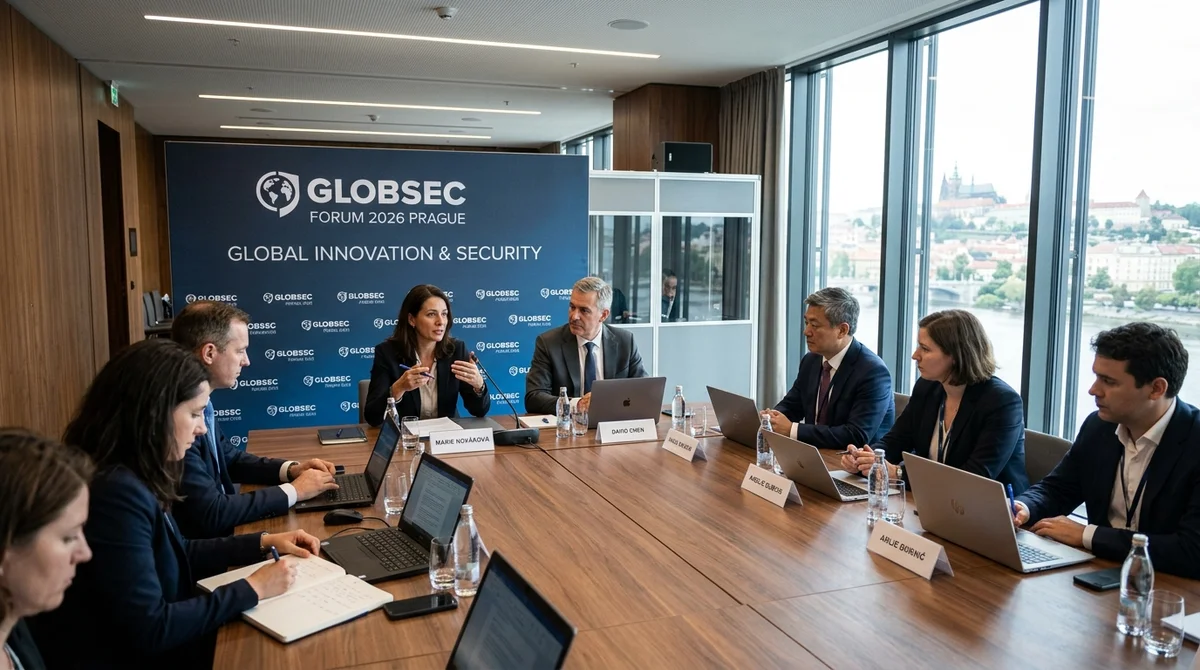
GLOBSEC Forum 2026 in Prague brought together more than 2000 participants and 270 speakers for three days of discussion on AI, cybersecurity and digital trust. The upshot: Europe stands at a crossroads between two diametrically opposed strategies.
The GLOBSEC Forum: why Europe is watching
The annual GLOBSEC forum, now in its 21st year, has become the main venue for strategic discussion of Europe's future in the digital age. This year the Czech capital hosted the heads of the largest technology companies, digital economy ministers from several countries, researchers from leading universities and cybersecurity experts from across the continent. The European technology company Nebi was the event's official Content Partner, which underscores how much the event matters to the industry.
The packed program covered three interlinked topics: how Europe can stay competitive in AI development while the US and China lead, how to protect citizens from cyber threats in a world where almost all infrastructure is digitized, and how to build a digital trust ecosystem that does not strangle innovation in the cradle.
Two strategies: smart regulation or maximum freedom?
Over the three days, two opposing positions on the future of European digital policy took clear shape.
The first strategy bets on strict regulation and citizen protection. Its supporters point to legislation already in force: the AI Act, which defines risk levels for AI applications; the Digital Services Act, which requires platforms to take more responsibility for content; and GDPR, which has become a global data protection standard. In their view, exactly this kind of framework will protect ordinary Europeans from manipulation and theft of personal information.
The second strategy calls for lowering regulatory barriers and betting on innovation. Its advocates argue that Europe has already fallen behind the leaders in developing large language models. Every new regulatory requirement widens the gap further: European startups spend resources on compliance with bureaucratic requirements rather than on development.
- Regulatory approach: citizens are protected, the pace of innovation slows
- Innovation approach: faster progress, but higher risks for society
- Hybrid position: smart regulation that does not hinder development
Why this is a choice, not a theory
In words, both approaches make sense. In practice, they are mutually exclusive strategies. Europe has already faced real threats: cyberattacks on critical infrastructure, targeted leaks of personal data, and disinformation spread through social media, particularly affecting elections. None of this is a hypothetical risk; it is the current reality.
At the same time, lagging in AI poses a strategic risk to the economy. American and Chinese companies dominate the large-model segment. European counterparts are still weaker and less well funded. If Europe imposes requirements that are too strict, it risks losing even more competitiveness.
What this means for the future
Europe's global weight depends on the choice it makes in the next 1-2 years. If regulation outweighs innovation, Europe may remain a region with high protection standards but limited opportunities in the global market. If innovation outweighs regulation, development will accelerate, but citizens will face new vulnerabilities.
GLOBSEC 2026 did not offer a ready-made solution, but it showed clearly that the choice can no longer be postponed.
- Oct 31, 2026Author puts his script before an AI jury: the verdict cost 850 thousand tokens
- Oct 29, 2026OvisOCR3: an 0.8B-parameter model that reads documents better than specialized systems
- Oct 29, 2026Tencent releases Youtu-Parsing-Omni: one model parses documents, audio and video
- Oct 28, 2026Liquid AI releases LFM2.5-24B-A2B: an agent model with 2B active parameters
Key Questions Answered
Two strategies: smart regulation or maximum freedom?
Over the three days, two opposing positions on the future of European digital policy took clear shape. The first strategy bets on strict regulation and citizen protection. Its supporters point to legislation already in force: the AI Act, which defines risk levels for AI applications; the Digital Services Act, which requires platforms to take more responsibility for content; and GDPR, which has become a global data protection standard. In their view, exactly this kind of framework will protect ordinary Europeans from manipulation and theft of personal information. The second
What are the key details on The GLOBSEC Forum: why Europe is watching?
The annual GLOBSEC forum, now in its 21st year, has become the main venue for strategic discussion of Europe's future in the digital age. This year the Czech capital hosted the heads of the largest technology companies, digital economy ministers from several countries, researchers from leading universities and cybersecurity experts from across the continent. The European technology company Nebi was the event's official Content Partner, which underscores how much the event matters to the industry. The packed program covered three interlinked topics: how Europe can stay compe
Why this is a choice, not a theory?
In words, both approaches make sense. In practice, they are mutually exclusive strategies. Europe has already faced real threats: cyberattacks on critical infrastructure, targeted leaks of personal data, and disinformation spread through social media, particularly affecting elections. None of this is a hypothetical risk; it is the current reality. At the same time, lagging in AI poses a strategic risk to the economy. American and Chinese companies dominate the large-model segment. European counterparts are still weaker and less well funded. If Europe imposes requirements th
Test Frontier LLMs & Autonomous Agents in One Workspace
Run Claude Opus 5.5, GPT-6, Gemini 3.1, and DeepSeek side-by-side in Nomad AI (nomadnet.ai) — unified model routing, deep research, and multimodal workflows under one subscription.
The AI world, distilled — once a week
Seven stories that actually mattered, hand-picked. No noise, no reposts, no press releases.
Done! Check your inbox for a confirmation.