Graduates boo commencement speakers who praise AI, and Microsoft calls for dialogue
At graduation ceremonies across the US, students are booing speakers who praise AI and overstate its importance. Former Google CEO Eric Schmidt was booed at the University of Arizona. In Florida, the crowd erupted when a speaker called AI 'the next industrial revolution.' Microsoft responded with a 3,000-word post calling for a calm dialogue about AI's place in young people's careers.
AI-processed from The Verge; edited by Hamidun News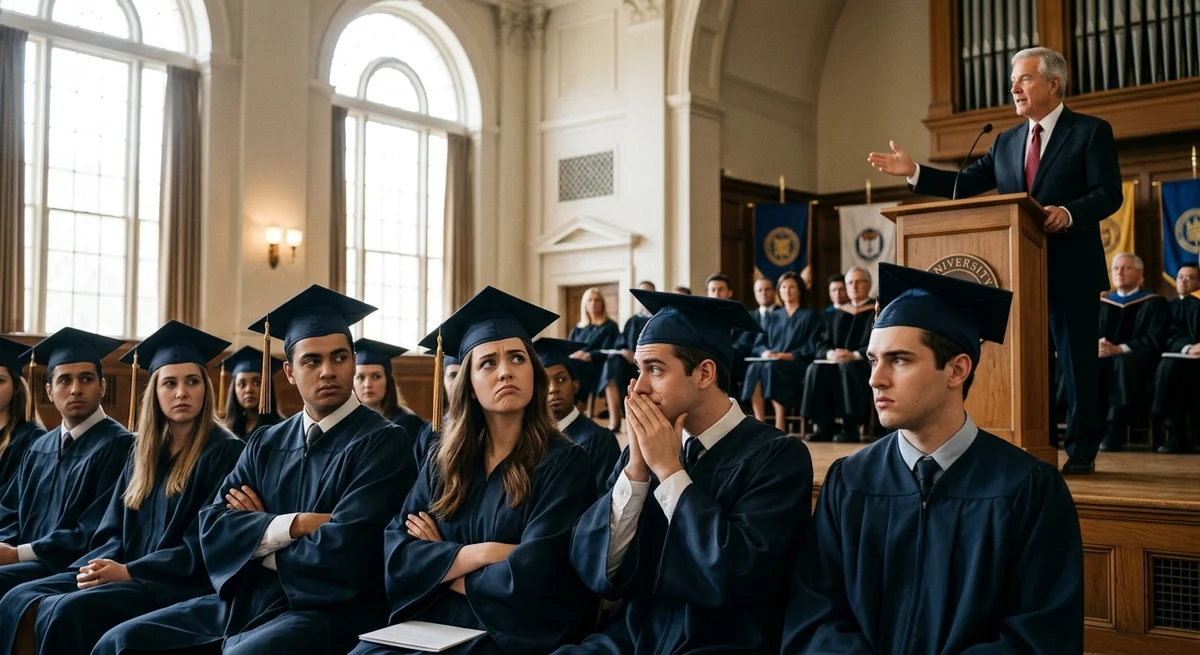

A new conflict is playing out at graduations across America. Graduates are booing speakers who praise artificial intelligence and the role it will play in the future of work. These aren't isolated incidents. They point to a deep gap between what corporate America promises and how it actually operates.
When AI became a rallying cry
Graduation crowds are pushing back against corporate optimism about AI. Former Google CEO Eric Schmidt was booed at the University of Arizona's ceremony as he tried to inspire graduates with the transformation AI promises. In that moment, educated, progressive young people said it plainly: 'We don't believe these promises, and we want you to hear that.'
In Florida, the crowd unexpectedly cut off a speaker after he called AI 'the next industrial revolution' and started talking up its potential. Clips of these moments spread across TikTok and Twitter and came to symbolize the growing distance between what corporate America says and what young people actually think. Within days, the videos racked up millions of views, and social media users started debating why graduates were reacting this way.
Why young people are unhappy
The booing isn't just an emotional reaction. It reflects a concrete concern shared across the class of 2026-2027. Graduates are watching AI move into education, recruiting systems, and entry-level jobs. They can see how fast things are changing.
Uncertainty is the real enemy. Nobody knows what the job market will look like in three years, which professions will survive, which will disappear, and which will fade into the background. Corporate speakers promise 'new opportunities' and 'transformation,' but students hear only one thing: 'your field may become obsolete, and you need to be ready for it.'
- Existential fear about their place in the job market as technology advances rapidly
- A deep gap between corporations' polished promises and the harsh economic reality young people face
- A sense that AI is being developed, improved, and deployed without meaningful input from the people it affects most
- No clear, transparent strategy for preparing workers for the changes ahead
Microsoft takes the mic
In response to the wave of viral videos, Microsoft vice chair and president Brad Smith published a detailed column running more than three thousand words. It's a substantial piece in which he tries to reframe the entire narrative around AI and its impact on the job market, career paths, and the future of the economy.
Smith's core argument is simple but forceful: AI won't simply push people out of jobs; it will create new professions we can't even imagine today. Rather than arguing, Smith proposed opening a dialogue about how retraining, education, and investment in human capital can help young people enter the digital economy successfully.
He also acknowledged that young people have a right to be skeptical and worried. The column tries to shift the message from 'the future is already here, and you need to be ready' to 'let's prepare together, and we'll help you.'
What it means
The corporate world is at least starting to hear the criticism. But Smith's words are only a first step, and young people know it. A real change in strategy will require concrete action: massive investment in education and retraining, plus fair conditions and transparency for young people throughout hiring and career development.
If Microsoft and other companies are serious about their promises, the next round of graduation ceremonies should be far less contentious, and students should feel genuine empathy rather than just nice words. Time will tell whether corporations can turn those words into action.
- Nov 1, 2026Google's StreamVibe video agent beats other models by 10.7% on response timing and quality
- Oct 30, 2026Mistral opens Large 4 weights: strong at code, but Chinese models score 32 to its 26
- Oct 30, 2026128 AI Agents With No Boss Passed 49% More Tests Than One
- Oct 29, 2026Stanford AI tool verifies part of Signal's code in half a day for under $500, versus five months of expert work
Key Questions Answered
When AI became a rallying cry?
Graduation crowds are pushing back against corporate optimism about AI. Former Google CEO Eric Schmidt was booed at the University of Arizona's ceremony as he tried to inspire graduates with the transformation AI promises. In that moment, educated, progressive young people said it plainly: 'We don't believe these promises, and we want you to hear that.' In Florida, the crowd unexpectedly cut off a speaker after he called AI 'the next industrial revolution' and started talking up its potential. Clips of these moments spread across TikTok and Twitter and came to symbolize the
Why young people are unhappy?
The booing isn't just an emotional reaction. It reflects a concrete concern shared across the class of 2026-2027. Graduates are watching AI move into education, recruiting systems, and entry-level jobs. They can see how fast things are changing. Uncertainty is the real enemy. Nobody knows what the job market will look like in three years, which professions will survive, which will disappear, and which will fade into the background. Corporate speakers promise 'new opportunities' and 'transformation,' but students hear only one thing: 'your field may become obsolete, and you
What are the key details on Microsoft takes the mic?
In response to the wave of viral videos, Microsoft vice chair and president Brad Smith published a detailed column running more than three thousand words. It's a substantial piece in which he tries to reframe the entire narrative around AI and its impact on the job market, career paths, and the future of the economy. Smith's core argument is simple but forceful: AI won't simply push people out of jobs; it will create new professions we can't even imagine today. Rather than arguing, Smith proposed opening a dialogue about how retraining, education, and investment in human ca
Ship AI Faster with Founders, Engineers & Weekly Architecture Reviews
Inside Vibe Club (hamidun.com/club) — weekly live masterminds with Zhemal Khamidun, Tech Radar, full LMS access, and 370+ production Claude Code skills.
The AI world, distilled — once a week
Seven stories that actually mattered, hand-picked. No noise, no reposts, no press releases.
Done! Check your inbox for a confirmation.