Investors borrow $36 billion for Google chips destined for Anthropic
A group of investors has raised $36 billion in borrowed funds to buy Google TPU chips for Anthropic. The financing runs through third parties, which lets the company avoid direct responsibility for how the money is used. OpenAI works with a similar scheme. The deal shows how AI companies competing with OpenAI cope with astronomical infrastructure costs.
AI-processed from 3DNews AI; edited by Hamidun News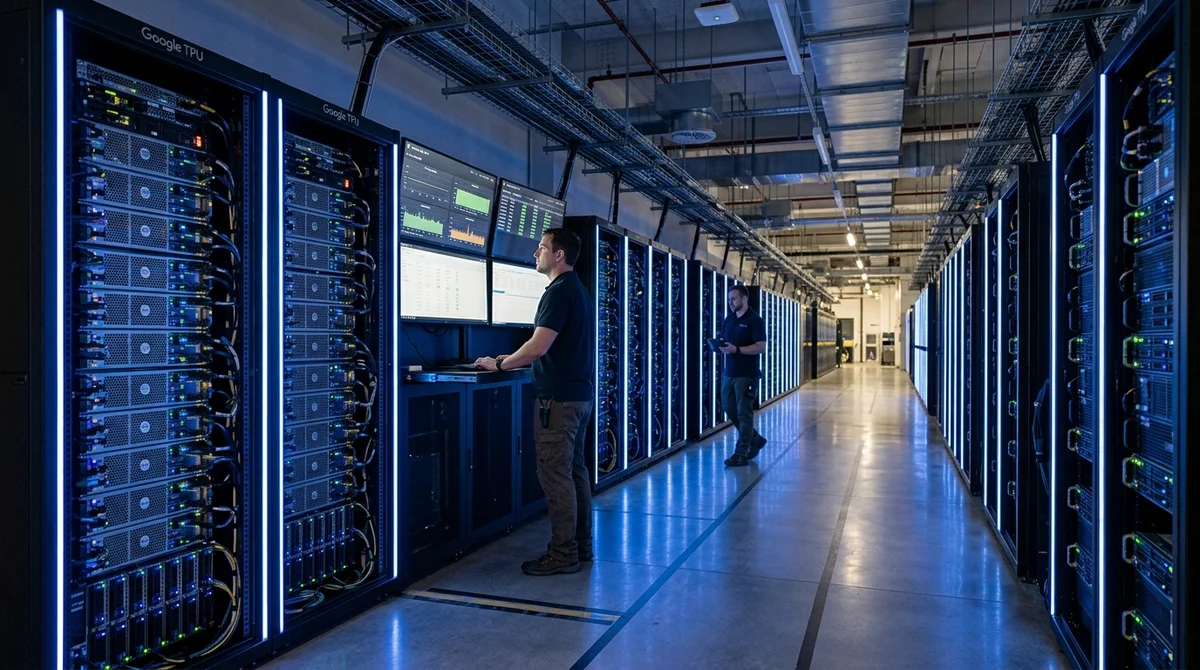
Anthropic is financing the purchase of extremely expensive servers through third-party investors, who have raised $36 billion in borrowed funds. It shows how AI companies competing with OpenAI cope with astronomical infrastructure costs.
A circular financing scheme
According to Bloomberg, a group of investors is taking out a $36 billion loan to buy Google TPUs (Tensor Processing Units), specialized chips that train and run modern AI models. The chips are then handed over to Anthropic.
This approach means Anthropic itself does not act as the borrower and does not bear direct legal responsibility for how the financing is used.
The structure resembles those used at OpenAI. Money changes hands many times, the companies get the hardware they need, but they formally keep their distance from the debt obligations.
Why investors are taking this risk
AI infrastructure requires capital spending that goes beyond traditional financing:
- A single data center worldwide costs $10–20 billion
- Google TPUs are supplied in limited volumes and only under long-term contracts
- Training a modern LLM takes millions of compute hours
- Competition for chips has intensified, so capacity must be reserved years ahead
For investors, this is a risky bet: if Anthropic grows in value and captures a significant share of the AI market, their investment will pay off many times over. If not, they are left holding expensive hardware.
What this means
Fintech and traditional financiers are weaving themselves into the core of the AI industry. The race for computing power may soon hit a borrowing limit, with banks setting strict conditions or refusing to lend altogether. That could slow the growth of new AI startups and concentrate power in the hands of large companies with their own cash flows.
- Nov 2, 2026Bun creator uses Claude Code to port 750K lines from Zig to Rust in 11 days
- Nov 2, 2026mcp-linter finds 18 undescribed parameters in Anthropic's filesystem server
- Nov 2, 2026The Verge reviewer builds a $50 Meta Muse Charm alternative with Claude Code
- Nov 2, 20268 Skills for video in Claude Code: from 244 pixel effects to rough-cut editing
Key Questions Answered
What are the key details on A circular financing scheme?
According to Bloomberg, a group of investors is taking out a $36 billion loan to buy Google TPUs (Tensor Processing Units), specialized chips that train and run modern AI models. The chips are then handed over to Anthropic. This approach means Anthropic itself does not act as the borrower and does not bear direct legal responsibility for how the financing is used. The structure resembles those used at OpenAI. Money changes hands many times, the companies get the hardware they need, but they formally keep their distance from the debt obligations.
Why investors are taking this risk?
AI infrastructure requires capital spending that goes beyond traditional financing: A single data center worldwide costs $10–20 billion Google TPUs are supplied in limited volumes and only under long-term contracts Training a modern LLM takes millions of compute hours Competition for chips has intensified, so capacity must be reserved years ahead For investors, this is a risky bet: if Anthropic grows in value and captures a significant share of the AI market, their investment will pay off many times over. If not, they are left holding expensive hardware.
What this means?
Fintech and traditional financiers are weaving themselves into the core of the AI industry. The race for computing power may soon hit a borrowing limit, with banks setting strict conditions or refusing to lend altogether. That could slow the growth of new AI startups and concentrate power in the hands of large companies with their own cash flows.
Test Frontier LLMs & Autonomous Agents in One Workspace
Run Claude Opus 5.5, GPT-6, Gemini 3.1, and DeepSeek side-by-side in Nomad AI (nomadnet.ai) — unified model routing, deep research, and multimodal workflows under one subscription.
The AI world, distilled — once a week
Seven stories that actually mattered, hand-picked. No noise, no reposts, no press releases.
Done! Check your inbox for a confirmation.