Generative AI Swamps Australia's Labor Tribunal: Workload Up 70% in Three Years
Australia's Fair Work Commission is urgently reviewing its processes after generative AI triggered a surge in claims. Over three years, the commission's workload has grown by 70%. Officials found that AI tools make it easier to file complaints, but the quality of many documents raises questions.
AI-processed from Bloomberg Tech; edited by Hamidun News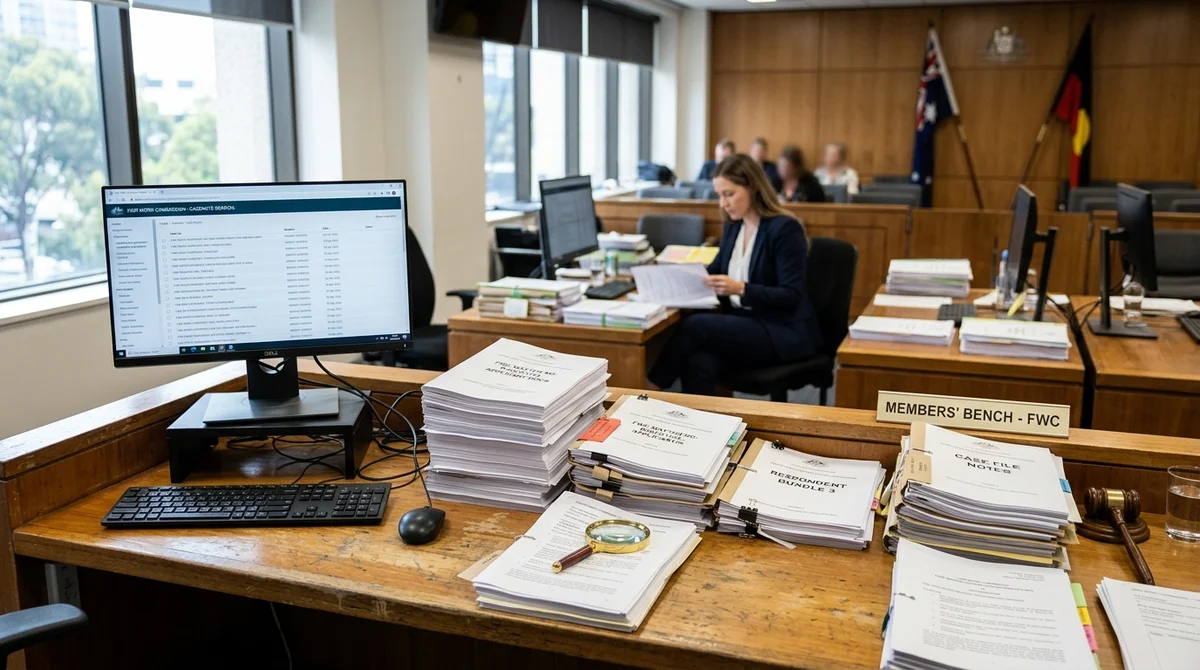
Australia's Fair Work Commission has announced an urgent review of its processes, facing an unprecedented influx of claims filed with the help of generative AI tools. Over three years, the commission's workload has grown by 70%.
How AI increased the workload
Generative AI has democratized access to legal tools. Previously, filing a claim meant hiring a lawyer or spending hours studying the law on your own. Now it is enough to describe the problem to ChatGPT, and within minutes a legal document is ready.
Tools such as ChatGPT, Claude and other models can quickly generate complaints, applications and other documents. This lowered the barrier to entry: workers can now defend their rights without lawyers.
It sounds good in theory. In practice, the commission received an avalanche of paperwork. The Fair Work Commission is not ready for this volume: staffing has stayed the same, while the number of cases has tripled.
Quality problems
Accessibility and accuracy are pulling in opposite directions. Generative AI often produces documents that are formally correct but wrong in substance. Filings generated by models contain:
- Hallucinations: invented facts and statutes
- Logical errors: contradictions within a single document
- Incorrect formatting: documents that are technically not accepted by the court
- Duplication: the same case filed several times from different angles
Commission staff have to examine each case from scratch and check sources to work out what a person wrote and what the neural network made up. This takes more time, not less.
How the commission will adapt
The Fair Work Commission has announced a review of its processes but has not yet named specific measures. There are several options: tighten the requirements for the form of filings, hire more staff, or deploy AI tools on the commission's side to check documents automatically.
The main challenge: the commission cannot simply shut the door on AI. First, that would be unfair, since not everyone can afford a lawyer. Second, it is technically impossible to control.
What this means
Australia's story shows the real price of democratizing tools through AI. On one hand, workers gained access to justice. On the other, courts faced administrative overload.
The question is not whether AI is good or bad. The question is whether institutions (courts, administrations, universities, hospitals) are ready for tools that change the scale of work by 3-10 times within a few years. Australia is looking for an answer right now. Other countries should watch closely.
- Nov 1, 2026Local models lose to Opus and Codex: 0.21 on a MacBook versus 1.00 for Codex
- Nov 1, 2026Kimi scores 96.2% on a 1C database analytics test and emerges as a fallback if Claude access is blocked
- Nov 1, 2026OpenAI Rewrites GPT Behavior Rules: Five Values and a Chain of Command
- Nov 1, 2026Google admits AI Mode cuts search revenue, shares fall 15%
Key Questions Answered
How AI increased the workload?
Generative AI has democratized access to legal tools. Previously, filing a claim meant hiring a lawyer or spending hours studying the law on your own. Now it is enough to describe the problem to ChatGPT, and within minutes a legal document is ready. Tools such as ChatGPT, Claude and other models can quickly generate complaints, applications and other documents. This lowered the barrier to entry: workers can now defend their rights without lawyers. It sounds good in theory. In practice, the commission received an avalanche of paperwork. The Fair Work Commission is not ready
What are the key details on Quality problems?
Accessibility and accuracy are pulling in opposite directions. Generative AI often produces documents that are formally correct but wrong in substance. Filings generated by models contain: Hallucinations: invented facts and statutes Logical errors: contradictions within a single document Incorrect formatting: documents that are technically not accepted by the court Duplication: the same case filed several times from different angles Commission staff have to examine each case from scratch and check sources to work out what a person wrote and what the neural network made up.
How the commission will adapt?
The Fair Work Commission has announced a review of its processes but has not yet named specific measures. There are several options: tighten the requirements for the form of filings, hire more staff, or deploy AI tools on the commission's side to check documents automatically. The main challenge: the commission cannot simply shut the door on AI. First, that would be unfair, since not everyone can afford a lawyer. Second, it is technically impossible to control.
Ship AI Faster with Founders, Engineers & Weekly Architecture Reviews
Inside Vibe Club (hamidun.com/club) — weekly live masterminds with Zhemal Khamidun, Tech Radar, full LMS access, and 370+ production Claude Code skills.
The AI world, distilled — once a week
Seven stories that actually mattered, hand-picked. No noise, no reposts, no press releases.
Done! Check your inbox for a confirmation.