An Azerbaijani LLM on SageMaker: how Azercell tackled a low-resource language
Azerbaijani telecom operator Azercell has built its own large language model using Amazon SageMaker AI. In six weeks of intensive work with the AWS Generative AI Innovation Center, the company worked around a chronic shortage of training data and the morphological complexity of the Azerbaijani language. The result is a production-ready LLM that powers a customer-facing chatbot and internal business processes — the first industrial-scale example of its kind in the region.
AI-processed from AWS Machine Learning Blog; edited by Hamidun News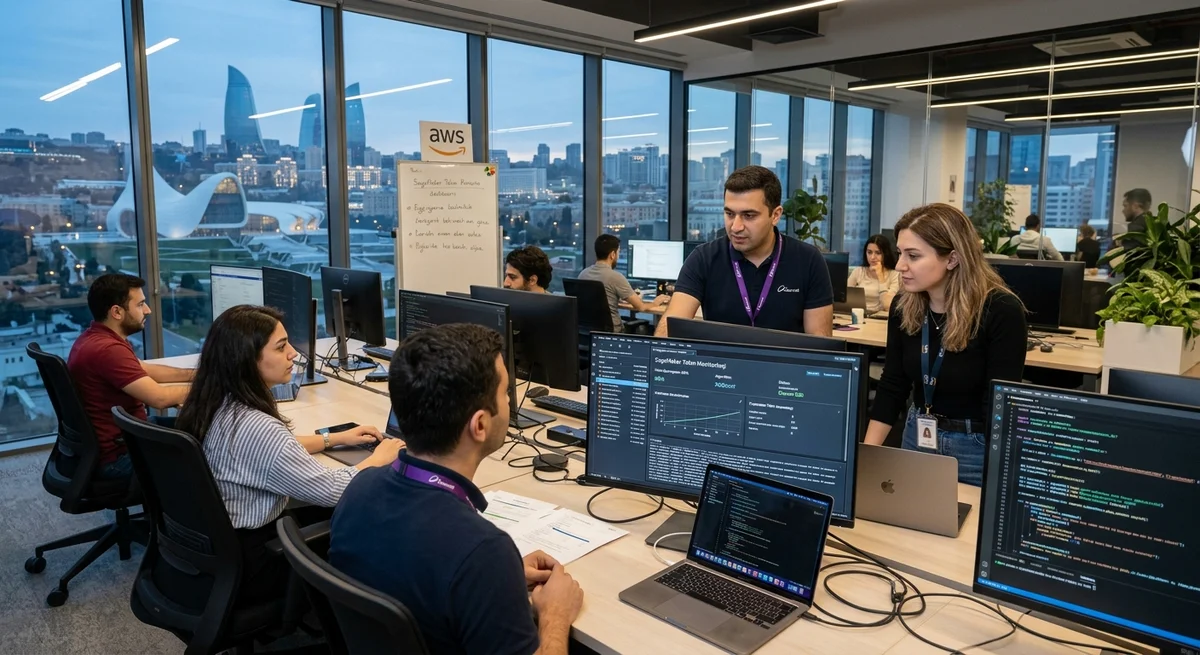
Azerbaijani telecom operator Azercell has built its own language model on Amazon SageMaker AI. The company set itself an ambitious goal: a production-grade LLM for a morphologically complex language with little ready-made data and no existing solutions on the market.
Why Azerbaijani is a hard case
Azerbaijani is a typical agglutinative language with rich morphology. A single word can carry many suffixes, each of which can radically change its meaning and grammatical function. That calls for very different approaches to tokenization and model training than Indo-European languages do.
On top of the morphology comes a critical constraint: there is far less open training data in Azerbaijani than in English, Russian, or Spanish. Standard LLM training methods, refined on large text corpora, don't transfer directly.
- Morphological complexity requires specialized tokenization
- Data scarcity: 100+ times less text than for major languages
- No existing examples or best practices for Azerbaijani LLMs
- Foundation models trained on English-language data need to be adapted
- The model has to integrate with production telecom systems
How Azercell solved it
The company partnered with the AWS Generative AI Innovation Center. Over six intensive weeks, specialists from both sides built a production-ready framework on Amazon SageMaker.
The solution had several key components: careful preparation and cleaning of the available data, specialized tokenization that accounts for Azerbaijani morphology, and a training process optimized for smaller datasets. Rather than training from scratch on an Azerbaijani corpus, the engineers used transfer learning to adapt already-trained models.
The result: two roles for the model
Azercell's model serves two purposes. First, it runs a customer-facing chatbot that helps subscribers with questions about services and plans in Azerbaijani.
Second, the model supports internal business processes: handling incoming requests, analyzing call-center speech, classifying issues, and generating personalized service recommendations. Focusing on Azerbaijani avoids meaning lost in translation and ensures the model understands local context and nuances of speech.
What it means
This is the first public example of a fully functional Azerbaijani LLM developed on cloud infrastructure. The case shows that cloud platforms can adapt LLMs not only to low-resource languages but also to specific industry tasks.
For other companies in the region, the message is clear: investing in a proprietary language model is realistic and achievable within a few weeks.
- Nov 2, 2026The Verge reviewer builds a $50 Meta Muse Charm alternative with Claude Code
- Oct 31, 2026Worldwide Express hands disputed invoices to AI agents and cuts unresolved disputes by 75%
- Oct 30, 2026AWS gives coding agents a live site preview straight from an isolated session
- Oct 30, 2026Agent traffic on Zocdoc is up 30x since July, and ChatGPT faces two health lawsuits
Key Questions Answered
Why Azerbaijani is a hard case?
Azerbaijani is a typical agglutinative language with rich morphology. A single word can carry many suffixes, each of which can radically change its meaning and grammatical function. That calls for very different approaches to tokenization and model training than Indo-European languages do. On top of the morphology comes a critical constraint: there is far less open training data in Azerbaijani than in English, Russian, or Spanish. Standard LLM training methods, refined on large text corpora, don't transfer directly. Morphological complexity requires specialized tokenization
How Azercell solved it?
The company partnered with the AWS Generative AI Innovation Center. Over six intensive weeks, specialists from both sides built a production-ready framework on Amazon SageMaker. The solution had several key components: careful preparation and cleaning of the available data, specialized tokenization that accounts for Azerbaijani morphology, and a training process optimized for smaller datasets. Rather than training from scratch on an Azerbaijani corpus, the engineers used transfer learning to adapt already-trained models.
What are the key details on The result: two roles for the model?
Azercell's model serves two purposes. First, it runs a customer-facing chatbot that helps subscribers with questions about services and plans in Azerbaijani. Second, the model supports internal business processes: handling incoming requests, analyzing call-center speech, classifying issues, and generating personalized service recommendations. Focusing on Azerbaijani avoids meaning lost in translation and ensures the model understands local context and nuances of speech.
Test Frontier LLMs & Autonomous Agents in One Workspace
Run Claude Opus 5.5, GPT-6, Gemini 3.1, and DeepSeek side-by-side in Nomad AI (nomadnet.ai) — unified model routing, deep research, and multimodal workflows under one subscription.
The AI world, distilled — once a week
Seven stories that actually mattered, hand-picked. No noise, no reposts, no press releases.
Done! Check your inbox for a confirmation.