Google reveals Android Auto of tomorrow — and it makes old cars look ridiculous
Google updates Android Auto with a new UI, improved maps, and Gemini integration. At Google IO, the demonstration of the future car interface was so impressive that old cars now look hopeless. Updates will affect navigation, voice commands, and information display.
AI-processed from ZDNet AI; edited by Hamidun News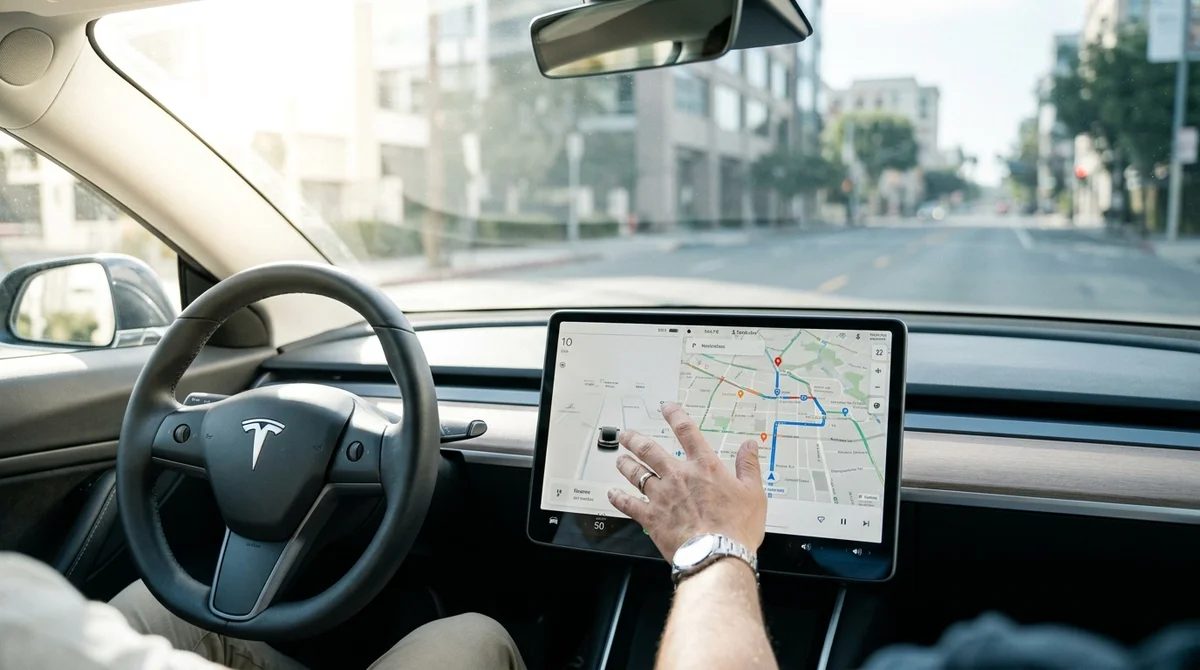
At Google IO, they presented an updated Android Auto with a redesigned interface, improved maps, and built-in Gemini integration. The presentation was so impressive that you can't help but think: how will I drive my current car? It's no longer just a system for displaying information on a screen — it's a full-fledged smart assistant that understands the context of your trip.
Redesigned Interface
Google has completely reworked the Android Auto interface. Maps now occupy most of the display and automatically adapt to different screen sizes and resolutions across various vehicles. Control buttons have become significantly larger, clearer, and more accessible while driving — this is critical for safety. Integration with Gemini has accelerated the system's response to voice commands several times over. Instead of a set of predefined commands, the system now understands natural language and context. Ask to find "a vegetarian café near work" — and the system will find the establishment, plot a route accounting for traffic. This is a qualitatively new level of interaction between driver and car.
Gemini as an Intelligent Assistant
Gemini's built-in integration into Android Auto is the main upgrade in this update cycle. Now the assistant not only listens and executes commands, but actively helps: suggests optimal routes, warns about traffic, instantly offers alternatives. All of this happens without taking your eyes off the road. Key capabilities:
- Real-time analysis of road conditions and automatic route reconfiguration when traffic occurs
- Personalized recommendations for rest areas, gas stations, cafés along the route based on driver habits
- Reading and synthesis of incoming messages without diverting attention from the road
- Voice control of music, calls, and navigation in natural language
- Predictive suggestions: the system will suggest a refueling stop before you run out of fuel
Maps Redesigned
Google has completely reworked the map layer. The map interface has become cleaner, clearer, and faster to perceive at speed. When zooming, you see significantly more useful details: road markings, alleys, street names, landmarks. This is especially useful in unfamiliar areas and large cities. The system updates traffic information in real-time and instantly suggests an alternate route if your route is congested. In some countries, Google has added support for local taxi and delivery services directly in the navigation interface. This means that during a trip, you can order a meeting at the destination without switching between apps.
When to Expect Updates
Google IO did not announce an exact date for the full release. Updates will begin rolling out gradually to compatible vehicles in the coming months. The speed depends on the manufacturer and operating system version.
"We have worked closely with manufacturers to ensure the update reaches cars as quickly as possible.
This is the result of carefully listening to driver requests around the world," — a Google representative at the presentation.
What This Means for Drivers
The new Android Auto sets a high bar for the industry. It shows what truly modern car interfaces should be like: intuitive, fast, predictive, and helpful to the driver. If you have an old car with the current version of Android Auto, the demonstration creates an acute desire to change your vehicle. This is a signal to the market: in the coming years, driving will be completely different, because the focus on AI assistants is only increasing. We can only hope that updates will be available for the widest range of vehicles, not just flagship models of premium brands.
Need AI working inside your business — not just in your newsfeed?
I build production AI for companies — custom CRM, internal tools, autonomous agents, workflow automation. Owned by you, shaped to your process, no per-seat tax. Built by Zhemal Khamidun, CPO of AlpinaGPT (AI platform, 6,000+ users).
The AI world, distilled — once a week
Seven stories that actually mattered, hand-picked. No noise, no reposts, no press releases.
Done! Check your inbox for a confirmation.