China's biotech leap: AI, clinical trials, and rising investment
China is rapidly strengthening its position as a global biotech hub. AI is cutting costs in the early stages of drug development, while the local drug approval system works significantly faster than Western regulators. The country is becoming a global leader in clinical trials, attracting new investment into the sector.
AI-processed from Bloomberg Tech; edited by Hamidun News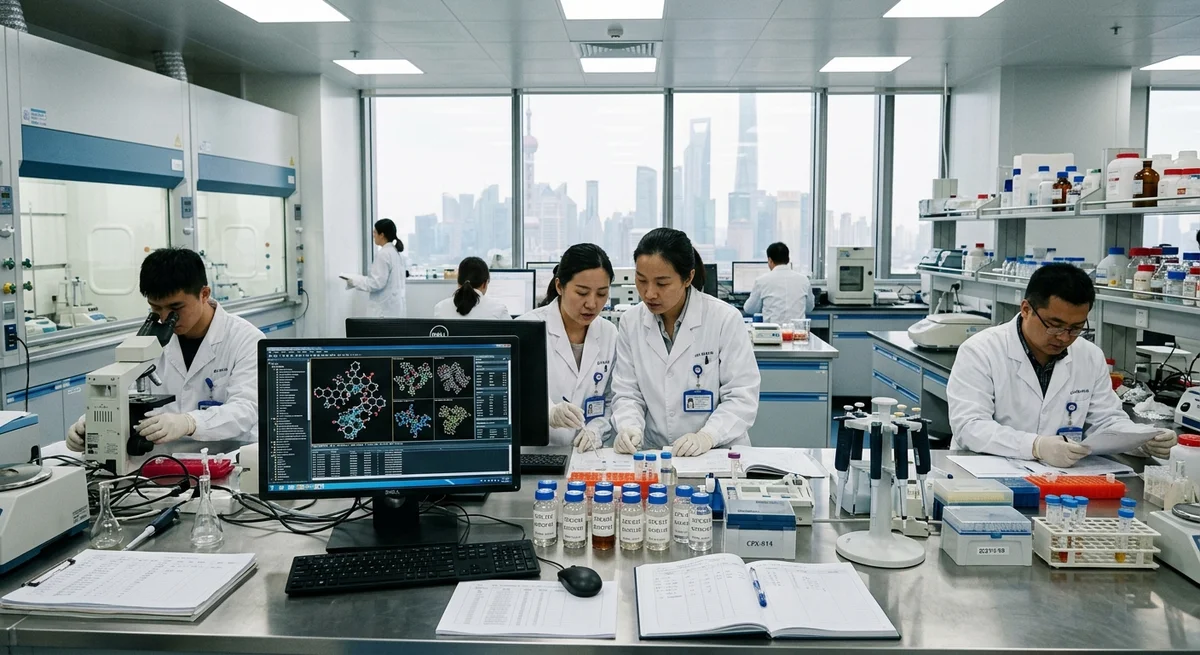
Chinese healthcare and biotechnology sector is experiencing explosive growth, relying on production scale, execution speed, and one of the world's most efficient drug approval systems.
How artificial intelligence cuts development costs
Neural networks are beginning to seriously reduce the cost of the most expensive early phases of drug development. Traditionally, researchers had to synthesize and test hundreds, sometimes thousands of molecules manually, relying on intuition and experience. Now AI helps predict the structure and biochemical activity of compounds before physical synthesis. This saves months of work and millions of dollars in the early stages. However, AI is not a magic wand — the clinical trial process itself remains expensive and lengthy. But by significantly accelerating the preparation of drug candidates, artificial intelligence makes the entire development pipeline more compact.
"AI doesn't solve the whole problem, but it saves enormous resources at the very beginning," explains
Simone Song, lead partner at Ori Capital fund, at the Sohn Hong Kong conference.
Why Chinese approvals work faster
China's State Administration for Drug Control approves new drugs significantly faster than the American FDA or European EMA. This is the result of both administrative efficiency and scientific integrity of systems — developers can move between trial phases without endless coordination. Many Western pharmaceutical companies are already moving key clinical trials to China. Fast approvals attract investment:
- Timelines from application submission to approval are significantly shorter
- Minimal inter-agency bureaucracy between trial phases
- Direct access to large patient populations
- Significantly lower costs for conducting clinical trials
- Ready-made infrastructure of certified research centers
Why China became the center of global trials
Over the past ten years, the country has created a vast network of hospitals and research centers prepared for rapid scaling of clinical trials. The availability of a large pool of patients willing to participate in research attracts major pharmaceutical companies. Many conduct critical phases 2 and 3 of their drugs here. This is not just convenient for developers — it serves as a full-fledged "proof of concept" for Western investors. If a drug is successful in a million-strong Chinese population, it is likely to work on Western patients as well.
Hong Kong market revaluation
On the Hong Kong stock market, a long-awaited revaluation of biotech stocks has taken place. Companies that previously traded at completely speculative multiples are now valued more realistically — by actual metrics of survival, profitability, and development stage. This creates a dual dynamic: overvalued companies fall in price, but the sector as a whole becomes more attractive to serious investors. Major funds are now ready to enter biotech because valuations have stopped being fantasy.
What this means
China is not copying Western biotech models — it is creating its own, faster and more scalable ecosystem. This means that clinical trials will increasingly take place in Asia, AI will accelerate the creation of first versions of drugs, and the Hong Kong market will become better calibrated to value biotech companies. For the global pharmaceutical industry, this will mean a new center of power in drug development.
Key Questions Answered
How artificial intelligence cuts development costs?
Neural networks are beginning to seriously reduce the cost of the most expensive early phases of drug development. Traditionally, researchers had to synthesize and test hundreds, sometimes thousands of molecules manually, relying on intuition and experience. Now AI helps predict the structure and biochemical activity of compounds before physical synthesis. This saves months of work and millions of dollars in the early stages. However, AI is not a magic wand — the clinical trial process itself remains expensive and lengthy. But by significantly accelerating the preparation o
Why Chinese approvals work faster?
China's State Administration for Drug Control approves new drugs significantly faster than the American FDA or European EMA. This is the result of both administrative efficiency and scientific integrity of systems — developers can move between trial phases without endless coordination. Many Western pharmaceutical companies are already moving key clinical trials to China. Fast approvals attract investment: Timelines from application submission to approval are significantly shorter Minimal inter-agency bureaucracy between trial phases Direct access to large patient population
Why China became the center of global trials?
Over the past ten years, the country has created a vast network of hospitals and research centers prepared for rapid scaling of clinical trials. The availability of a large pool of patients willing to participate in research attracts major pharmaceutical companies. Many conduct critical phases 2 and 3 of their drugs here. This is not just convenient for developers — it serves as a full-fledged "proof of concept" for Western investors. If a drug is successful in a million-strong Chinese population, it is likely to work on Western patients as well.
Build & Ship Production AI Apps with Vibe Coding
Join Zhemal Khamidun's hands-on Vibe Coding Intensive at hamidun.com/vibecoding — master Claude Code, Cursor, and autonomous agentic workflows.
The AI world, distilled — once a week
Seven stories that actually mattered, hand-picked. No noise, no reposts, no press releases.
Done! Check your inbox for a confirmation.