Robot apocalypse is a myth: what really worries Oxford AI professor
Oxford professor Michael Wooldridge, who has published 500+ scientific papers and 10 books on AI, is not worried about a machine uprising. In his view, the real danger lies in how Silicon Valley misapplies the technology, underestimates ethical risks, and often focuses only on maximizing profit while ignoring the consequences.
AI-processed from Guardian; edited by Hamidun News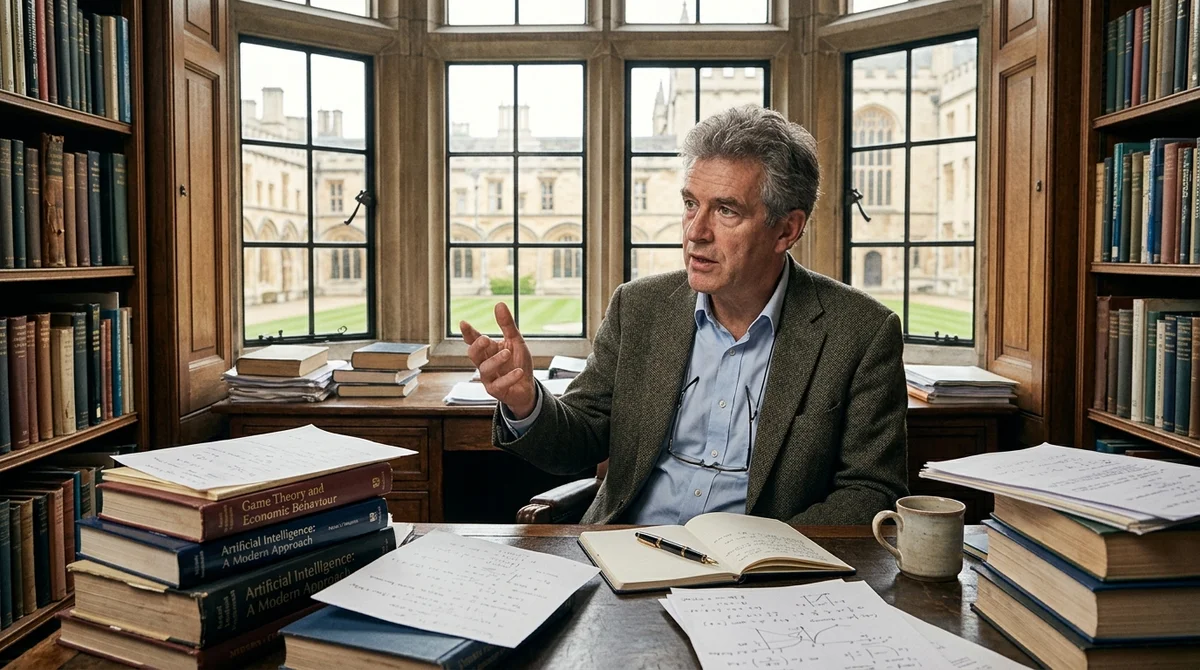
Professor Michael Wooldridge from Oxford, one of the world's leading AI and game theory experts, is convinced that humanity is worried about the wrong things. A machine uprising is a fantasy, and the real problems are far more mundane—but far more serious.
Who Is Michael Wooldridge
Michael Wooldridge is not your typical academic. After nearly 50 years working with computers, he hasn't descended into narrow specialization—quite the opposite: he has published over 500 scientific papers, written 10 books, yet remains accessible—capable of explaining the complex in simple terms. His latest project is an updated version of the classic Ladybird children's books about AI. "I'm very proud of this," Wooldridge says. For him, this is not a popularization trick, but a genuine conviction: everyone should understand how the technologies that shape their lives work.
Why Robot Apocalypse Is a Myth
When a Guardian journalist asked Wooldridge about machine uprising, the professor smiled. "I'm not worried about it," he replied with remarkable confidence. The reason is straightforward: modern AI lacks self-awareness, goals that diverge from human goals, or a desire for power. ChatGPT doesn't plot an uprising because it simply has nothing to want. It has no survival instincts, no ambitions, no claims to dominance. This doesn't mean AI is safe. It means the danger lies elsewhere entirely.
Real Risks of Technology
Wooldridge identifies several concrete problems that concern him far more than movies about machine rebellion:
- Misapplication of game theory — companies use it solely to maximize profit, ignoring social consequences
- Lack of ethics in design — AI systems are trained on biased data, which reproduces historical discrimination
- Absence of transparency — AI "black box" conceals how critical decisions are made about loans, court verdicts, job hiring
- Ignoring long-term consequences — companies think about quarterly profit, not the impact on labor markets, inequality, and society as a whole
Wooldridge emphasizes: the danger lies not in artificial intelligence itself, but in how people apply it.
How Silicon Valley Misuses Science
In Wooldridge's view, technologists in Silicon Valley often take the formal apparatus of game theory as justification for ruthless profit-driven optimization. They say: "This is Pareto optimal" or "this maximizes shareholder value"—and forget that in human systems you simply cannot "optimize." Every optimization decision creates winners and losers. Wooldridge proposes a different approach: we need to include ethical and social costs in the calculation, even if this is more difficult and less profitable. This is precisely what distinguishes responsible AI application from irresponsible application.
What This Means
Wooldridge's interview is a reminder that AI fears often do not match reality. The real problem is not machine uprising, but how people use these machines: for profit, without foresight, without ethics, and without accounting for long-term consequences. This is not a science fiction scenario—it is what is happening right now, in 2026, in the offices of the world's largest technology companies.
Want to stop reading about AI and start using it?
AI News is a curated feed of AI/tech news. Hamidun Academy teaches you to use AI systematically in your work.
The AI world, distilled — once a week
Seven stories that actually mattered, hand-picked. No noise, no reposts, no press releases.
Done! Check your inbox for a confirmation.