WeatherNext Helped National Hurricane Center More Accurately Predict Hurricane Melissa
DeepMind released WeatherNext, an AI model for weather forecasting. When predicting Hurricane Melissa in Jamaica, it provided a more accurate and earlier warning. This allowed residents to begin preparing for the storm several hours earlier.
AI-processed from DeepMind Blog; edited by Hamidun News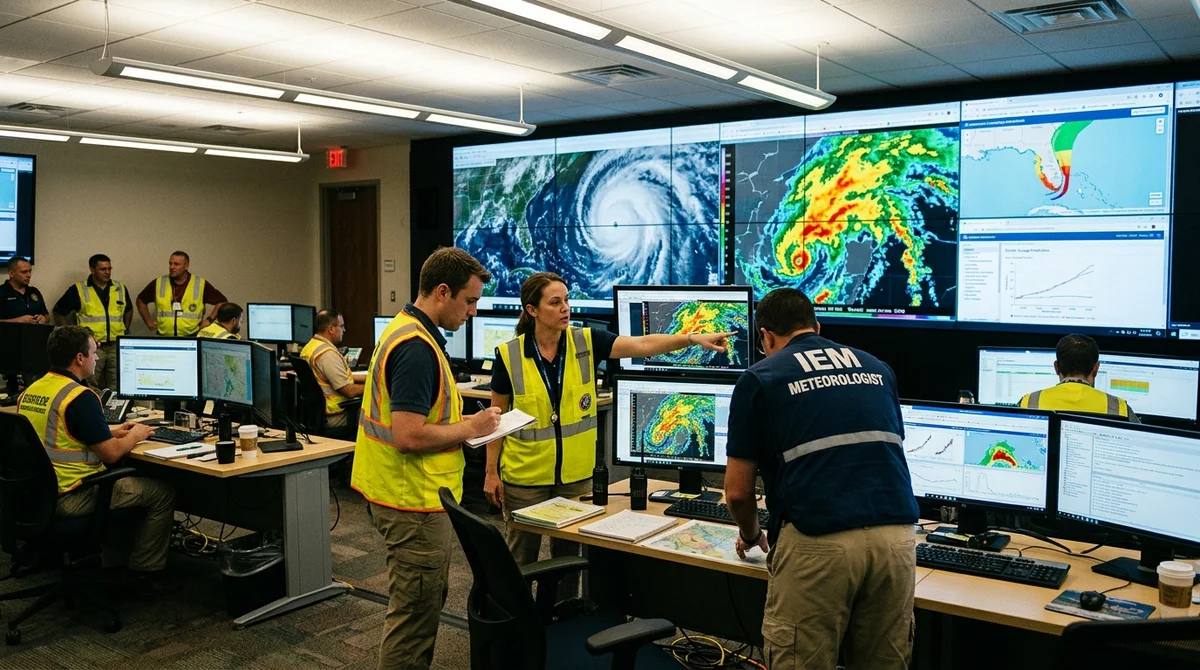
WeatherNext, an AI weather forecasting model from DeepMind, played a key role in more accurately predicting Hurricane Melissa, which hit Jamaica with unexpected force. The improved forecast gave communities precious additional time to prepare for the historic natural disaster.
How WeatherNext Works
WeatherNext uses deep learning to analyze satellite data, information on pressure, temperature, humidity, and historical patterns of storm development. The model is trained on millions of examples from the past and can predict the development of weather systems with significantly higher accuracy than traditional numerical models that require enormous computational resources. The key advantage is speed and efficiency. Where traditional methods require hours of computation on supercomputers, WeatherNext processes data in minutes. This allows meteorologists at the National Hurricane Center to update recommendations in near real-time, without waiting for a full computational cycle to complete.
Melissa: When AI Tackles Uncertainty
Hurricane Melissa became historic for its intensity and rapid development. Satellite images showed its rapid transition to the highest category hurricane, but the trajectory and exact time of peak intensity remained uncertain even to experienced forecasters. The National Hurricane Center faced a classic dilemma: issue a conservative forecast or an aggressive one, risking panicking the population. WeatherNext provided a third way—more accurate forecasting by analyzing vast amounts of data that humans cannot process in a short time.
What Communities and First Responders Gained
The improved forecast transformed hurricane preparation:
- Evacuation began 4-6 hours ahead of the normal schedule
- Emergency services had enough time to deploy mobile medical facilities
- Critical infrastructure was protected—power grids reinforced, water supply systems switched to emergency mode
- Ports and airports received a clear timeline for completing operations
- Panic was reduced thanks to timely and reliable information
In practice, these hours made the difference between a natural disaster and a prepared response. Jamaican authorities later acknowledged that the additional time saved lives and property.
What This Means for the Future
The success of WeatherNext demonstrates that AI can transform from a laboratory project into a life-saving tool. Machine learning does not replace meteorologists' expertise but enhances it, providing a more complete and faster picture of an evolving situation. For insurance, logistics, and urban planning, accurate forecasts of extreme events acquire strategic importance.
Want to stop reading about AI and start using it?
AI News is a curated feed of AI/tech news. Hamidun Academy teaches you to use AI systematically in your work.
The AI world, distilled — once a week
Seven stories that actually mattered, hand-picked. No noise, no reposts, no press releases.
Done! Check your inbox for a confirmation.