Lithuania is the second in the EU to approve Tesla Full Self-Driving — Greece and Belgium are next in line
Tesla has received approval to launch Full Self-Driving (Supervised) in Lithuania. It is the second EU country to allow the system, after the Netherlands, just
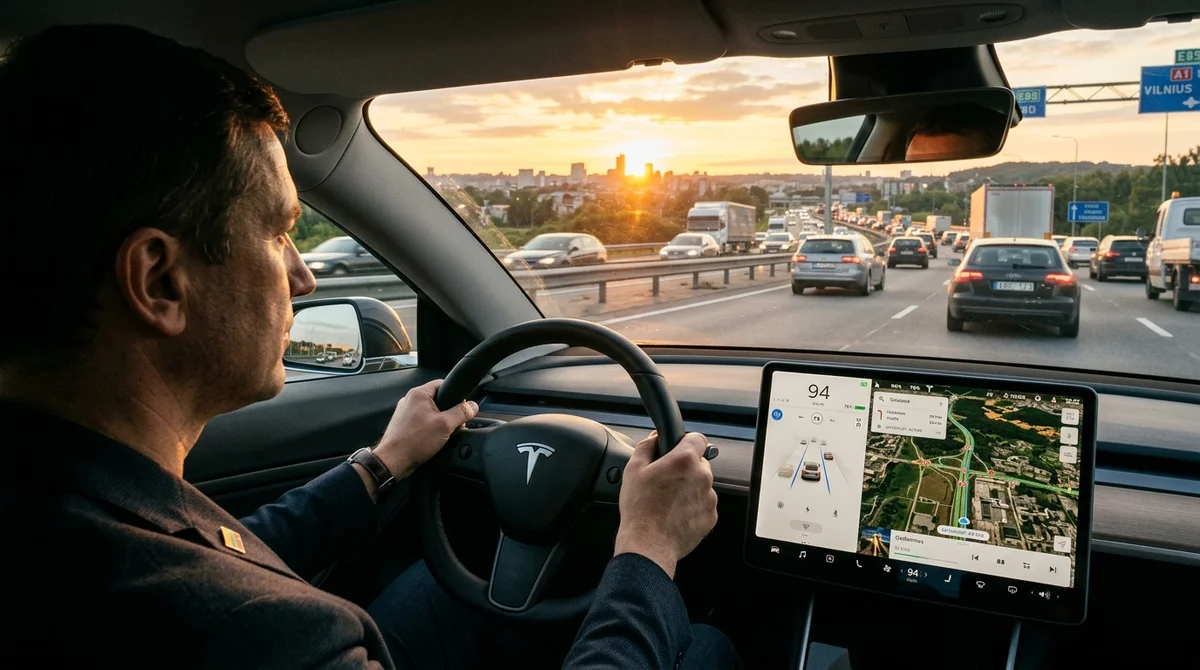
Tesla has achieved approval for Full Self-Driving in Lithuania, becoming the second EU country where the technology has received the green light for mass use.
Lithuania Joins the Netherlands
Lithuanian road transport safety authority officially approved Full Self-Driving (Supervised) this past Tuesday, becoming the second link in Tesla's expansion chain across the European Union. This came just weeks after the Netherlands became the first EU country to grant permission for Tesla's advanced autopilot. Lithuania's approval process was notably accelerated because Lithuanian regulators officially recognized and accepted the certification from the Dutch RDW agency, rather than requiring and conducting their own independent full-scale inspection. This approach, based on mutual recognition of certifications and harmonization of requirements within the EU, saves significant time and resources, allowing other countries to follow the Netherlands' example more quickly.
Wave of EU Expansion
Lithuania is far from the end. Greece is already actively preparing its own approval and should become the third EU country to permit Full Self-Driving. Belgium is in the queue, following Greece. This strategic sequence of approvals reveals Tesla's plan for the European market:
- Start with smaller and more innovation-friendly regulatory environments
- Prove the safety and reliability of the technology in practice
- Gradually expand to larger and more demanding markets
- Avoid difficult battles with France and Germany
- Create a precedent for other autonomous systems developers
This approach allows the company to advance strategically while demonstrating successful implementation in less competitive territories. The rapid approval in the Netherlands and Lithuania shows that European regulators are willing to accept Tesla FSD provided the company proves its technology is safe. Using mutual recognition of certifications between EU countries significantly speeds up regulatory procedures.
What Full Self-Driving (Supervised) Can Do
Full Self-Driving allows Tesla vehicles to perform complex driving tasks in real traffic conditions on public roads. The system can change lanes, navigate obstacles, handle turns, execute U-turns, and even park independently, relying on real-time analysis of road conditions. However, the (Supervised) designation emphasizes a critical distinction: the driver remains fully responsible for safety and must always be attentive and ready to take control at any moment. Tesla positions FSD not as a fully autonomous mode, but as an advanced driver assistance system that requires active driver participation. For Tesla owners in the Netherlands and soon in Lithuania, this means access to one of the most advanced driver assistance systems on the consumer market.
What This Means
Tesla's expansion of Full Self-Driving across EU countries demonstrates growing confidence in autonomous technologies within the European regulatory community. The rapid approval in Lithuania shows that regulatory barriers in Europe are becoming less stringent if a company convincingly proves its technology is safe. This may open doors for other autonomous vehicle developers who previously faced strong resistance from European regulators. FSD expansion is not merely a commercial move for Tesla, but an important signal for the entire autonomous driving industry.