DeepMind Co-Scientist helps geneticists find drugs for cirrhosis
A Stanford researcher used DeepMind's Co-Scientist AI assistant to find new approaches to treating liver cirrhosis. The tool helps analyze complex genetic data and identify promising ways to repurpose existing drugs.
AI-processed from DeepMind Blog; edited by Hamidun News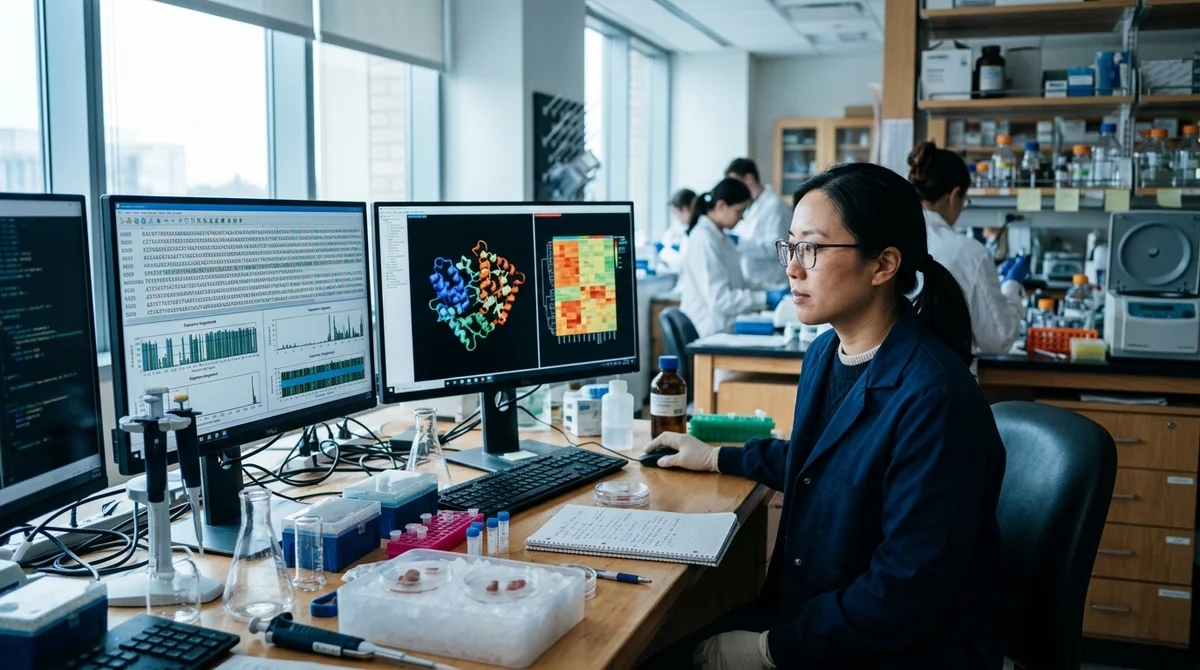
A researcher from Stanford, using Co-Scientist — an AI assistant from DeepMind, discovered promising treatment methods for chronic liver damage and cirrhosis.
How AI Analyzes Biology
Co-Scientist is an assistant based on large language models, designed for scientific work. The tool helps scientists process and interpret complex data, formulate hypotheses, and find patterns that might remain unnoticed in manual analysis. In the case of the Stanford geneticist, Co-Scientist worked with data about genes and proteins associated with liver diseases. The AI helped formulate questions, structure analysis results, and suggest unexpected connections between different biological factors. The system analyzed published research, clinical data, and molecular models, extracting signals from large volumes of information.
Drug Repurposing as a Way to Save Lives
The key finding of the study is the discovery of existing drugs that could potentially treat liver fibrosis. These are not new drugs developed from scratch, but drug repurposing — finding new applications for already-approved medications. Drug repurposing has historically proven faster than full development of a new drug. The standard path to creating a new drug takes 10-15 years and costs billions of dollars. Repurposing can reduce this timeline several times:
- The drug has already passed safety trials
- Side effects and dosage are known
- Clinical research can begin faster
- Time to practical application is reduced by years
- Development costs are lowered
For patients with liver cirrhosis — a disease with high mortality — every month matters. Liver fibrosis develops over years, and there is a narrow window when it can still be saved. Quickly found treatment can give people a chance they would not otherwise have.
AI Meets Medicine
This work demonstrates how large language models can become a tool in the hands of researchers. Co-Scientist does not replace the geneticist, but complements them: it processes data faster, offers hypotheses, helps notice what is hidden in the noise of information. DeepMind positions Co-Scientist as part of its mission to accelerate scientific progress. The company already uses AI in other areas of biology — for example, in predicting protein structures (AlphaFold). Each successful story of Co-Scientist use in real research reinforces the idea that AI assistants can become standard in science.
"AI can help scientists work faster and more efficiently, but human judgment remains critical," — this philosophy reflects
DeepMind's approach to developing scientific tools.
What This Means
AI assistants could become a standard tool in laboratories around the world. If such systems become available to researchers, the speed of discovering new treatment methods could increase sharply. Chronic and rare diseases will have more chances for cure. Additionally, this could accelerate the development of drug repurposing methods, which is especially important for developing countries where there are no resources to create drugs from scratch.
Access Frontier LLMs & Multimodal AI in One Workspace
Discover NomadNet AI (nomadnet.ai) — unified access to frontier language models, research synthesis, and multimodal workflows.
The AI world, distilled — once a week
Seven stories that actually mattered, hand-picked. No noise, no reposts, no press releases.
Done! Check your inbox for a confirmation.