DeepMind's Co-Scientist helps find new ways to treat liver diseases
Researcher Filippo Menolascina uses DeepMind's Co-Scientist — an AI assistant designed to accelerate scientific discovery — to understand the mechanisms of live
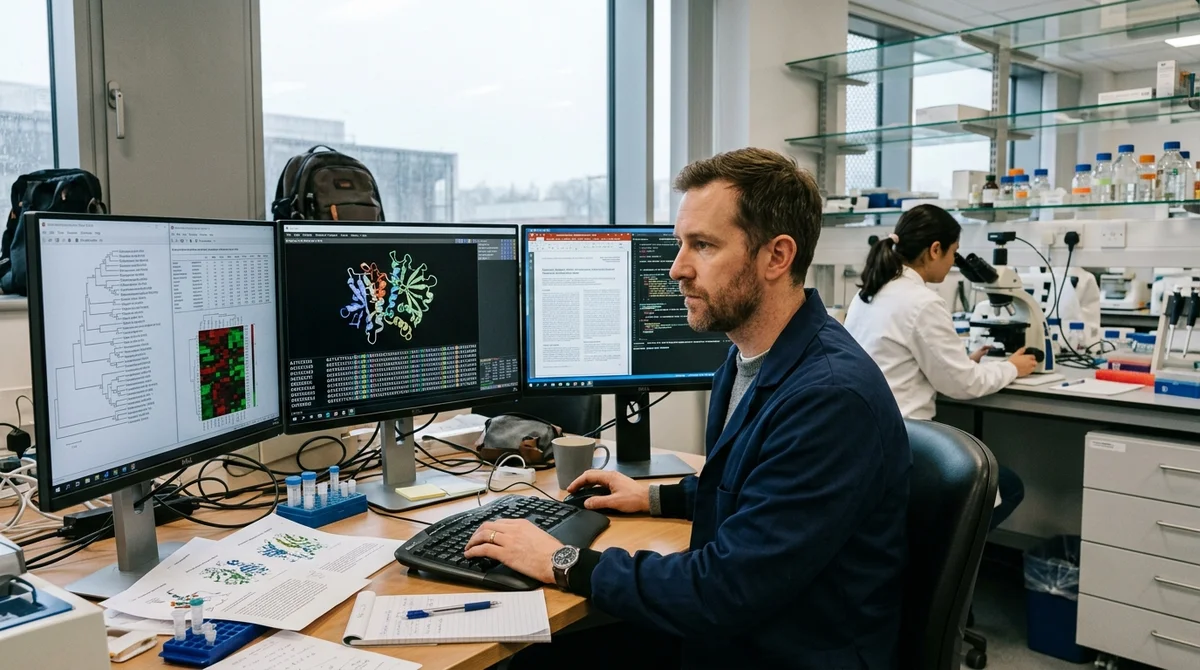
Researchers from DeepMind have developed Co-Scientist — an AI assistant that helps scientists accelerate the process of scientific discoveries. Filippo Menolascina, a researcher in systems biology, is working with this tool on one of the most complex problems in modern medicine: why the same drugs work effectively for some patients but fail to help others.
Co-Scientist: an assistant for the scientist
Co-Scientist differs from conventional large language models in that it can work with real experimental data, analyze the results of laboratory research, and propose new research hypotheses based on actual data. The tool integrates into a scientist's workflow, helping to formulate complex research questions and identify patterns in data that human analysis might miss. For Menolascina, this means the ability to more quickly iterate through various options, test assumptions, and find connections between different levels of biological data — from the activity of individual genes to the behavior of entire cell populations and organs.
The traditional way a scientist works is to formulate a hypothesis, conduct an experiment, analyze the result. Co-Scientist accelerates this chain by proposing new hypotheses based on existing data and helping interpret results in the context of known scientific knowledge.
Uncovering the mechanisms of liver disease
The liver is one of the most complex organs in the human body. Its diseases often remain poorly understood because the mechanisms of disease development involve multiple molecular pathways that interact in a complex network. Co-Scientist helps Menolascina identify the key molecular mechanisms that lead to disease development and progression of liver failure. Understanding these mechanisms makes it possible to:
- Analyze which genes are activated or suppressed in disease
- Identify biochemical pathways through which disease develops
- Find points in the molecular network where drugs can intervene
- Predict the effectiveness of existing drugs for a specific patient
- Develop new treatment approaches based on understanding the mechanism
This approach allows not simply finding new drugs through random screening, but rather deliberately developing therapy while understanding why it should work in that way.
Individual responses to the same treatment
One of medicine's greatest puzzles is the variability in patient responses to identical treatment. For some patients the drug works perfectly and the patient recovers, for others it doesn't help at all, for still others it causes serious side effects. This phenomenon is called "phenotypic heterogeneity" — one diagnosis masks different biological processes in different people. Co-Scientist helps explain these differences at the molecular level. Data analysis shows that underlying these clinical differences are changes in specific genes and the proteins they produce. The tool helps link these molecular features with the clinical picture and predict which patient will benefit from a particular drug.
What this means
Menolascina's research demonstrates that AI not only generates hypotheses but also becomes a real accelerator for scientific discoveries, especially in biomedicine. If Co-Scientist can help unravel one of the most complex organs in the human body, this opens the door to applying such tools in studying other diseases. For patients, this means that in the coming years treatment may become more precise and effective — doctors will be able to choose medicines not through trial and error, but based on molecular analysis of the specific patient, their genetic characteristics and biochemical profile of their disease.