Meta adds accessibility features to its AI glasses for people with disabilities
Meta has released updates to its AI glasses to make them more accessible to people with disabilities. The new features are designed to help users with a range of impairments in everyday life, from navigation to communication. This is a critical step toward democratizing AI technology. *Meta is designated an extremist organization and banned in Russia.
AI-processed from Meta Corporate News; edited by Hamidun News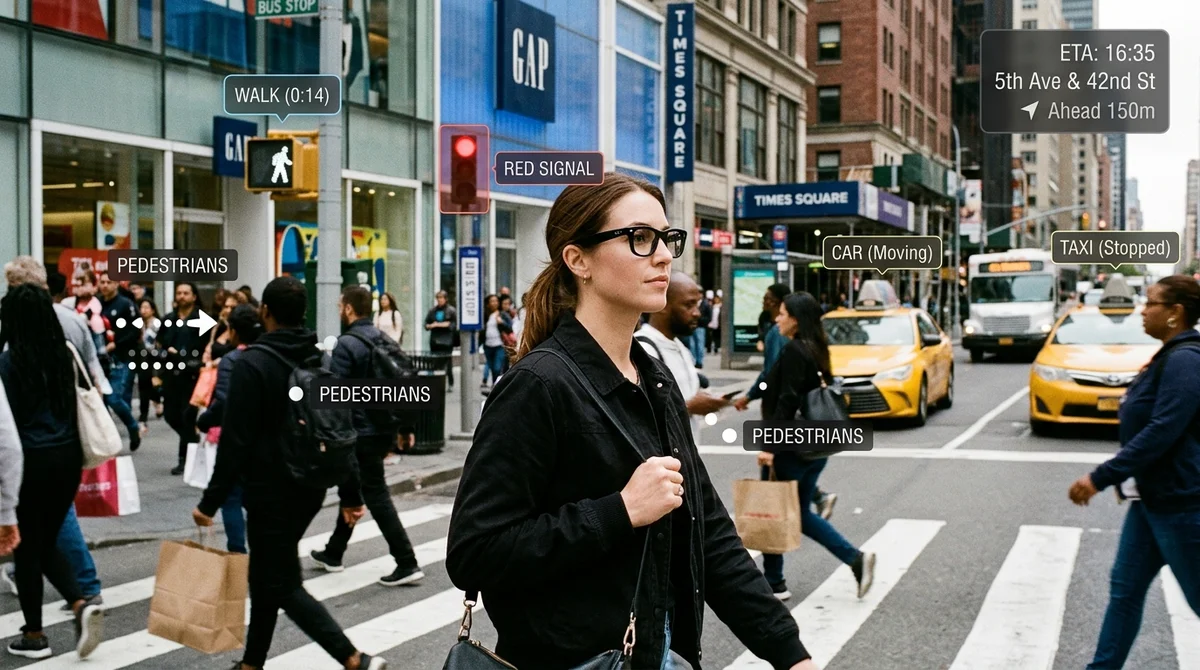
Meta has expanded its Ray-Ban AI glasses with new features that make the technology accessible to people with various disabilities. The update reflects the company's push to make AI useful to the widest possible audience.
What Meta added
The new features include improved scene descriptions for people with visual impairments. The system can describe people, objects, and text around the user with high accuracy. Meta has also added hands-free controls: voice commands and gesture recognition for users with limited mobility.
One of the key additions is real-time speech-to-text for people with hearing loss, along with text read-aloud for people with low vision. These features open up new options for communication and independence in daily life.
Why it matters
For millions of people with disabilities worldwide, accessible technology is not a convenience but a necessity. AI glasses could become a personal assistant for everyday tasks, from finding your way around a city to reading a restaurant menu or a product label.
Meta is not the first company to work in this area, but it is one of the few building accessibility into its core product rather than shipping it as a separate module. This approach could become a new industry standard.
Use cases
Consider some practical scenarios:
- A person with low vision hears a description of the pedestrian crossing signal before stepping into the street
- A deaf user sees real-time captions while talking with a colleague
- A person with paralysis controls the glasses by voice or gaze
- An older user turns on text magnification in a store
- A person with dyslexia listens to on-screen content read aloud
This is not science fiction: the features run on modern computer vision and language processing models. Meta plans to keep expanding them based on user feedback.
What it means
AI glasses are moving out of the novelty gadget category and becoming practical assistants. For people with disabilities, this could be a revolutionary change in independence and quality of life.
Meta frames accessibility not as charity but as standard product functionality. If other companies follow suit, we may see a generation of technology designed for everyone, not just the majority. That could accelerate broader inclusion in the digital economy.
*Meta is designated an extremist organization and banned in Russia.
- Nov 2, 2026The Verge reviewer builds a $50 Meta Muse Charm alternative with Claude Code
- Nov 1, 2026MoneyGate safety layer blocked all 42 fraudulent requests to local AI models
- Oct 31, 2026Open-source LLM gateway KTMS 1.0 plugs your own GPUs into the cloud and survives outages
- Oct 31, 202622B-Parameter LTX-2.5 Runs on a 10 GB RTX 3080, but Takes 5 Minutes per Shot
Key Questions Answered
What Meta added?
The new features include improved scene descriptions for people with visual impairments. The system can describe people, objects, and text around the user with high accuracy. Meta has also added hands-free controls: voice commands and gesture recognition for users with limited mobility. One of the key additions is real-time speech-to-text for people with hearing loss, along with text read-aloud for people with low vision. These features open up new options for communication and independence in daily life.
Why it matters?
For millions of people with disabilities worldwide, accessible technology is not a convenience but a necessity. AI glasses could become a personal assistant for everyday tasks, from finding your way around a city to reading a restaurant menu or a product label. Meta is not the first company to work in this area, but it is one of the few building accessibility into its core product rather than shipping it as a separate module. This approach could become a new industry standard.
What are the key details on Use cases?
Consider some practical scenarios: A person with low vision hears a description of the pedestrian crossing signal before stepping into the street A deaf user sees real-time captions while talking with a colleague A person with paralysis controls the glasses by voice or gaze An older user turns on text magnification in a store A person with dyslexia listens to on-screen content read aloud This is not science fiction: the features run on modern computer vision and language processing models. Meta plans to keep expanding them based on user feedback.
Test Frontier LLMs & Autonomous Agents in One Workspace
Run Claude Opus 5.5, GPT-6, Gemini 3.1, and DeepSeek side-by-side in Nomad AI (nomadnet.ai) — unified model routing, deep research, and multimodal workflows under one subscription.
The AI world, distilled — once a week
Seven stories that actually mattered, hand-picked. No noise, no reposts, no press releases.
Done! Check your inbox for a confirmation.