OpenClaw Got a Physical Body. How AI Coders Are Changing Robotics
Coding AI models are beginning to manage real robots. A Wired engineer gave the OpenClaw agent a physical body and showed how this simplifies development. The result: from concept to working mechanism—many times faster. Traditionally, creating a robot required programmers to write control software from scratch for each mechanism. Now, AI can generate and adapt the code on the fly. This dramatically reduces the time and expertise needed to bring a robot from design to deployment.
AI-processed from Wired; edited by Hamidun News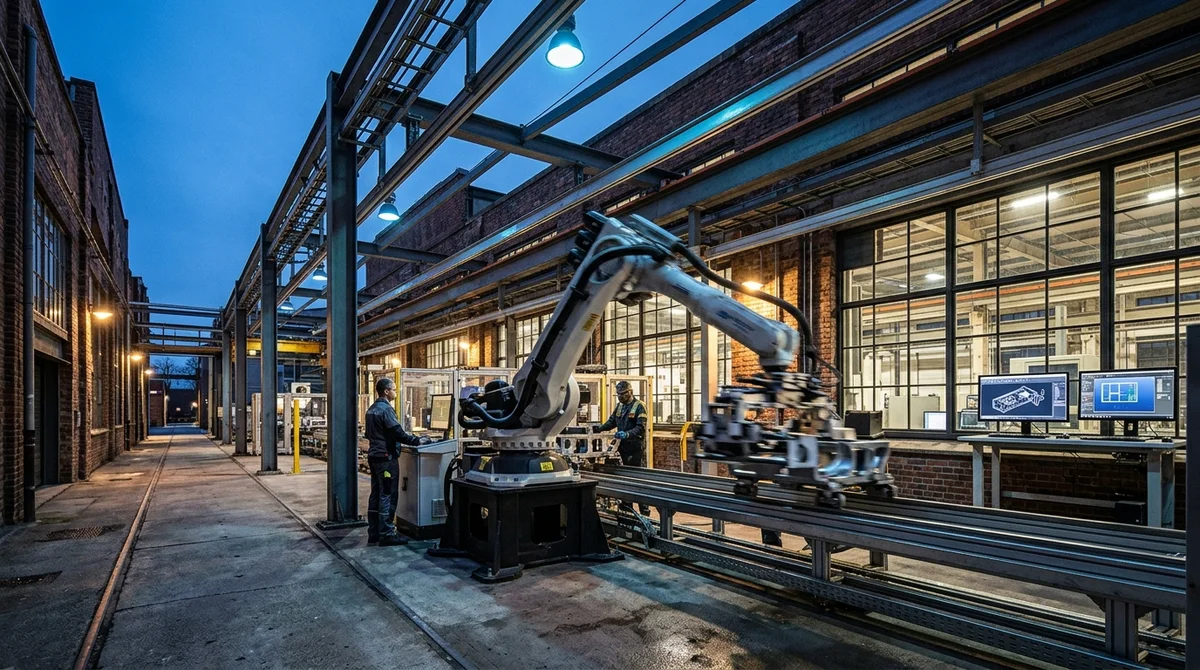
AI models that can write code are opening a new path for robotics. Instead of developers manually writing control programs for each mechanism, AI can generate and adapt that code on the fly.
From Virtual to Physical
The basic idea is simple: if AI writes code well, why not let it control real devices? This is exactly what happened with the OpenClaw agent. Starting as a purely software tool, the agent gained the ability to interact with the physical world. When the agent sees a mechanism (through a camera or sensors), it can understand how it's constructed and immediately write appropriate control code for it. This is fundamentally different from the traditional approach, where a programmer had to first understand the construction, then write an algorithm, then test it.
Why It Matters
Traditionally, creating a robot requires three stages:
- Mechanical design—in CAD, testing the structure
- Writing control software—sometimes code from scratch, sometimes modifying existing code
- Integration and debugging—bringing mechanics and software together
Each stage requires specialists from different fields and takes considerable time. Coding AI accelerates the second and third stages, allowing rapid software adaptation to specific mechanisms.
Practical Applications
This opens doors for rapid prototyping. An enterprise can assemble a mechanism, feed AI information about its design—and get working code. Not perfect on the first try, but functional. This means the barrier to entry for robot creation is falling. For small teams, startups, and research groups, this fundamentally changes project economics. You need fewer people and less time in the development cycle.
What It Means
Integrating AI coders and robotics is the beginning of democratizing robot building. Programming skill will no longer be a critical bottleneck. Engineers can focus on mechanics and design, letting AI handle the code.
Need AI working inside your business — not just in your newsfeed?
I build production AI for companies — custom CRM, internal tools, autonomous agents, workflow automation. Owned by you, shaped to your process, no per-seat tax. Built by Zhemal Khamidun, CPO of AlpinaGPT (AI platform, 6,000+ users).
The AI world, distilled — once a week
Seven stories that actually mattered, hand-picked. No noise, no reposts, no press releases.
Done! Check your inbox for a confirmation.