Lyapunov vs. the System: How the USSR Developed Forbidden Cybernetics
In 1954, cybernetics in the USSR was declared a reactionary pseudoscience. Yet mathematician Alexey Lyapunov opened a cybernetics seminar at Moscow State University, convinced that feedback is an objective law. That act of courage helped keep alive ideas that later became the foundation of AI.
AI-processed from Habr AI; edited by Hamidun News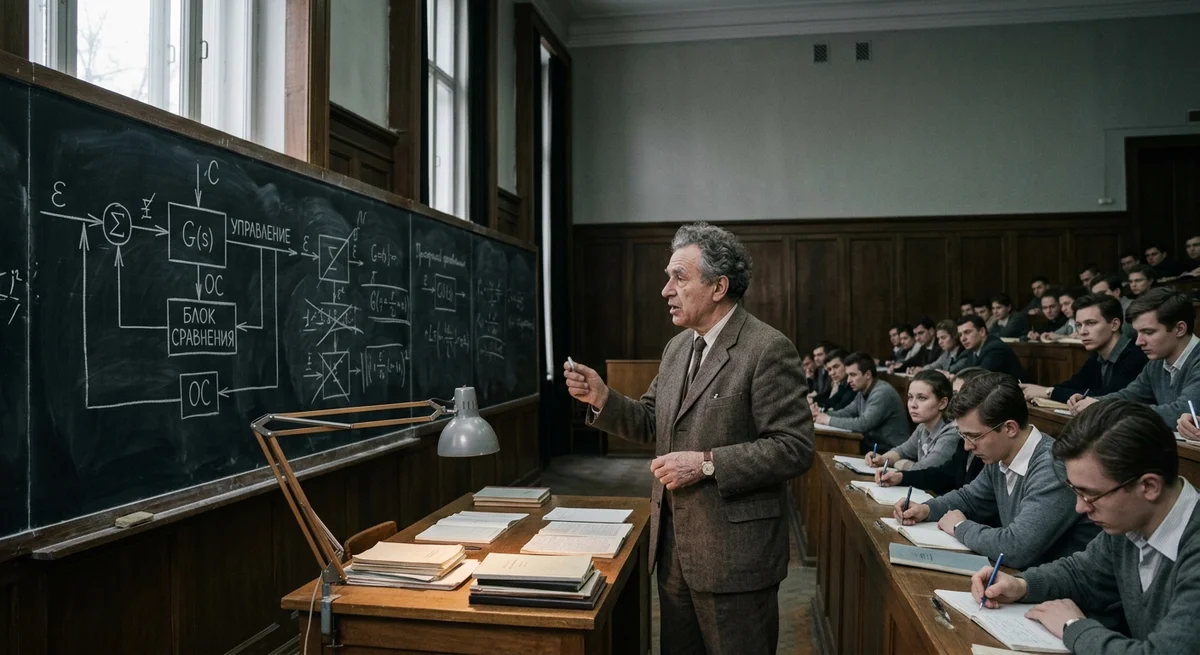
In 1954, when cybernetics was officially considered a reactionary bourgeois pseudoscience in the USSR, mathematician Alexey Lyapunov opened a seminar on the subject at Moscow University. It was an act of scientific courage: a challenge less to a science than to an ideological verdict.
When feedback was the enemy
At the turn of the 1940s and 1950s, Soviet ideology declared cybernetics the number one enemy in science. The problem was not the discipline itself. Cybernetics studied information and control without a Marxist human being at the center of the system. Feedback, self-regulation, information flows: Soviet ideologists saw all of these as signs of bourgeois mechanism, an attempt to reduce the development of society to machine algorithms.
A mathematician against the philosophers
Alexey Andreyevich Lyapunov was neither a dissident nor a politician. He was a mathematician who specialized in mathematical logic. But he believed in a simple idea: feedback exists whether or not ideologues of the right stripe approve of it. In 1954, when studying cybernetics officially was dangerous, he opened a seminar at Moscow State University. It was like reading banned literature in the reading room of a public library, except the public library was Moscow State University itself. He did not hide and did not wait for permission. The seminar ran openly and drew students and graduate students who eagerly absorbed knowledge about control and information, everything that was officially labeled a reactionary invention.
Why it mattered
- It brought the first generation of Soviet scientists to cybernetics in a safe academic setting
- Lyapunov's seminar became a bridge between the ban of the 1950s and the rehabilitation of cybernetics in the early 1960s
- Ideas of feedback later underpinned the development of computing in the USSR
- It created a tradition of informal teaching, a way to pass on knowledge when the official system blocked it
The legacy in the age of AI
Lyapunov's story shows a fundamental truth: the development of AI cannot be stopped, even by a powerful ideology. Cybernetics is a direct predecessor of modern neural networks, machine learning and autonomous systems. The concept of feedback that Lyapunov defended in an unofficial seminar is now used at OpenAI, DeepMind and in every major AI lab in the world.
What this means
When a new technology meets a political system that fears losing control, science finds a way to survive. Lyapunov was not a hero of revolution. He was an ordinary scientist who refused to believe that some ideological committee could ban mathematical reality.
- Nov 2, 2026Meta's Muse assistant keeps dossiers on loved ones and gets root on Ubuntu by default
- Nov 1, 2026Local models lose to Opus and Codex: 0.21 on a MacBook versus 1.00 for Codex
- Nov 1, 2026Kimi scores 96.2% on a 1C database analytics test and emerges as a fallback if Claude access is blocked
- Nov 1, 2026OpenAI Rewrites GPT Behavior Rules: Five Values and a Chain of Command
Key Questions Answered
When feedback was the enemy?
At the turn of the 1940s and 1950s, Soviet ideology declared cybernetics the number one enemy in science. The problem was not the discipline itself. Cybernetics studied information and control without a Marxist human being at the center of the system. Feedback, self-regulation, information flows: Soviet ideologists saw all of these as signs of bourgeois mechanism, an attempt to reduce the development of society to machine algorithms.
What are the key details on A mathematician against the philosophers?
Alexey Andreyevich Lyapunov was neither a dissident nor a politician. He was a mathematician who specialized in mathematical logic. But he believed in a simple idea: feedback exists whether or not ideologues of the right stripe approve of it. In 1954, when studying cybernetics officially was dangerous, he opened a seminar at Moscow State University. It was like reading banned literature in the reading room of a public library, except the public library was Moscow State University itself. He did not hide and did not wait for permission. The seminar ran openly and drew studen
Why it mattered?
It brought the first generation of Soviet scientists to cybernetics in a safe academic setting Lyapunov's seminar became a bridge between the ban of the 1950s and the rehabilitation of cybernetics in the early 1960s Ideas of feedback later underpinned the development of computing in the USSR It created a tradition of informal teaching, a way to pass on knowledge when the official system blocked it
Test Frontier LLMs & Autonomous Agents in One Workspace
Run Claude Opus 5.5, GPT-6, Gemini 3.1, and DeepSeek side-by-side in Nomad AI (nomadnet.ai) — unified model routing, deep research, and multimodal workflows under one subscription.
The AI world, distilled — once a week
Seven stories that actually mattered, hand-picked. No noise, no reposts, no press releases.
Done! Check your inbox for a confirmation.