OpenAI expands Education for Countries program for schools worldwide
OpenAI has expanded the Education for Countries program, focusing on integrating AI into school education worldwide. The initiative includes new partnerships with regional organizations, teacher training on AI tools, and the development of tailored solutions for schools at different levels. The goal is to make high-quality AI education accessible to all countries, regardless of their level of economic development.
AI-processed from OpenAI Blog; edited by Hamidun News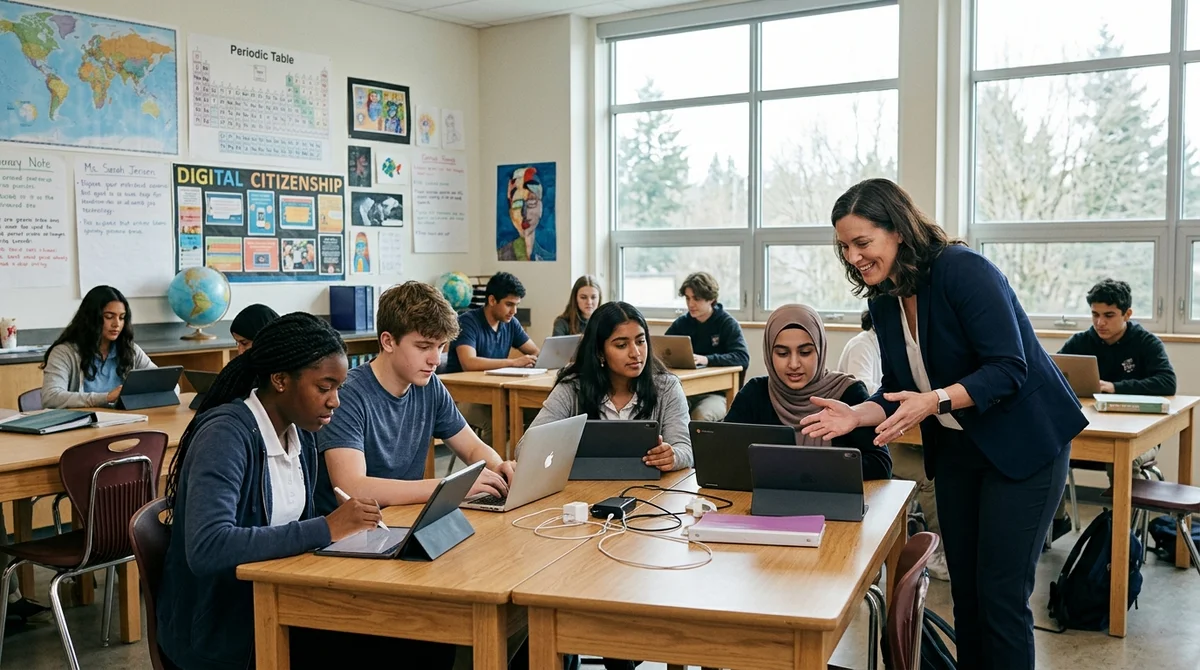
OpenAI is expanding the Education for Countries program, directing efforts toward integrating AI into school education. The initiative covers new partnerships, teacher training, and the development of tools to improve educational quality in countries at all levels of development.
The Essence of the Education for Countries Program
Education for Countries is an OpenAI program aimed at large-scale implementation of artificial intelligence in school systems. The goal is simple: to give teachers and students tools for more effective learning, regardless of where they live. The program works through partnerships with local ministries of education, educational organizations, and school networks. OpenAI provides access to its tools, starting with ChatGPT, and helps adapt them to local needs and languages. The main message: AI should be accessible not only in wealthy countries, but also in developing regions. This is part of OpenAI's broader strategy to democratize access to cutting-edge technologies.
New Partnerships and Expansion
The expanded version of the program brings several key changes:
- New partnerships with educational organizations in different countries
- Localization of tools for local languages and curricula
- Integration of AI solutions into existing school systems
- Support for both primary and secondary schools
- Development of specialized modules for higher education
Each partnership includes consultation, technical support, and training so that institutions can independently implement AI tools without external assistance in the future. OpenAI is working to make the transition to AI tools as smooth as possible and adapted to the local context. The program also provides for the development of specialized educational applications that take into account the characteristics of different age groups and skill levels. This allows AI to be used not as a universal solution, but as a flexible tool that can be customized for a particular school or region.
Teacher Training — the Center of the Program
A key part of the initiative is teacher training. OpenAI has developed special courses and materials that help educators understand how to use AI in the classroom and get the most out of it. Teachers learn how ChatGPT can be applied to lesson preparation, homework assessment, supporting different learning styles, and helping students with different educational needs.
The program includes both basic training and advanced modules for experienced educators who want to more deeply integrate AI into their teaching methodology. Special emphasis is placed on developing critical thinking in students — teachers are taught to use AI not as a replacement for teaching, but as a tool that expands the possibilities of education. Educators gain skills in working with the tool, but also learn how to think about how to properly use AI, what risks and benefits it carries, and how to foster in children a responsible attitude toward technology.
What This Means
The expansion of Education for Countries signals a shift in focus by major AI companies toward social responsibility and global access. For teachers, this means new tools and opportunities to improve the quality of teaching. For students, it means more personalized learning that takes into account their individual needs and pace of development. For countries, it is a chance to accelerate the development of digital literacy and prepare young people for a world where AI will become an integral part of professional activity.
Want to stop reading about AI and start using it?
AI News is a curated feed of AI/tech news. Hamidun Academy teaches you to use AI systematically in your work.
The AI world, distilled — once a week
Seven stories that actually mattered, hand-picked. No noise, no reposts, no press releases.
Done! Check your inbox for a confirmation.