Peter Steinberger Spent $1.3 Million on API Calls in One Month of OpenClaw Experiments
Peter Steinberger, creator of OpenClaw, has published a breakdown of his OpenAI API costs from a month of experiments with autonomous coding. The bill came to $1.3 million: 603 billion tokens processed across roughly 100 parallel model instances. The story exposes the hidden economics of AI coding at scale.
AI-processed from TNW; edited by Hamidun News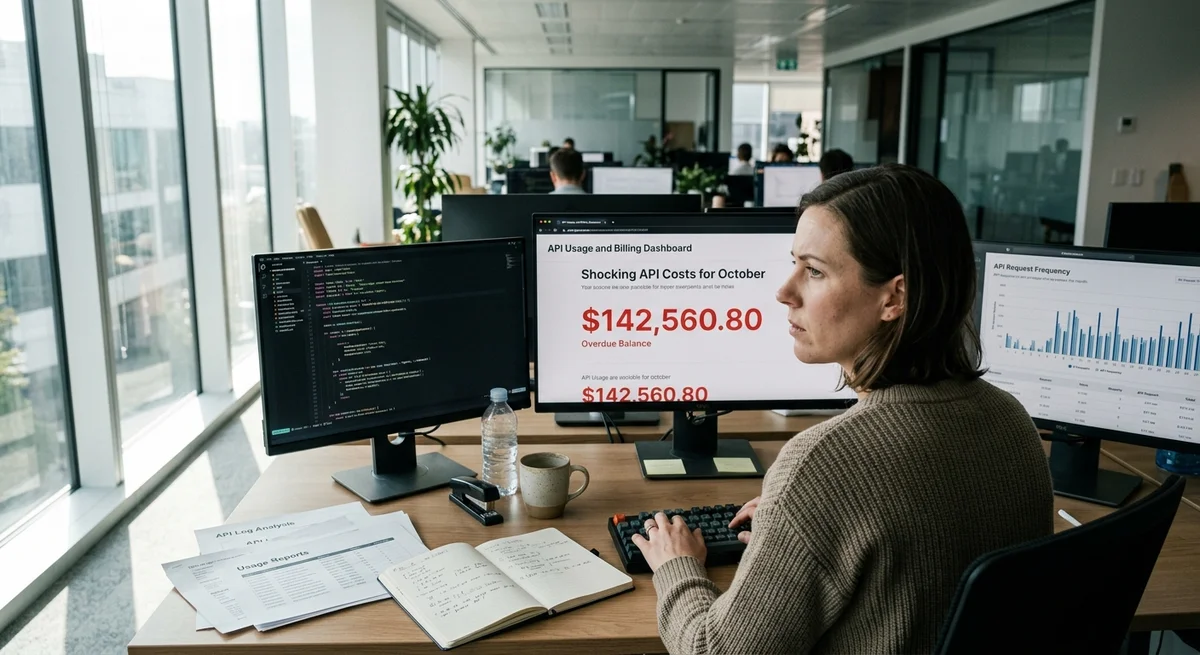
Peter Steinberger, an OpenAI engineer and the creator of OpenClaw, a system for autonomous coding, recently published a financial report on his month-long experiment. The numbers read like science fiction: in a single month, the bill came to $1.3 million. It is not a typo and not a hypothesis. It is real money spent on the OpenAI API to have machines write code at industrial scale.
How the bill got so large
For 30 days, Steinberger ran roughly 100 language model instances at once. Each worked in parallel on separate coding tasks. Over the month, 603 billion tokens were processed through 7.6 million API requests. This is not just a big number. It is a live demonstration of what happens when an AI agent starts writing code at industrial scale, without human intervention.
Every request to the OpenAI API costs money. When you run 100 agents at once, and each can generate dozens or hundreds of requests per minute, the bill grows exponentially. This is not a linear increase in spending; it follows a power law.
Why it is expensive: the economics of modern LLMs
- The price per token is not the same in every case: a long context (a lot of text in the initial prompt) costs more
- 100 parallel sessions multiply costs against each other, scaling in the worst possible way
- Every request requires the model to process the full context, which is the most computationally expensive part of transformer networks
- Long-running agents resend old context in new requests, paying repeatedly for the same tokens
- There are no real-time volume discounts: OpenAI charges for every token at the current rate
In his report, Steinberger suggests that building a commercial product requires serious optimization. For example: token caching (a new OpenAI API feature that makes repeated calls with the same context cheaper), batching (grouping several requests together), and using cheaper models for auxiliary tasks such as code analysis. Without these tricks, scaling autonomous coding becomes economically unviable.
What this reveals about the cost of compute
Costs at this scale expose the real, hidden economics of AI tools. When an agent is smart enough to work for hours without human supervision, the price becomes visible and unavoidable. This is not criticism of OpenAI; it is the math of compute costs. Transformers are expensive at inference, and no optimization will change that radically.
"If you run a fully autonomous agent that works for a long time and switches between models often, your bill will simply skyrocket," is roughly how
Steinberger described the core of the problem.
What will change in the market
For developers and startups, this is an important signal: AI coding at scale requires not only technical knowledge but also a deep understanding of compute costs. We will most likely see a wave of optimizations. Companies will start looking for ways to lower the effective price per token, use lighter models for drafts and contextual analysis, and cache and reuse contexts as much as possible. For OpenAI, this may mean new pricing plans for high-volume users, something like wholesale discounts, contract rates or dedicated enterprise solutions.
The time when AI coding was cheap and available to everyone is ending. The era of deliberate, financially optimized use of autonomous agents is beginning.
- Nov 1, 2026Local models lose to Opus and Codex: 0.21 on a MacBook versus 1.00 for Codex
- Nov 1, 2026Kimi scores 96.2% on a 1C database analytics test and emerges as a fallback if Claude access is blocked
- Nov 1, 2026OpenAI Rewrites GPT Behavior Rules: Five Values and a Chain of Command
- Nov 1, 2026Google admits AI Mode cuts search revenue, shares fall 15%
Key Questions Answered
How the bill got so large?
For 30 days, Steinberger ran roughly 100 language model instances at once. Each worked in parallel on separate coding tasks. Over the month, 603 billion tokens were processed through 7.6 million API requests. This is not just a big number. It is a live demonstration of what happens when an AI agent starts writing code at industrial scale, without human intervention. Every request to the OpenAI API costs money. When you run 100 agents at once, and each can generate dozens or hundreds of requests per minute, the bill grows exponentially. This is not a linear increase in spend
Why it is expensive: the economics of modern LLMs?
The price per token is not the same in every case: a long context (a lot of text in the initial prompt) costs more 100 parallel sessions multiply costs against each other, scaling in the worst possible way Every request requires the model to process the full context, which is the most computationally expensive part of transformer networks Long-running agents resend old context in new requests, paying repeatedly for the same tokens There are no real-time volume discounts: OpenAI charges for every token at the current rate In his report, Steinberger suggests that building a c
What this reveals about the cost of compute?
Costs at this scale expose the real, hidden economics of AI tools. When an agent is smart enough to work for hours without human supervision, the price becomes visible and unavoidable. This is not criticism of OpenAI; it is the math of compute costs. Transformers are expensive at inference, and no optimization will change that radically. "If you run a fully autonomous agent that works for a long time and switches between models often, your bill will simply skyrocket," is roughly how Steinberger described the core of the problem.
Build & Ship Production AI Agents Without Boilerplate Code
Start your free 72-hour trial at Hamidun Academy (academy.hamidun.com) — interactive lessons on Claude Code & Cursor, live Tech Radar, and production agent templates.
The AI world, distilled — once a week
Seven stories that actually mattered, hand-picked. No noise, no reposts, no press releases.
Done! Check your inbox for a confirmation.