Melbourne becomes a center for AI research with the MAVERIC supercomputer
Melbourne is building an AI ecosystem: the MAVERIC supercomputer for medical and scientific research, the expansion of data center capacity to 800 MW, and a str
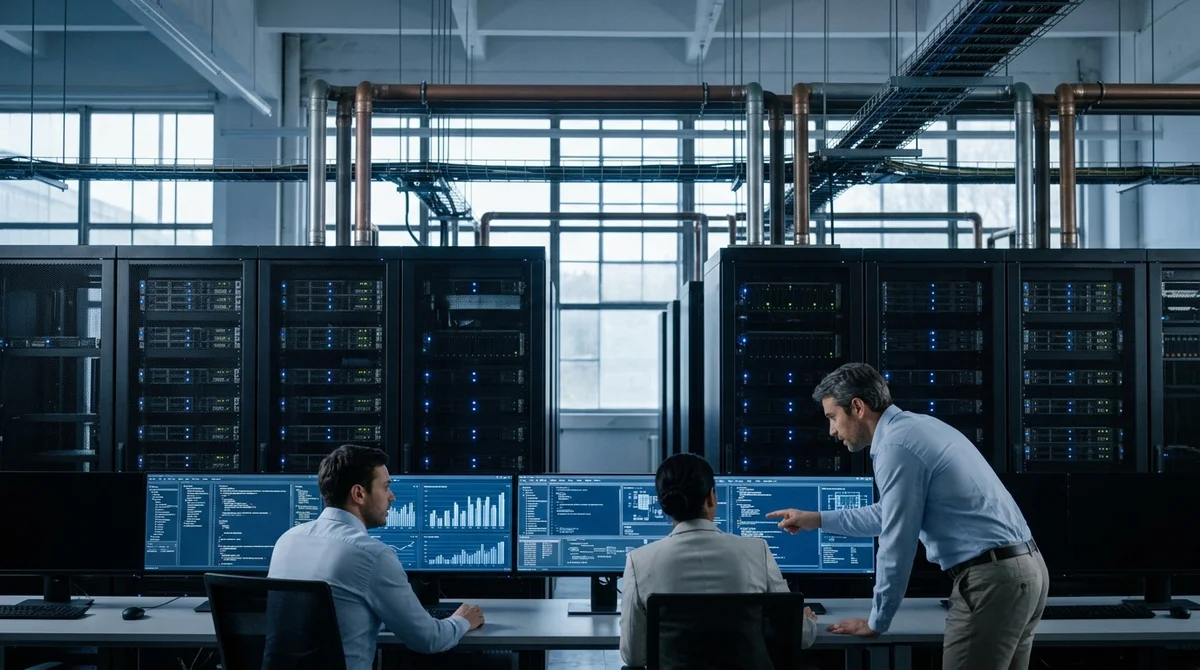
Melbourne is becoming the epicenter of the global AI research ecosystem. Three elements shape this transformation: the MAVERIC supercomputer, expansion of data center infrastructure, and a growing pipeline of international technology conferences.
MAVERIC: Sovereign Computing for Science
The cornerstone of Australia's AI ecosystem is the MAVERIC supercomputer (Monash AdVanced Environment for Research and Intelligent Computing), built by Monash University in partnership with NVIDIA, Dell Technologies, and CDC Data Centres. It is Australia's largest university AI supercomputer, specifically designed for large-scale AI and data-intensive science.
The system runs on NVIDIA GB200 NVL72 and uses closed-loop liquid cooling—this reduces water consumption compared to traditional air systems and addresses sustainability concerns as computing volumes grow.
MAVERIC is designed as a Next Generation Trusted Research Environment, enabling researchers to safely work with sensitive data within national jurisdiction.
"MAVERIC will open enormous opportunities for our researchers in solving the most complex challenges in medical science, computer science, and STEM disciplines," said James Whisstock, Deputy Dean Research at Monash University.
The supercomputer supports projects ranging from cancer research and neurodegenerative disease studies to clinical trial analysis and discovery of new materials.
Megawatts of Computing Power
Melbourne is expanding data center infrastructure in parallel with MAVERIC. CDC Data Centres opened its first Melbourne campus in Brooklyn in February 2026 with two operational facilities and a third planned. Combined with the existing campus in Laverton, this will create a base of over 800 MW of sovereign digital power—critical for AI workloads.
Simultaneously, NEXTDC is investing AUD $2 billion in developing an infrastructure hub at Fishermans Bend adjacent to the Innovation Precinct.
Planned facilities include:
- AI Factory for model deployment
- Mission Critical Operations Centre for systems management
- Technology Centre of Excellence for cross-sector collaboration
Melbourne already concentrates 188 AI companies and over 40 data center facilities throughout Victoria.
The regional government has invested AUD $5.5 million in a Sustainable Data Centre Action Plan to link infrastructure growth with environmental goals.
Conferences as Research Accelerators
A reinforcing cycle emerges between computing power and international events. In September 2026, Data Center World Australia and The AI Summit Australia will take place at the Melbourne Convention and Exhibition Centre—events bringing together global leaders in AI and digital infrastructure.
This collocation reflects a fundamental fact: AI progress is inseparable from the infrastructure that powers it.
Additionally, the city hosts research conferences: ICONIP 2026 (up to 700 researchers in neural networks and machine learning) and IEEE VR 2027 (up to 1000 delegates on virtual reality).
In this context, conferences function not simply as events, but as infrastructure for knowledge exchange and the formation of global research networks.
What This Means
As AI research becomes increasingly dependent on infrastructure scale and sovereign computing capabilities, cities like Melbourne close the gap between theory and practice. This brings researchers into direct contact with real hardware and enables them to build more robust global research networks—a scenario unavailable to those working only in the cloud.