Amazon запустила Alexa for Shopping, объединив Rufus с платформой Alexa+
Amazon объединила Rufus и Alexa+ в единую систему Alexa for Shopping. Она доступна в приложении, браузере и на Echo Show. Ассистент сравнивает товары, отслежива
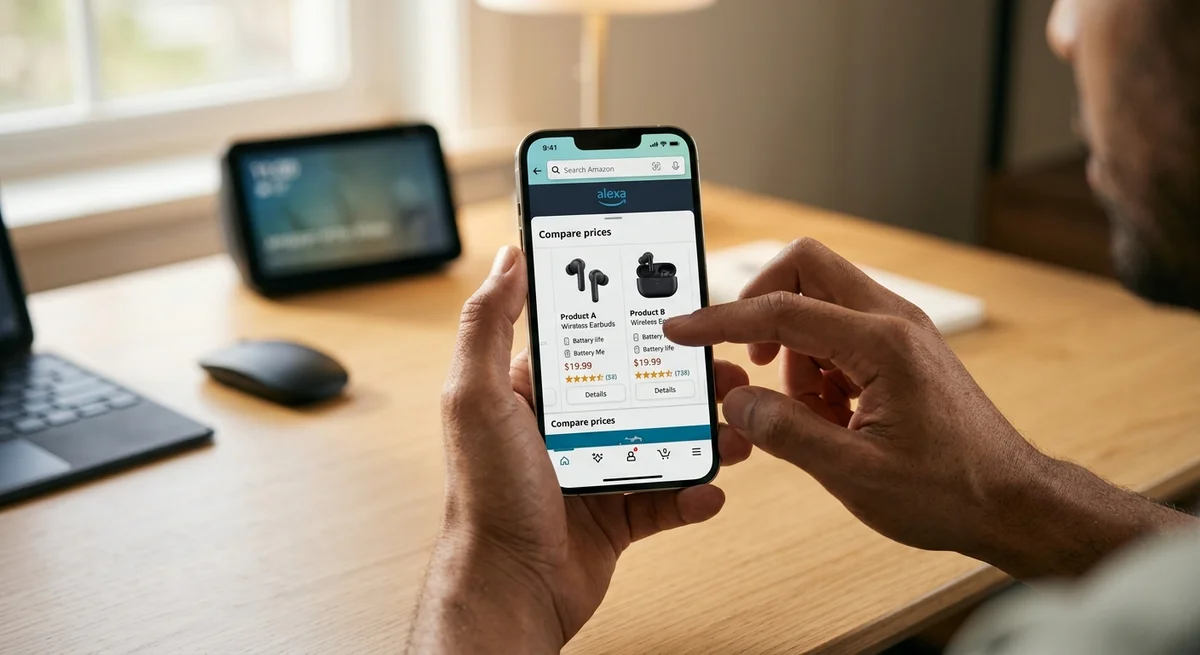
Amazon has launched Alexa for Shopping, combining its Rufus (an AI assistant for shopping) with the Alexa+ platform into a unified system available everywhere people shop on Amazon.
Where the new assistant will be embedded
Alexa for Shopping will work in the Amazon mobile app, on the website, and on Echo Show smart speakers. This is not an entirely new separate product — Rufus is being moved under the Alexa umbrella, dramatically expanding its reach. Previously, Rufus operated as a separate chatbot within the Amazon app. Users either had to know about its existence or specifically search for the Rufus mode in the menu. This limited its usage — many people simply didn't know the feature existed. Now it will become a natural, organic part of the shopping experience across all three platforms simultaneously.
What it can do
The assistant handles the full purchase cycle:
- Answers questions about products: materials, sizes, delivery, warranty, compatibility with other items
- Compares prices between different products and brands in real time
- Tracks price drops and notifies about changes
- Sets reminders about purchases for items of interest
- Executes automated purchases (within limits and settings the user has configured)
Functionally, this is an extension and deepening of Rufus's logic, but with much greater accessibility. Instead of the user actively and consciously seeking out Rufus's help, Alexa for Shopping will await his question on every screen — in the browser, in the mobile app, on smart speakers.
Strategy: from niche product to ubiquitous
Rufus was successful in initial tests. However, as a separate product, it remained niche — people forgot about it or simply didn't know it existed. The problem is that a niche product, no matter how good, cannot compete with habit.
Now Amazon is embedding Rufus everywhere at once: in the mobile app, browser, voice screens. This creates an effect of ubiquity and habit — wherever the customer goes, they will meet the same assistant, ready for conversation. Additionally, the rebranding to Alexa for Shopping is a strategic move.
Alexa is already familiar to millions of users as Amazon's voice and interface thanks to smart speakers sold worldwide. By tying Rufus to this well-known name and brand, the company leverages existing emotional attachment and recognition. The shopping assistant no longer seems like a newcomer or experiment — it's part of an already familiar, trusted world.
What this means for users and business
For shoppers, it's about convenience and speed. Instead of switching between interfaces and platforms, they simply ask a question where they are. Instead of manually comparing products — often taking dozens of minutes — Alexa will do it in milliseconds.
For Amazon, it's a matter of reducing friction in the customer journey. Every extra click, every additional second is a loss of conversion, a lost purchase. Simplifying the path to ordering, embedding the assistant everywhere means increasing the number of completed purchases.
Technologically, Rufus remains the same AI engine, the same neural network architecture. But Amazon positions it no longer as a special, narrow shopping tool, but as a universal assistant that simply happens to be very good at one thing — selling.