US Embeds Itself in Asian Supply Chains to Secure Sovereignty in AI
The US is actively embedding itself in Asian supply chains for critical AI components. The move is strategic: it aims to secure independence from Chinese suppliers and preserve dominance in the AI race. The Beijing summit does not freeze the contest for technological leadership.
AI-processed from Bloomberg Tech; edited by Hamidun News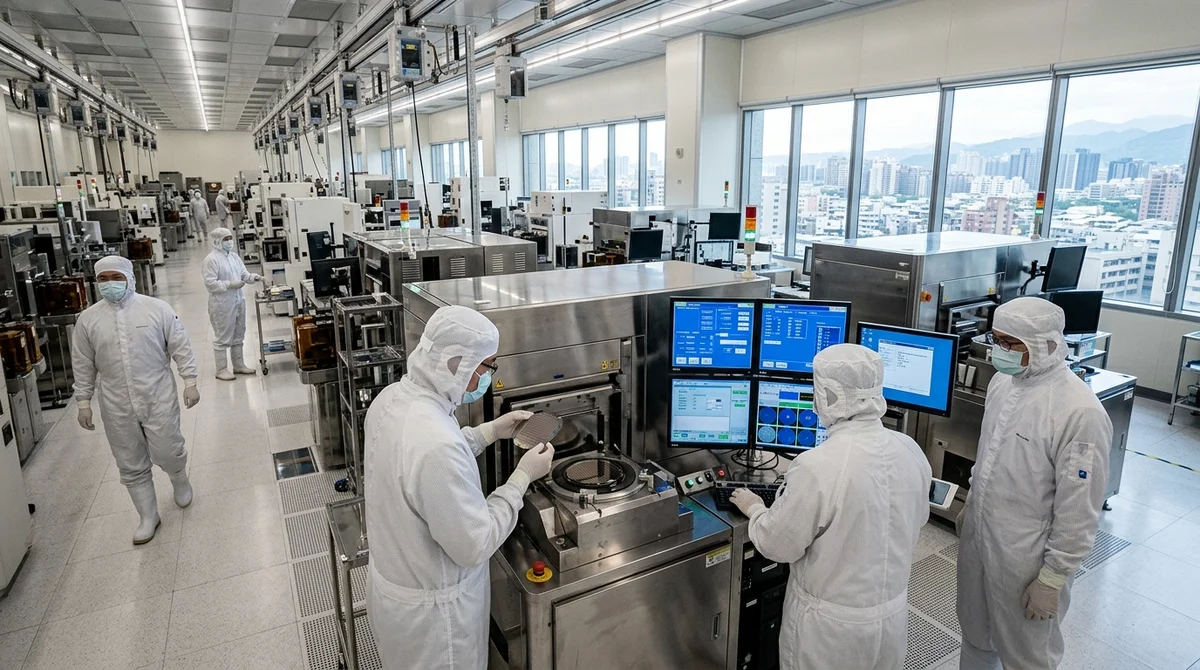
Despite the Beijing summit and diplomatic attempts by the US and China to find common ground, the American administration is not pausing its race for AI dominance. On the contrary, the States are embedding themselves deeper in Asian supply chains for critical components: chips, semiconductors and rare earths.
Sovereignty Through Partnerships
The US grasps a simple truth: in the 21st century, the AI race is won not only with algorithms but also by controlling the hardware. The chip is the language everyone speaks. That is why the States are choosing integration into global networks over isolation.
Integration, however, does not mean dependence. The US is actively building deep partnerships with key Asian players: South Korea, Taiwan and Japan. It is not simply buying; it is building joint ecosystems for manufacturing, R&D and innovation. This is a long-term strategy for outflanking Chinese competitors by strengthening allies.
The US's Asian Partners
The focus falls primarily on three pillars:
- South Korea (Samsung, SK Hynix) — a leader in memory and advanced processes, with a powerful industrial base
- Taiwan (TSMC) — 54% of the global chip manufacturing market, the undisputed leader in advanced process nodes
- Japan — equipment, rare materials and precision components from Sony, Canon and Mitsubishi
With each partner, the States are launching joint projects: expanding fabs, synchronizing standards, and protecting intellectual property for both sides. The investment goes into capacity that the West will control and that will be shielded from infiltration by Chinese companies. The goal is singular: to cut the critical links of the chain with Beijing and make it impenetrable to competitors.
The Facade of Diplomacy
Officially, the US and China are discussing "rules of the game" for AI at the Beijing summit: risks, ethics, safety. Pleasant words, declarations of peaceful coexistence. But those words mask reality: while talks go on, a quiet war over supply chains is under way. The US is embedding itself in Asia, while China is accelerating development of its own processors (Huawei HiSilicon, SMIC). Both are preparing to be independent when conflict comes.
Diplomacy is a maneuver, not a truce.
"Independence in critical technologies is not a choice but a matter of national security," strategists in
Washington believe.
Risks and Uncertainty
The embedding strategy is not without risks. First, Taiwan remains a geopolitical volcano: a conflict could erupt at any moment. Second, US allies in Asia are themselves balancing between the West and Beijing: South Korea trades with China, and Japan depends on it economically. Third, technology moves fast, and today's cutting-edge chip may be obsolete tomorrow.
But there is no alternative. Full isolation does not work, and full openness is too risky. Embedding through allies looks like the most realistic compromise.
What This Means
The AI race is turning from a technological contest into a geopolitical struggle for control over materials, manufacturing and standards. Companies that rely on open global supply chains risk becoming hostages to politics. For investors and startups, this translates into a concrete threat: choose partners not only on price and quality, but also on their position in the global architecture of power.
Today you are a developer building on TSMC; tomorrow you depend on American policy toward Taiwan.
- Oct 31, 2026Author puts his script before an AI jury: the verdict cost 850 thousand tokens
- Oct 30, 2026Agent traffic on Zocdoc is up 30x since July, and ChatGPT faces two health lawsuits
- Oct 29, 2026OvisOCR3: an 0.8B-parameter model that reads documents better than specialized systems
- Oct 29, 2026Tencent releases Youtu-Parsing-Omni: one model parses documents, audio and video
Key Questions Answered
What are the key details on Sovereignty Through Partnerships?
The US grasps a simple truth: in the 21st century, the AI race is won not only with algorithms but also by controlling the hardware. The chip is the language everyone speaks. That is why the States are choosing integration into global networks over isolation. Integration, however, does not mean dependence. The US is actively building deep partnerships with key Asian players: South Korea, Taiwan and Japan. It is not simply buying; it is building joint ecosystems for manufacturing, R&D and innovation. This is a long-term strategy for outflanking Chinese competitors by strengt
What are the key details on The US's Asian Partners?
The focus falls primarily on three pillars: South Korea (Samsung, SK Hynix) — a leader in memory and advanced processes, with a powerful industrial base Taiwan (TSMC) — 54% of the global chip manufacturing market, the undisputed leader in advanced process nodes Japan — equipment, rare materials and precision components from Sony, Canon and Mitsubishi With each partner, the States are launching joint projects: expanding fabs, synchronizing standards, and protecting intellectual property for both sides. The investment goes into capacity that the West will control and that wil
What are the key details on The Facade of Diplomacy?
Officially, the US and China are discussing "rules of the game" for AI at the Beijing summit: risks, ethics, safety. Pleasant words, declarations of peaceful coexistence. But those words mask reality: while talks go on, a quiet war over supply chains is under way. The US is embedding itself in Asia, while China is accelerating development of its own processors (Huawei HiSilicon, SMIC). Both are preparing to be independent when conflict comes. Diplomacy is a maneuver, not a truce. "Independence in critical technologies is not a choice but a matter of national security," stra
Ship AI Faster with Founders, Engineers & Weekly Architecture Reviews
Inside Vibe Club (hamidun.com/club) — weekly live masterminds with Zhemal Khamidun, Tech Radar, full LMS access, and 370+ production Claude Code skills.
The AI world, distilled — once a week
Seven stories that actually mattered, hand-picked. No noise, no reposts, no press releases.
Done! Check your inbox for a confirmation.