Penn created a hybrid particle for ultra-fast, energy-efficient AI
Penn created a hybrid particle that combines light and matter. It will speed up AI computations and reduce energy use by 10x to 100x. The technology could bring
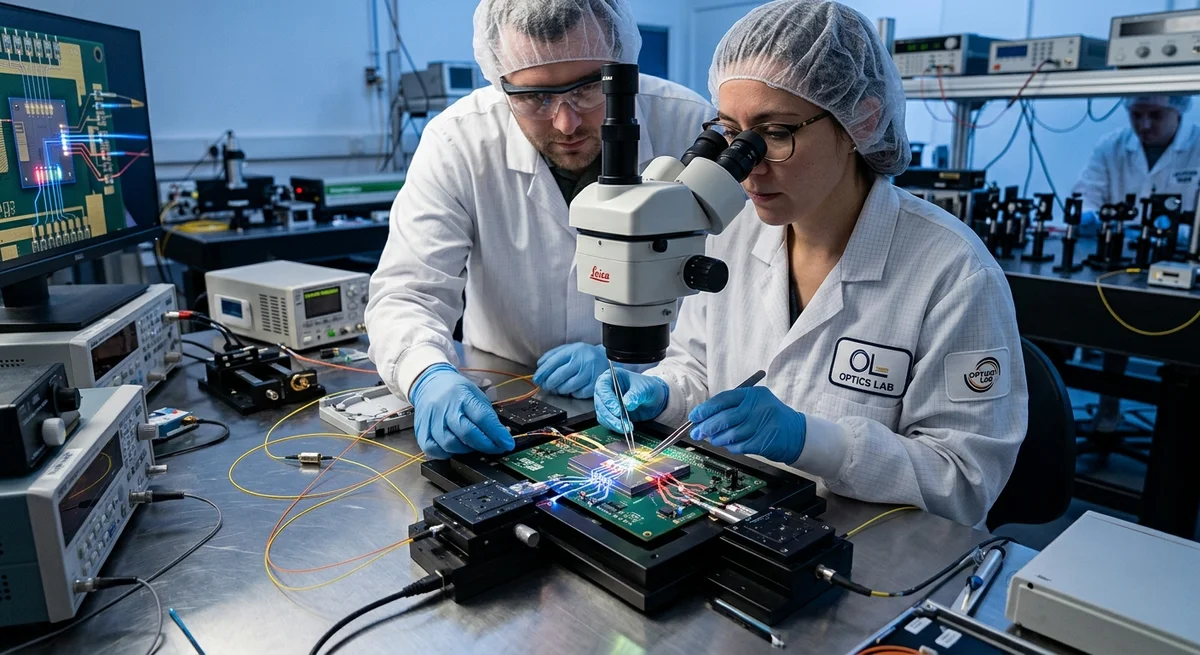
Scientists at the University of Pennsylvania have created a hybrid particle made of light and matter that could revolutionize computing for artificial intelligence. The breakthrough could enable replacing energy-intensive electronic processes with ultra-efficient photonic technologies.
Light
Instead of Electrons The new particle is a hybrid: it combines the properties of photons (light particles) and matter at the quantum level. Penn researchers have achieved a state where a photon can interact with electrons in a material such that an entirely new object emerges with combined properties of both. Such a particle can transmit information much faster than traditional electrons in silicon processors.
Physicists have known about this approach for a long time, but Penn is the first to demonstrate its applicability to AI computing. The key distinction of photonic systems: they do not suffer from the limitations of electronics. Light travels at speeds close to the maximum in nature and does not heat up when moving through materials.
This means that computing will become simultaneously faster and cooler — two critical parameters for AI systems that are now hitting thermal limits.
Energy and
Speed The main advantage of photonic computing is a radical reduction in energy consumption. Modern AI models require enormous amounts of electrical energy: training a large neural network like GPT can cost hundreds of thousands of dollars in electricity alone. Penn's research shows that photonic systems could reduce these costs by 10-100 times depending on the type of computation. Processing speed is also critical. The faster a processor handles information, the faster the AI model works, and the less delay in responding to user requests. In applications like real-time video processing or serving thousands of concurrent users, computing speed directly affects business economics.
- Information processing acceleration by 10-100 times Reduction of heat generation and energy consumption by orders of magnitude Scaling AI systems without building new data centers Extending equipment lifespan through reduced heat Lowering the cost of server cooling and maintenance ## On the Path to Practice For now, the technology remains in the laboratory at the proof of concept stage. Penn researchers say that several engineering challenges must be solved before photonic computing becomes the standard in commercial systems. This involves integration with existing infrastructure, scaling the production of hybrid particles, and standardization of interfaces. However, progress is moving quickly. First pilot applications could appear within 2-3 years in specialized areas — training very large neural networks, scientific simulations, and video stream processing. Companies like IBM and Intel are already investing in optical computing, so commercial realization could come sooner than expected.
What
It Means If Penn's breakthrough withstands the test of reality, it could transform the AI industry. OpenAI, Google, Meta, and Microsoft have invested tens of billions in data centers and expensive GPUs. Photonic computing could make these investments less critical and allow AI to become more powerful without proportional growth in energy consumption and carbon footprint. *Meta is recognized as an extremist organization and is banned in Russia.