Jensen Huang и Michael Dell о революции AI-агентов и памяти
Бизнес в спешке к agentic AI. Jensen Huang из Nvidia и глава Dell Michael Dell обсудили грядущую революцию: автономные AI-агенты потребуют беспрецедентных объём
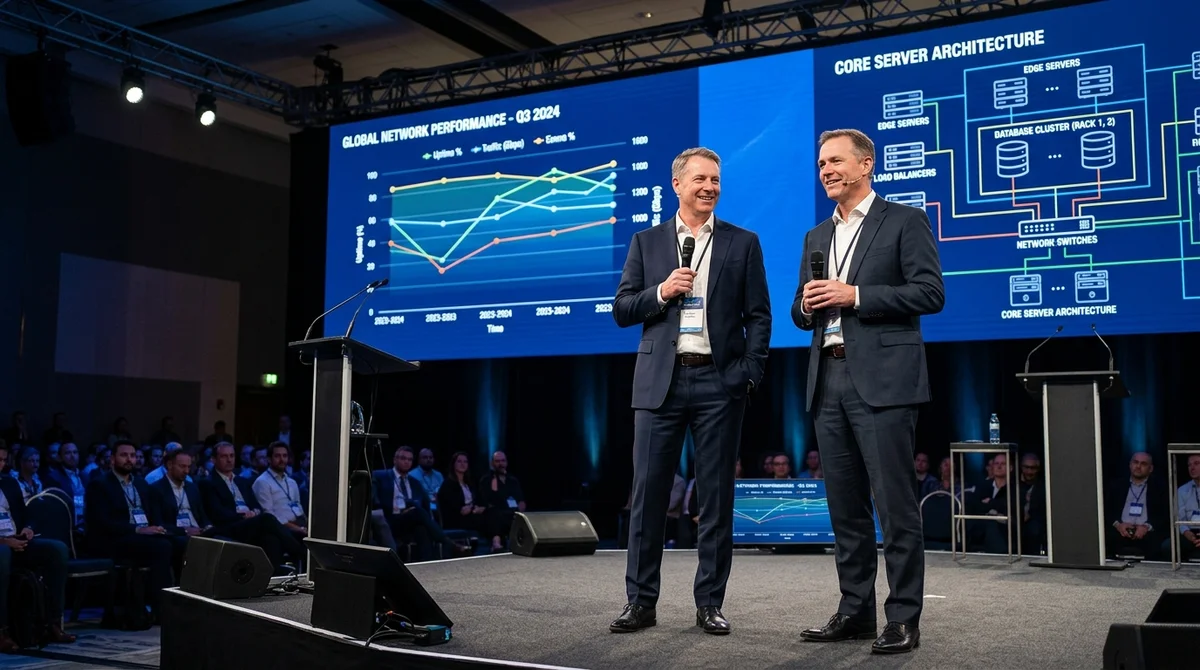
At Dell World conference in Las Vegas, NVIDIA CEO Jensen Huang and Dell Technologies head Michael Dell discussed the future of AI agents, the critical demand for memory, and how this transitional era requires a reassessment of engineering priorities.
The Main Challenge: Memory Eclipses Computing
For many years in the LLM era, server architecture has been optimized for GPU. But with the advent of agentic AI, the picture is changing fundamentally. AI agents are systems that don't simply generate text—they execute multi-step tasks in browsers, interact with APIs, and make decisions based on context.
For this, you need memory. Huge amounts of memory. In a Bloomberg interview, Jensen Huang stressed that memory volumes must grow exponentially.
While text model inference gets by with tens of gigabytes, agentic AI requires hundreds of gigabytes of RAM on a single server. This is a challenge for system architects and an opportunity for companies that reorient their production toward HBM (High Bandwidth Memory) and systems with new topology. Huang has repeatedly stated: memory will grow faster than computing.
This upends investment priorities.
Agentic AI Examples Already in Action
OpenAI released Operator—a browser agent that can autonomously fill out forms, compare prices, and make purchases. Google unveiled Gemini 2.0 with agentic mode, capable of integrating with Workspace services. All of these systems demand enormous amounts of memory at inference time: the agent must simultaneously see the screen, remember task history, call external APIs, and evaluate alternatives. On modest GPUs, this runs slowly and often with errors. This is precisely why Jensen Huang and Michael Dell speak of memory as the critical bottleneck. This is not theory—it's practice that developers already see and that cloud providers are experiencing right now.
Next-Generation Infrastructure
Michael Dell explained that Dell World 2026 showcases PowerEdge systems and a solutions ecosystem reoriented toward agentic AI. Where TFLOPS (floating-point operations) were once the main metric, now it's memory bandwidth and storage volumes. Dell has already launched new server configurations:
- HBM integration—High Bandwidth Memory chips on boards next to GPUs to minimize latency when accessing memory
- Cooling redesign—new thermal solutions, since memory plus computing require 1.5 times more power
- Network architecture—links between memory nodes require gigabit-class throughput, not kilobit
- Reassessment of TPU-like solutions—specialized chips for agentic workloads, not just LLM inference
These changes are not cosmetic. They demand a reworking of production pipelines, supply chain review, and complete retraining of system administrators.
Geopolitics and China's Market
Both CEOs indirectly touched on the geopolitical situation. Jensen Huang has repeatedly stated that export restrictions to China are a serious challenge for NVIDIA, but not a death sentence. The strategy is straightforward: invest in memory growth and accelerate the development of nano-servers, which are easier to integrate and require lower computational density.
Michael Dell added that growth in memory volumes compensates for losses in specific geographic regions. If China represents 15% of the market, but memory requires upgrades across 100% of the market, then all manufacturers in other countries win. Both CEOs also noted that Europe and North America are pushing agentic AI development and are ready to invest.
Against this backdrop, NVIDIA and Dell's efforts are reorienting toward the Atlantic side of the planet.
What This Means
Memory-first architecture is not simply an engineering shift—it's a paradigm change. Companies that are first to redesign their data centers and server configurations for agentic AI will capture a significant share of the computing contract market. NVIDIA and Dell back up their words with concrete products: new PowerEdge systems based on NVIDIA H-series with expanded memory—this is a direct response to market demand. Even today, major cloud providers are negotiating with Dell and NVIDIA for orders to upgrade their data centers.